1945 Schools and consolidation
- Trivoli School, District #139: 1960 #324 Farmington
- Pea Ridge School (Stone School), District #140: 1951 #1 Fulton County, 1969 #324
- Downs School, District #141: 1959 #1 Fulton County, 1969 #324
- Blue School, District #142: 1951 #1 Fulton County, 1969 #324
- Trivoli Center School, District #143: 1951 # Fulton County, 1969 #324
- Bickford School, District #144: 1951 #139, 1969 #324
- Concord School, District #145: 1959 #1 Fulton County, 1969 #324
- Brunswick School, District #146: 1951 #1 Fulton County, 1969 #324
- Pennsylvania (Penn Ridge), District #147: 1951 part #304 Logan School, part #149 Oak Grove to #320 Lancaster W.; 1969 #324 (printed #424), #327 Timber Township
- White School, District #148: 1951 #1 Fulton County, 1969 #324
- Oak Grove School, District #149: 1963 consolidated with #133 to form #320 Lancaster-West CC; 1969 part #324, part #327 Timber Twp
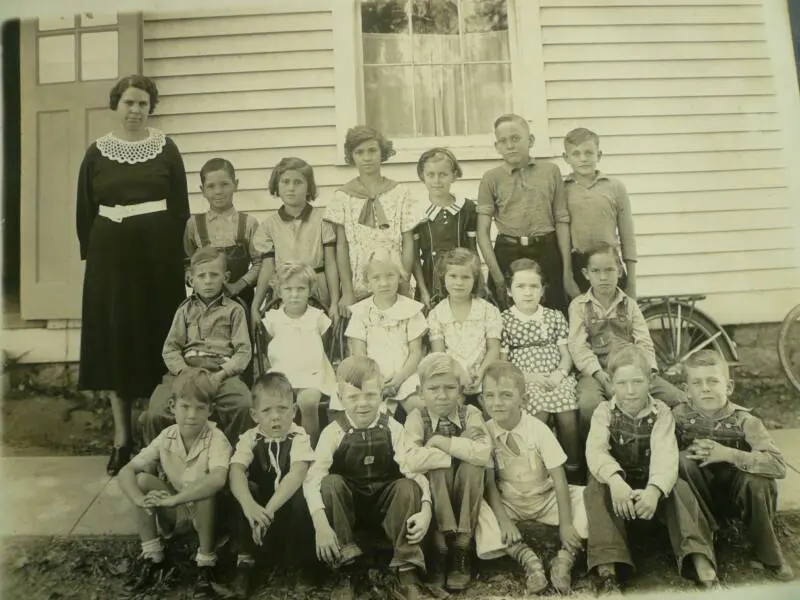
Trivoli School pictures from album of Leatha Folkenroth Whitlock, teacher at Trivoli Grade School. Thank you to Mrs. Doubet for sharing this album.
Also information and pictures from History of the Trivoli Area by Laura Jane Davis.
Concord School pictures from A History of Trivoli, Illinois and Trivoli Township by Glen Martin Woodcock.
Higgs kids from Higgs Family History.
From the album of Leatha Folkenroth Whitlock
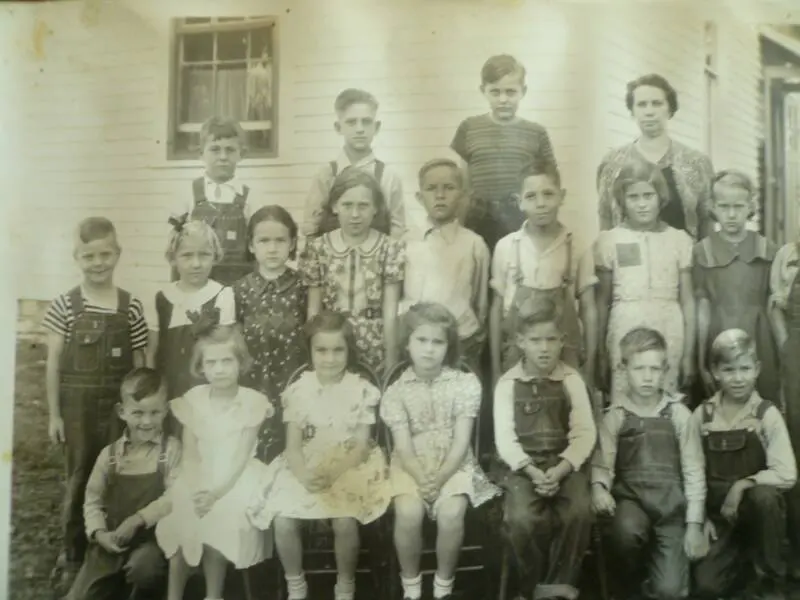
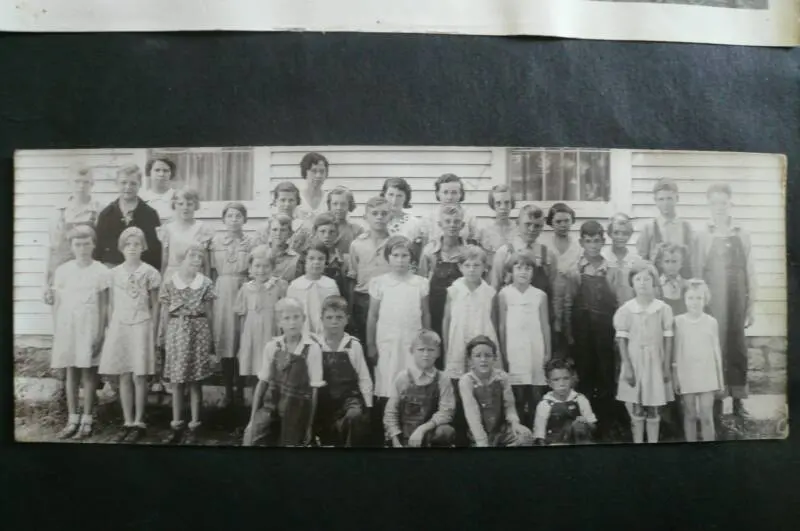
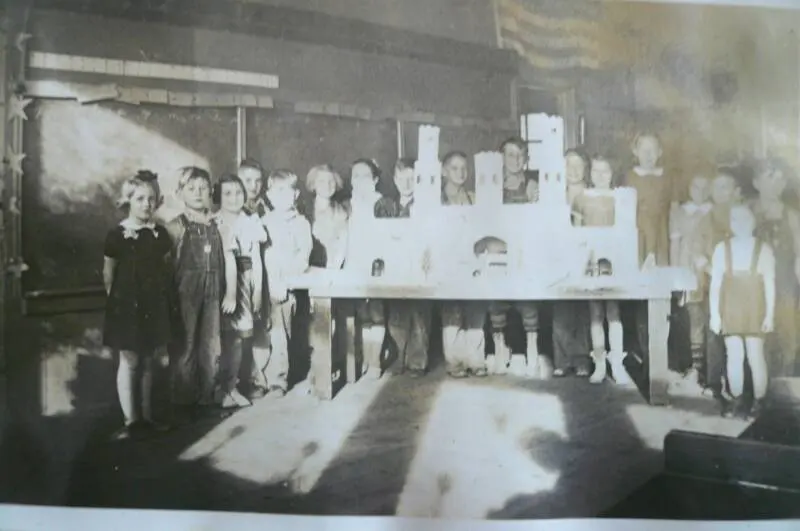
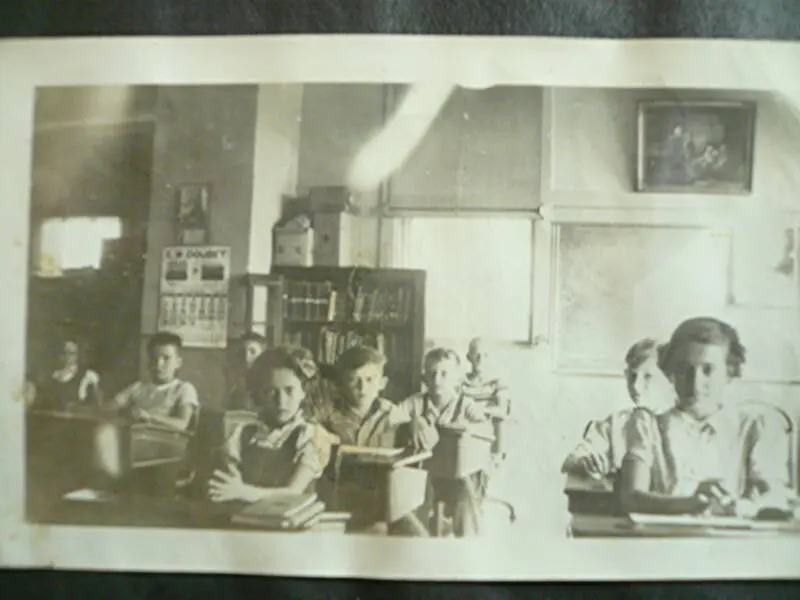
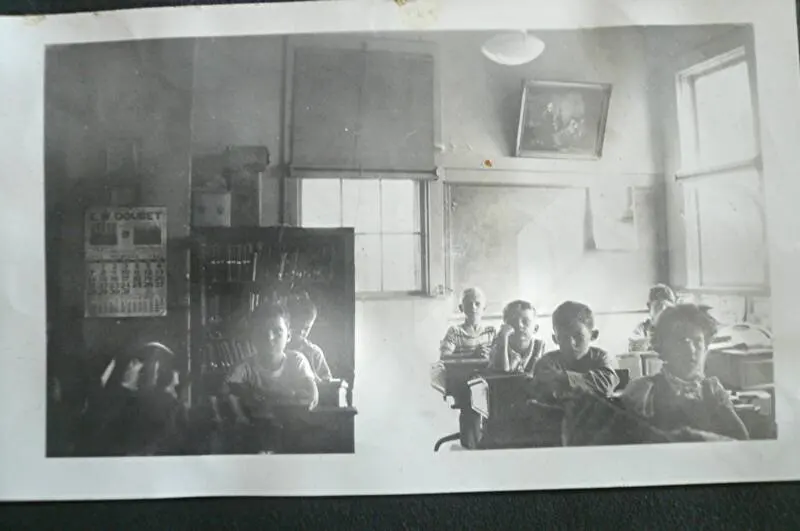
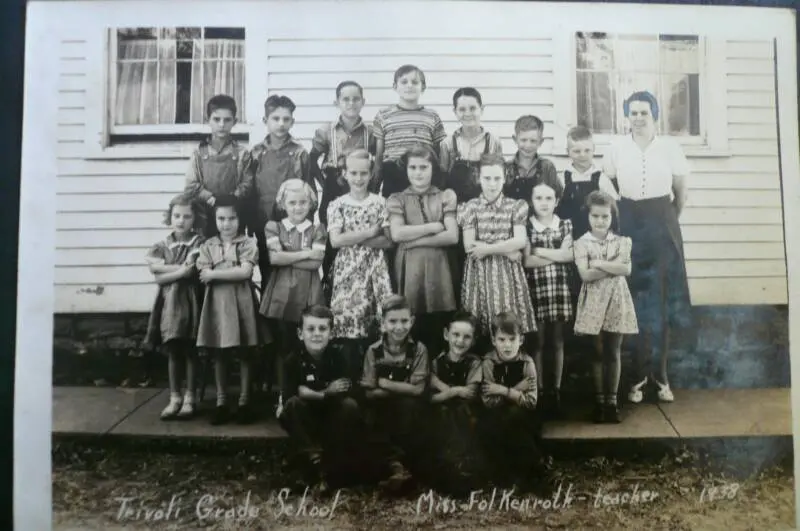
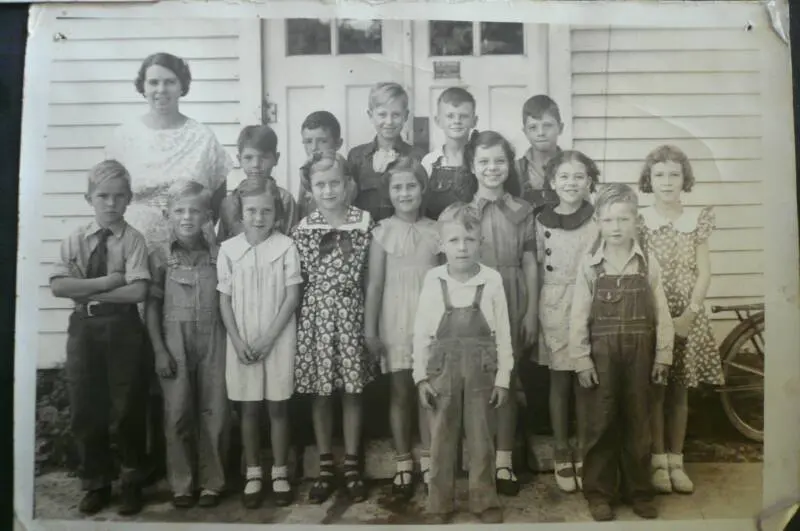
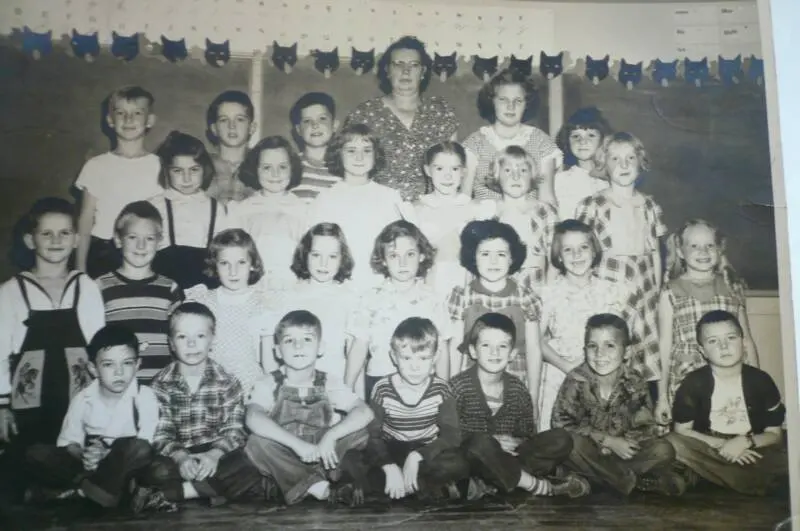
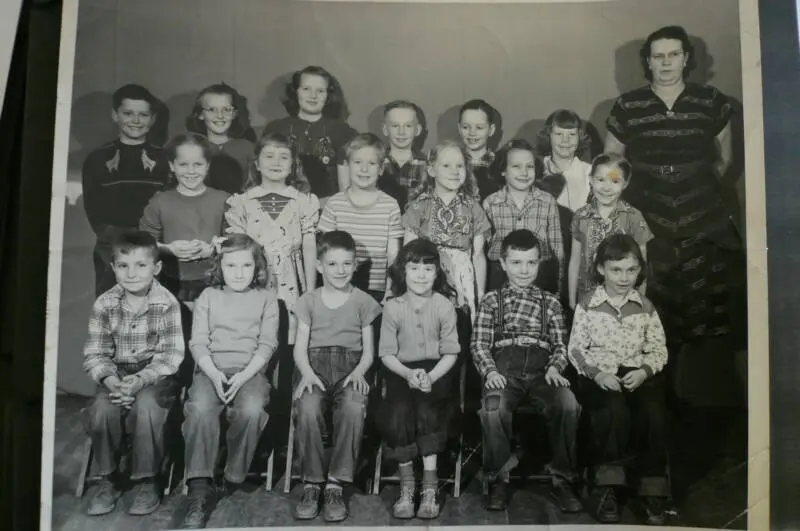
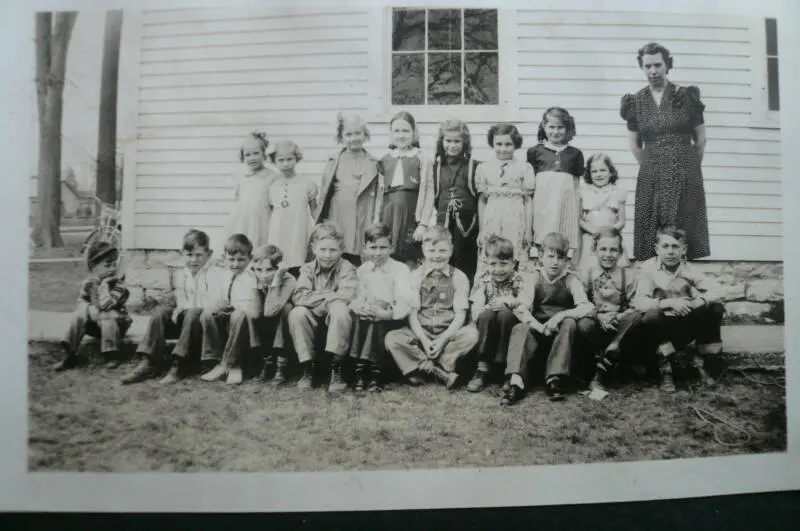
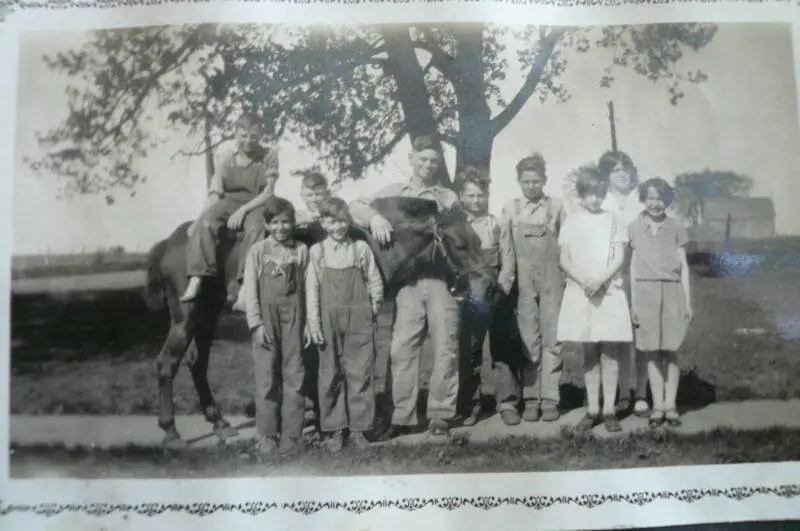
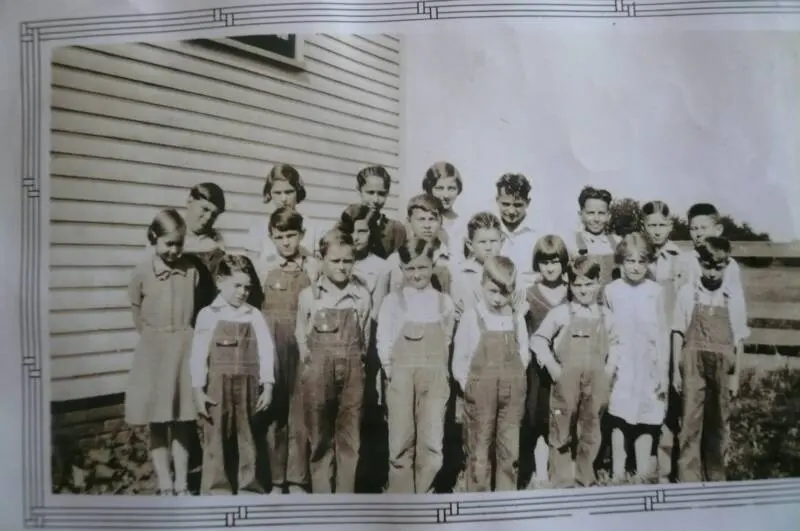
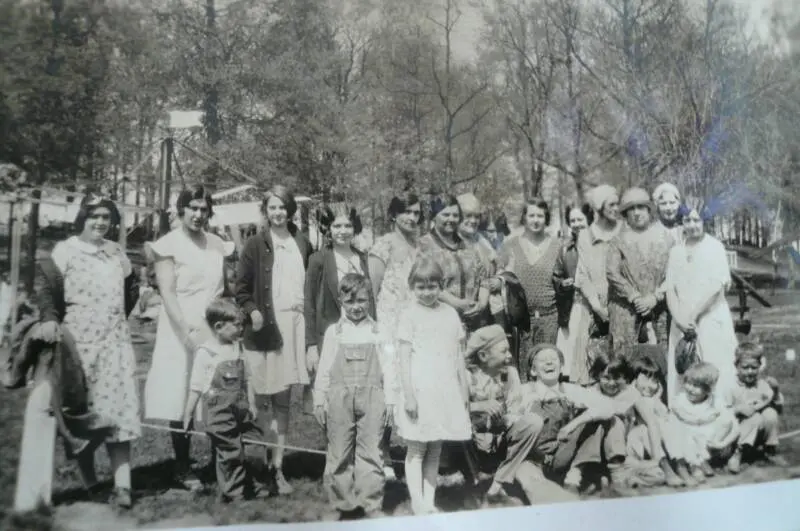
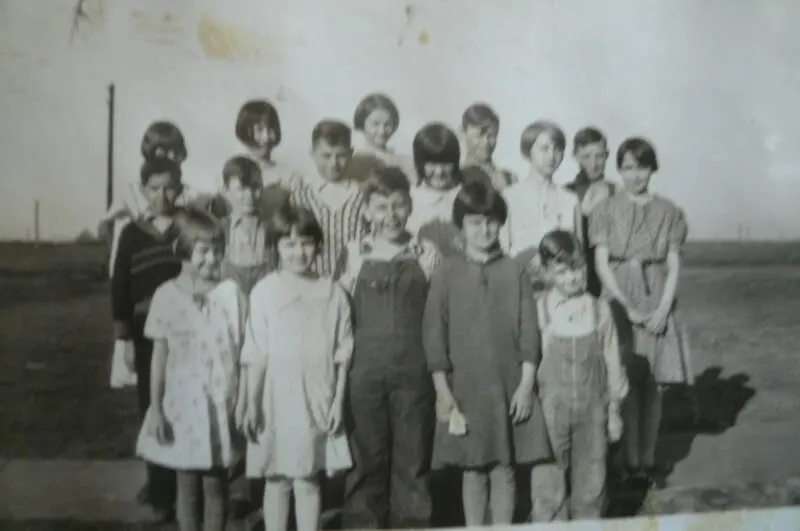
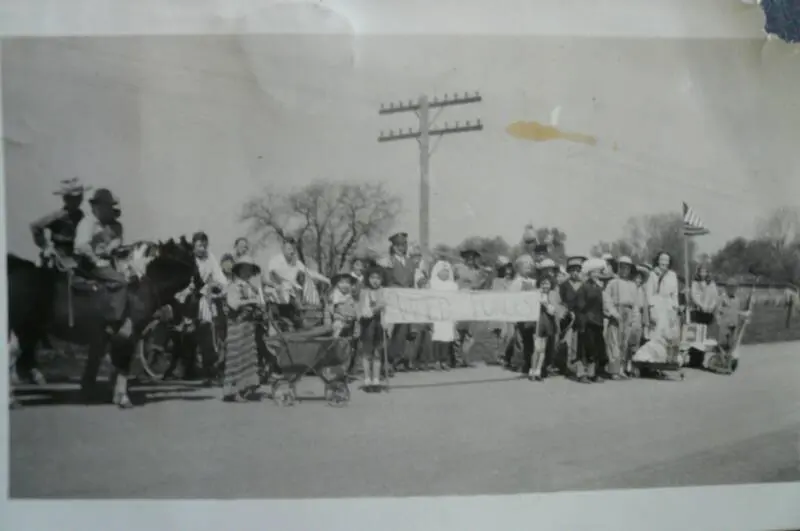
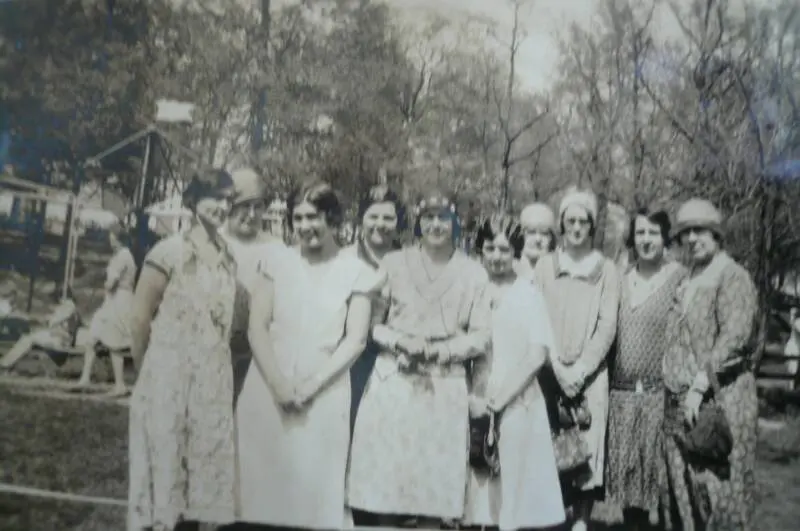
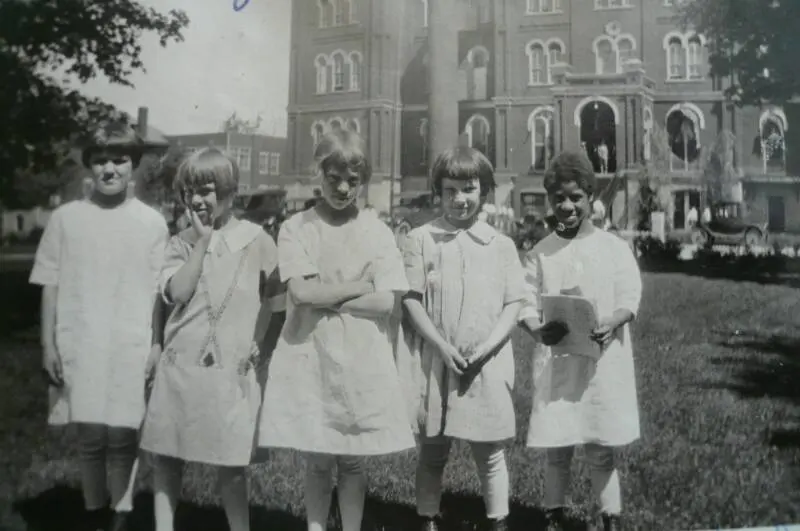
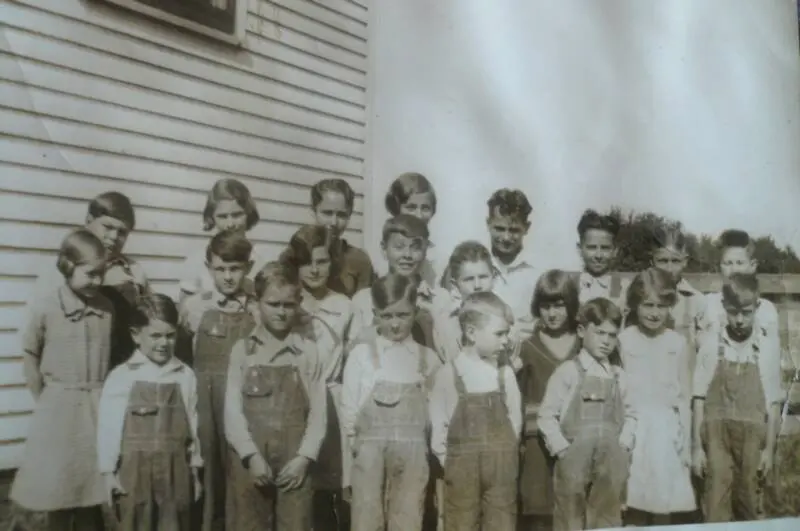
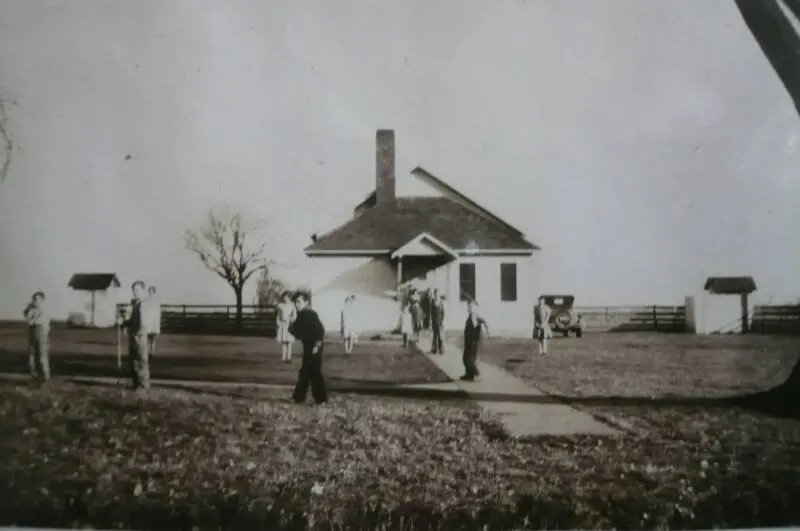
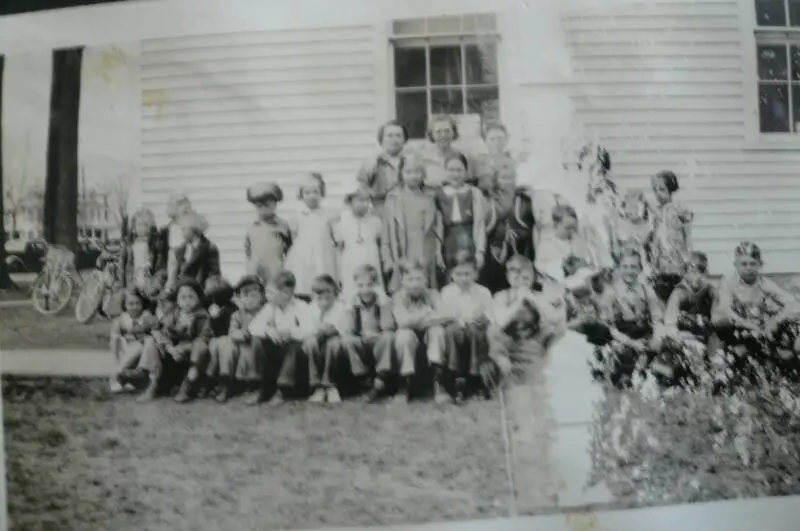
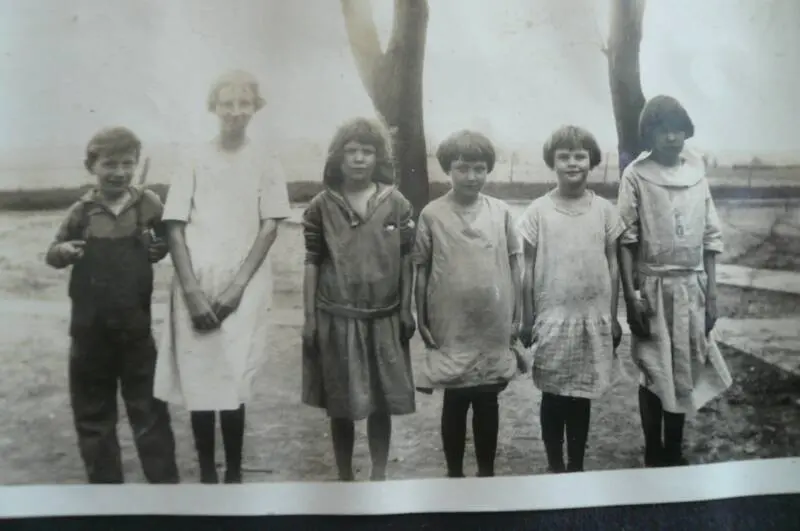
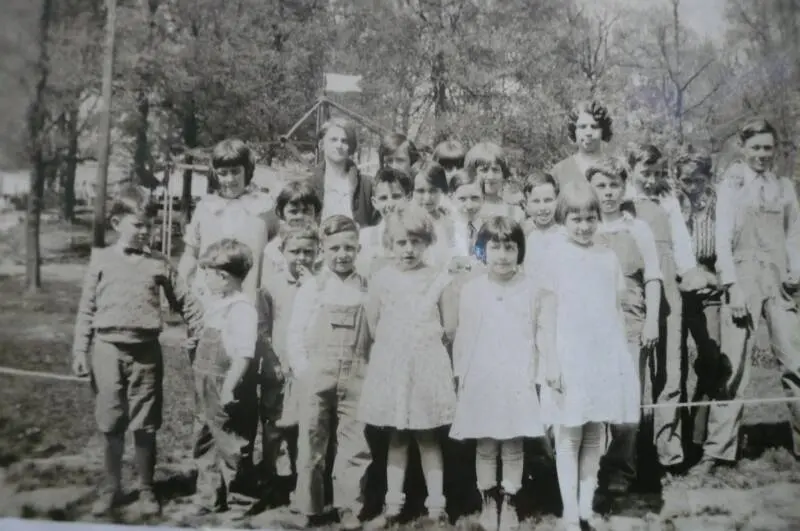
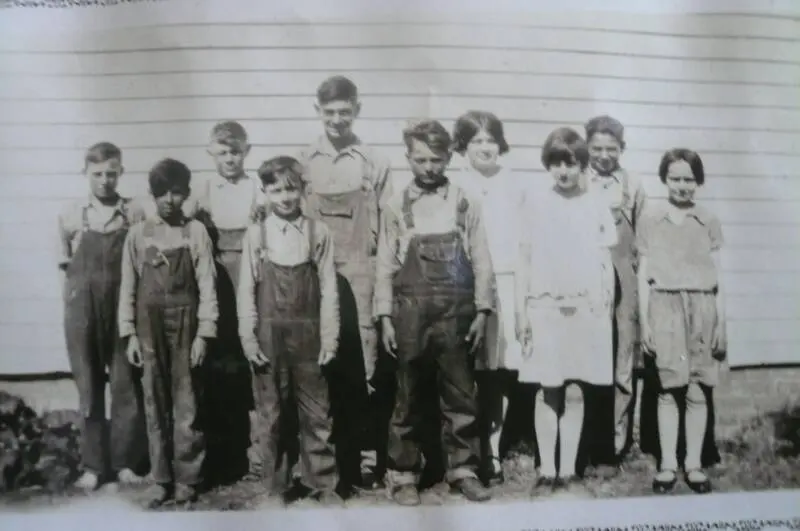
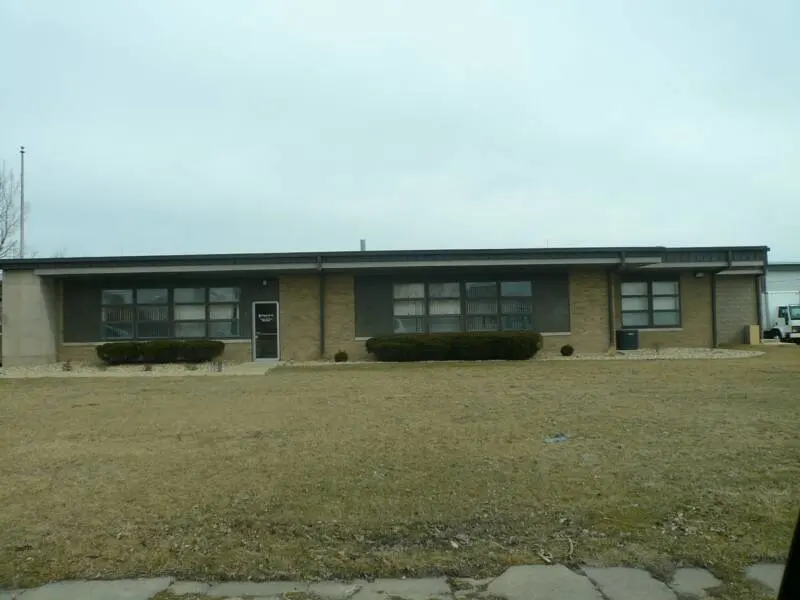
Trivoli School, District #139
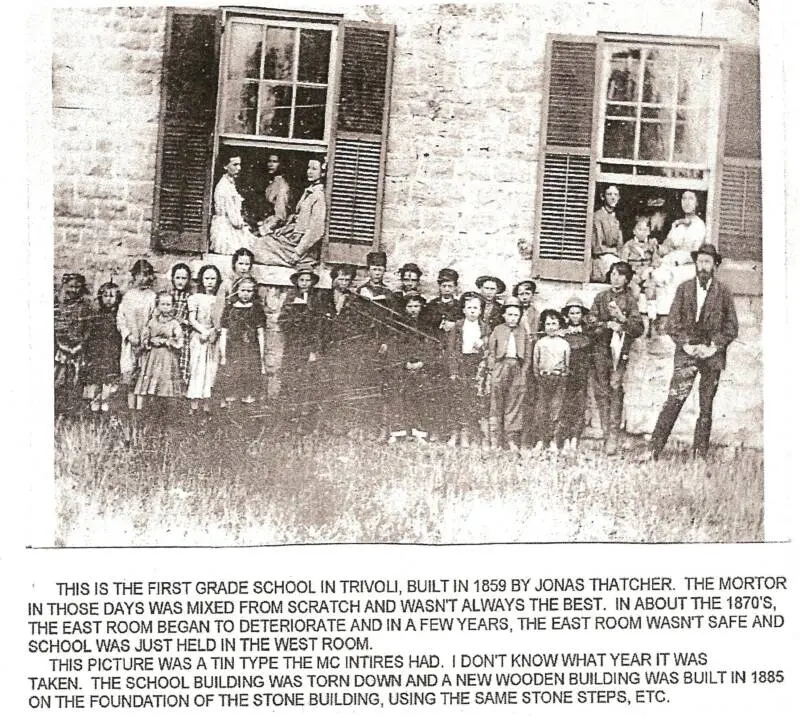
The Trivoli School history goes back to some time prior to 1854, when a school was located on Gillett’s farm one half mile west of town the exact date of this school has been lost but it probably was about 1843 or 1844. This building was in use until 1855 when a new stone building was erected on the same site and the same foundation that the building today is place upon. “Old Buck Buchanan” was running for President of the US at the same time the school was erected.
This building contained two rooms and were well filled immediately after it was completed but not for long because the Civil War came along and most of the male population, that was single, and most of these boys were in school, enlisted to help “Abe” free the slaves. Several traces of the underground railway have been uncovered within a few miles of Trivoli.
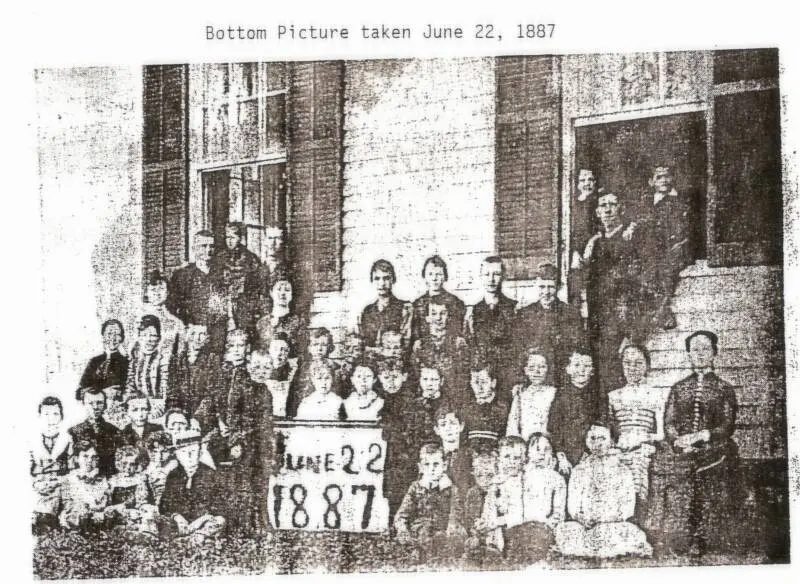
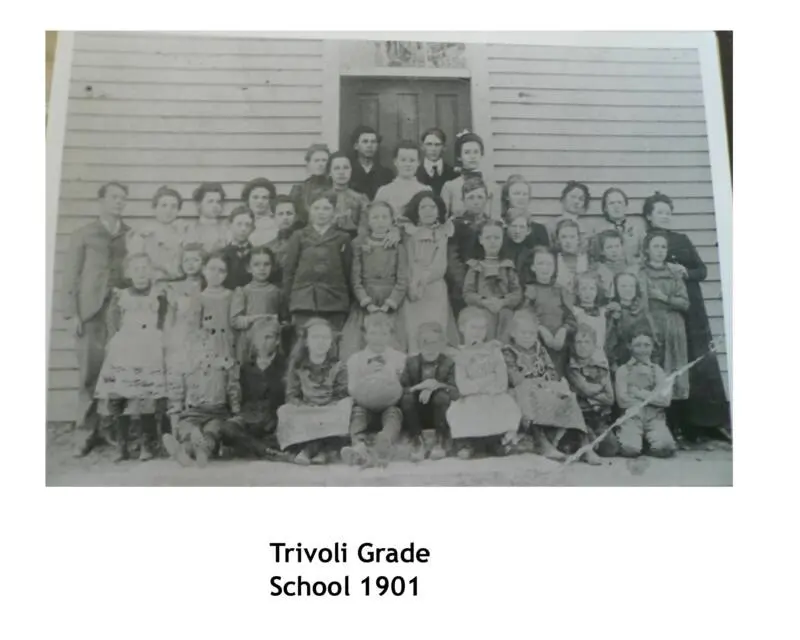
This building stood until 1884 and was in use from 6 to 9 months out of every year. At this time it was decided to build a new school. The old foundation was used and so the new school had approximately the same dimensions as the old one, but was much more modern in every respect. At the time this building was erected, the three directors got into a heated argument over whether the school should have three quarter inch siding or half inch siding. Two were in favor of the half-inch and one for the three quarter size. Majority rules so the half-inch was decided upon, but, since the one for the three quarter size did the ordering, his type was placed on the building. It is said that to this day the other two directors do not know whether a trick was played on them or not. In fact it was several years before anyone knew that anything but half inch had been put on.
Since the erection of the building there has been very few changes, none of which could be considered major. Changes have been made from time to time to meet with the requirements of the state school laws, additions have been made to the equipment and the library has been enlarged.
Entertainments have been given at different times since the beginning of history in the schoolhouse. For a number of years, the pupils gave a couple or three entertainments each year but this was discontinued about 1911. Not until Miss Taylor taught in 1917 was it attempted again. Since then most of the community gatherings and entertainments have been given at the Methodist Church which is located about a mile south of the school.
John Hayes
Some of the teachers were Sarah Gregory, Abbey McDonald, Parkhurst, Hamilton White, Eva McIntire, Lizzie Buchanan, Samuel Mock, Hopkins, Mr. and Mrs. Mapes, Markham, Mrs. Bell, Wonder, James Frazier, Mary Pettit, Ell Wood, Charles Burt, Stockwell, M.J. Hartchshaw, John M. Yost, Rufus McIntire, Albert Gove, and Young.
Helen Davis, Charles Hovenden, and Floyd Utsinger, Miss Dorothy Garlish, Leatha Folkenroth, Ruth Garber, Lois Higgs, Katherine Jaeger, Miss Wurmnest, Mrs. Dorothy V. Montgomery, Miss Irma Flickinger, were also teachers at Trivoli School.
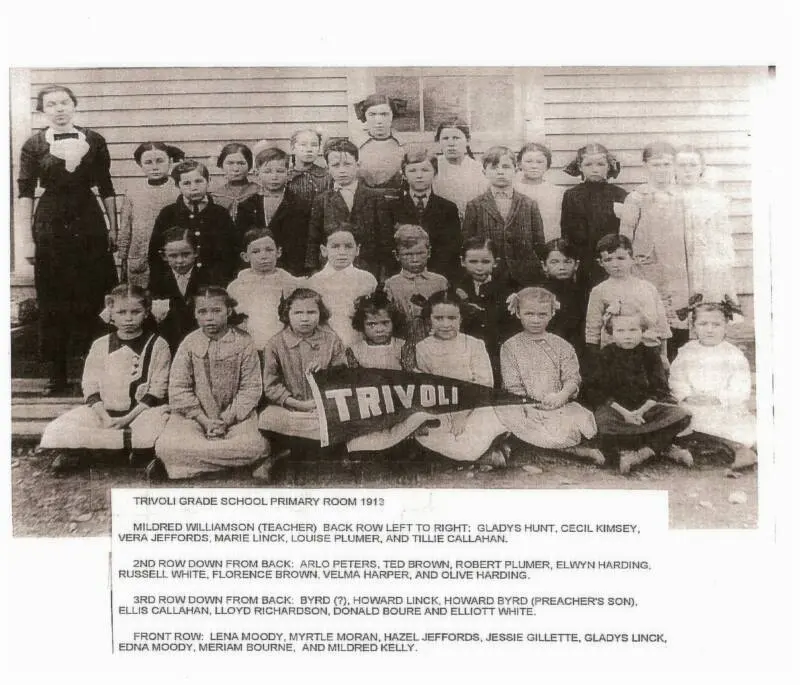
In 1953 the new Trivoli School was built. The old building was moved to the N.E. corner of the lot. The new school had 3 rooms and in 1960, an addition was made of 1 room and an office.
When the 1973-74 school term finished, the Trivoli School was closed and later sold to the B. & B. Builders. In 1995, B. & B. sold to Dependability.
Pea Ridge School, District #140
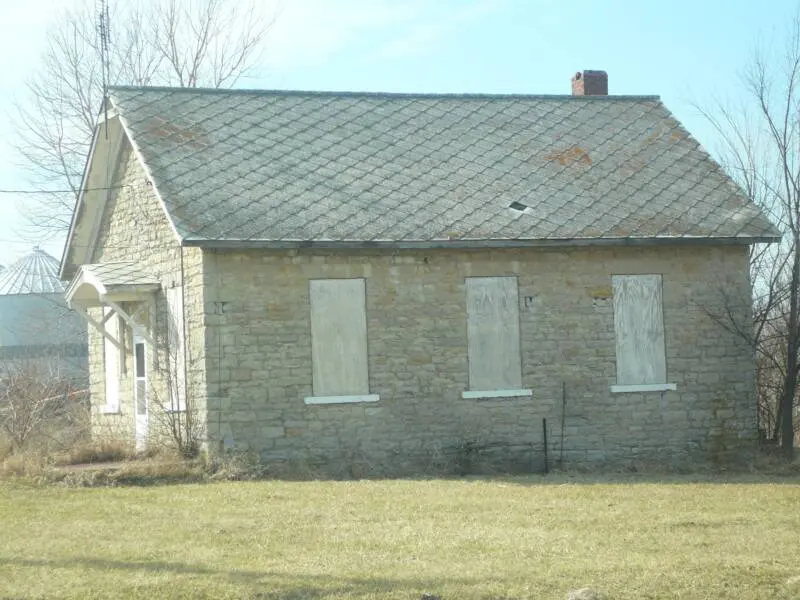
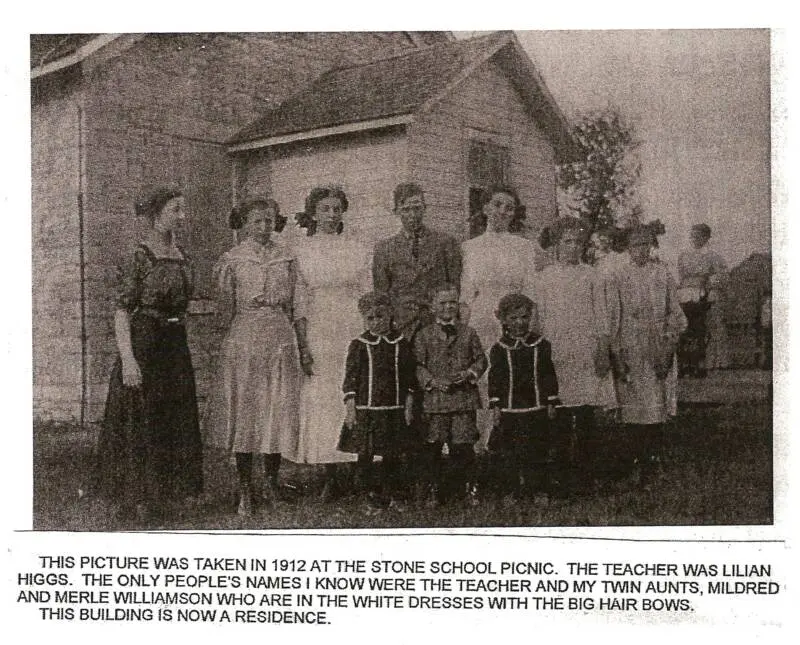
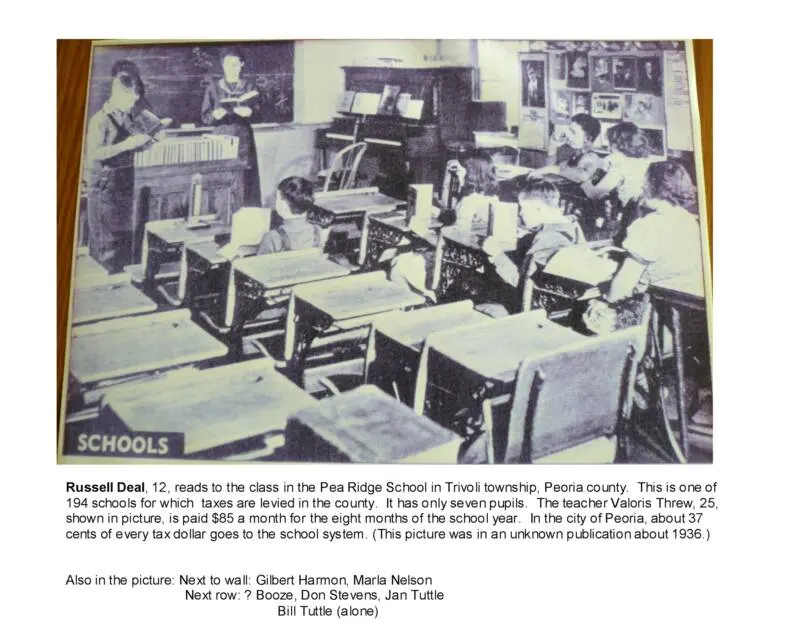
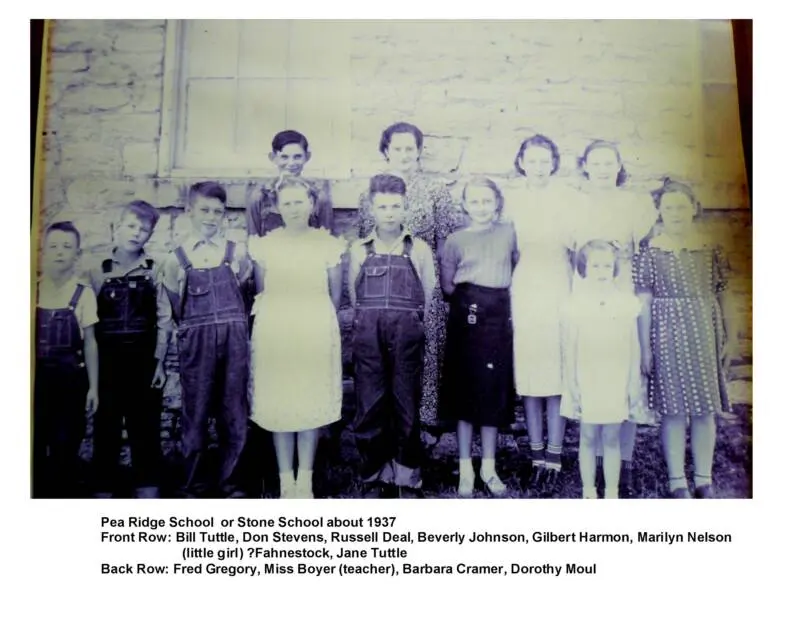
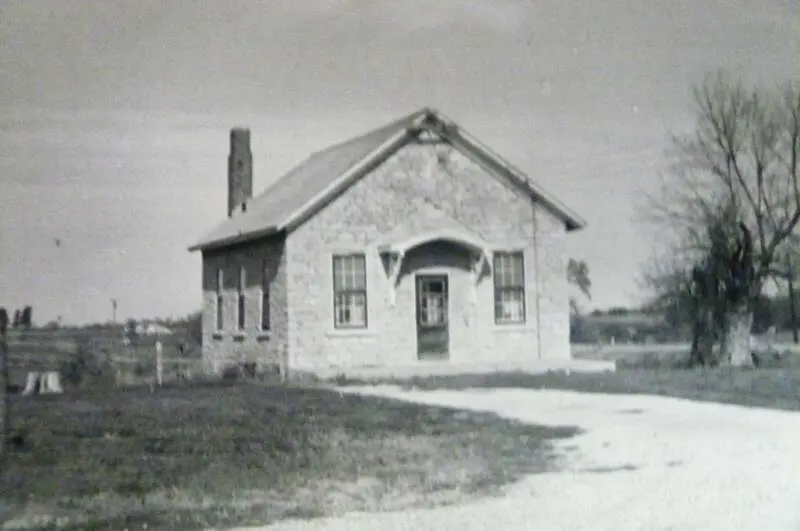
The Pea Ridge School more often called the “Stone” School has had interesting stories told of its beginning.
The building stood on a very important corner; originally, being on the trail that led to the gold fields of California and to which a rush was made immediately after 1848. On the south side of the road just opposite the schoolhouse stood a blacksmith shop where the travelers stopped to have the horses shod before continuing their westward journeys and so nearly all the time an encampment was pitched on the corner similar to our more modern tourist camps except that the tourist of those days came in covered wagons while now they drive cars. (This tiny little town was called Pea Ridge.)
Before the days of the Civil War a log school was built and used in this district. Before this time, the pupils of the neighborhood went to the little log school taught by Maria Harkness over in district 30. (Harkness Grove) The stone building, which is now being used, was built after the log building had been used for about ten years and had become too small to accommodate the large enrollment. This new building was erected about 1864 and has been in service since that time. The room was heated at first by a large stove in the center of the room and the seats were crowded around three sides of the stove. Now a modern heating and ventilating system have replaced this stove. The seats were benches in the earlier days and these have gone through a series of changes.
Double seats were place in the room shortly after the Civil War. Then when it became known that single seats were better a set of these were arranged in rows in the building, all of the same size and then later it was discovered that the younger students should have smaller seats, a graded set of seats was place as they can be found now.
The building was turned into a home in 1949 and owned by Russell Deal. The walls are two foot thick. The floors at the time it was converted into a home were within a half-inch of being perfectly level. Inside measurements are 22 x 30 feet. It is constructed of limestone keyed in.
Laura Jones
Corner of Rt 116 and Stone School Rd.
Russel Deal, his wife and their two children lived in the transformed schoolhouse for seven years. They built a new home and his hired person lived in the former school. It is now vacant.
Battle of Pea Ridge, from Wikipedia, the free encyclopedia:
The Battle of Pea Ridge (also known as Elkhorn Tavern) was a land battle of the American Civil War, fought on March 7 and March 8, 1862, at Pea Ridge in northwest Arkansas, near Bentonville. In the battle, Union Army forces led by Brig. Gen. Samuel R. Curtis defeated Confederate troops under Maj. Gen. Earl Van Dorn. The outcome of the battle essentially cemented Union control of Missouri. One notable fact of this battle is that it was one of the few in which a Confederate army outnumbered a Union army.
Downs School, District #141
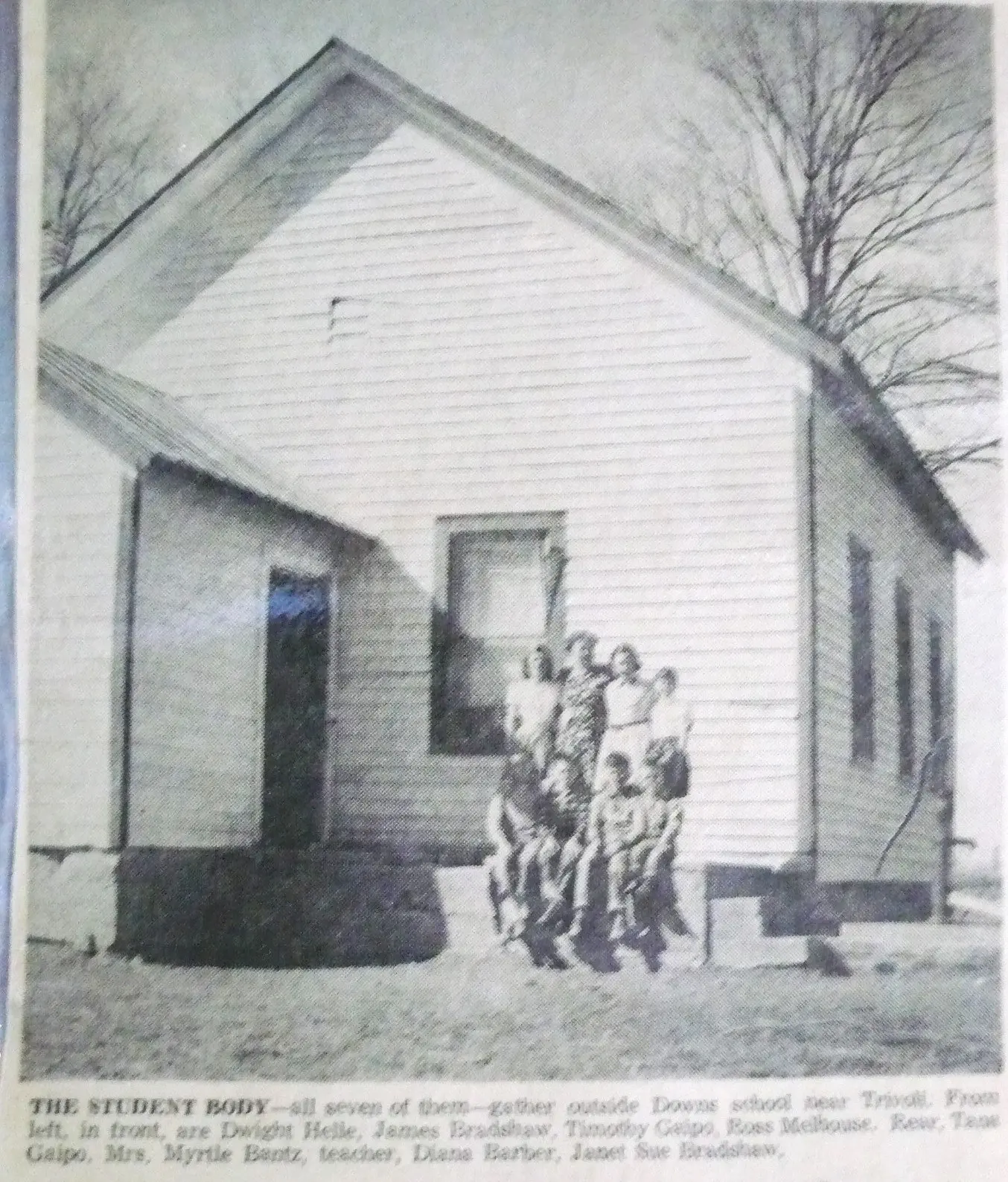
This school was torn down in the 50's and a new home was built in this location. Location Route 116 near Cramer Rd. (Downs Rd. is next Rd. after Cramer)
Teachers
- 1883 Eva Wolf
- 1884 Erra Smartman
- 1884 Lulu Hensley
- 1885 Carrie E. Snelling
- 1889 Stella Kimple
- 1890-1892 Stella Kimple
- 1892 John Gentle
- 1894 Bernice Marshall
- 1895 Mrs. A. M. Heaton
- 1895-1896 Charles H. Christy
- 1896 Katie Gegory
- 1906-07 Georgia Gartner
- 1907-08 Llewellyn Fahnestock
- 1908-09 Adrienne Marshall
- 1909-10 Charles Apple
- 1910-1911 Ernest Colvin
- 1911-12 Julia Sholl
- 1912-14 Ethel Colvin
- 1914-16 Estelle Whitney
- 1916-17 Anna Scarcliff
- 1917-19 Mary Pillman
- 1919-20 Cora Wasson
- 1925 Ella Wasson
- 1932- Alma McMasters
School on the southeast corner of Route #116 and Downs school Road. It was torn down and a house built there.
Blue School, District #142
The first school building in the district #142 of Peoria County, was located on Joel Lanes’ farm. The building was a small, of frame structure, and was painted red, thus being very typical of the school, which we have heard so much about in the song, “The Little Red Schoolhouse.” It is not known exactly when this building was first used as a school, but it is thought to have been about 1850 or the year previous to that.
About 1855, Mr. Martin Barlow, donated a strip of land, off the northwest corner of his farm, upon which was erected another small frame schoolhouse. This building was painted a bright blue thus the name was derived. This building stood about a half a mile from the first building, and almost due north of it. This building was quite small, with low ceiling and heated by a big cannon stove. The desks were the straight, long, old-fashioned kind, common to the old school houses.
Those were the days of singing schools and spelling matches and the Blue School had many of these contests, with many more victories to their credit, than losses.
In 1891 the first Blue School building was moved to a nearby farm to serve as an implement shed, and a more modern structure was erected in its place. This building had a large heating stove in the center of the room, and the seats were of the single variety. About 1913, the stove was discarded for a modern, jacketed heating system and a ventilating system endorsed by the state school inspectors. Since that time minor changes have been made to keep the school in accordance with regulations. The school has a nice library; modern maps and a complete dictionary and reference set.
The Blue School was on the southeast corner of Wasson Road and Downs School Rd. It was built into a home and is now owned by Jeff Huffman.
Trivoli Center School, District #143
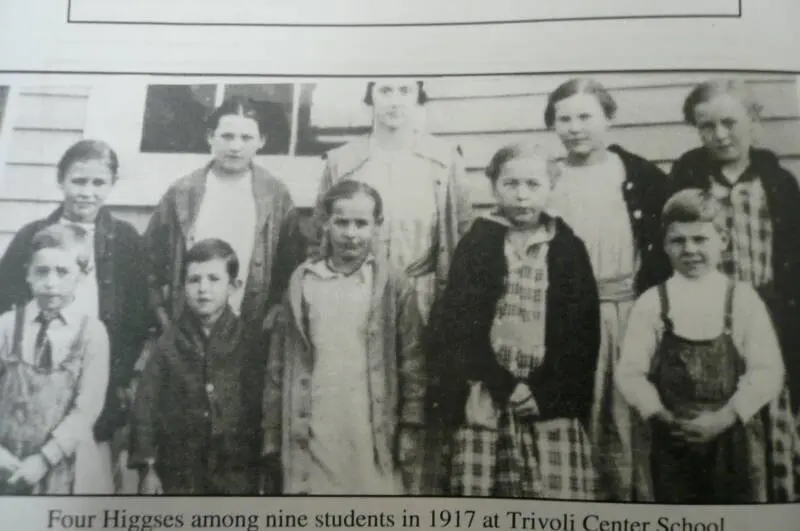
COMMENT regarding Trivoli Center school which my 2xgreat-grandfather helped build. I was happy to see the two photos of the school and I was happy they were selected from two Higgs' family histories which I authored. I can identify several people. The photo with ten [1917-1918 school year]includes Paul Higgs[left,row 1,grade one], Gerald Higgs[next to Paul][grade one][my father]; Fern Higgs[4th from left row one]. In the back center is Ethel Saunders[teacher] and back right is Mildred Higgs. The other Center school photo is circa 1912 and the boy on the right is Clifton Higgs and not Charles Higgs. The two young girls on the left would be Fern and Mildred Higgs. Thank you. It is a great collection Roger Higgs Nov. 2011
The foundation stones of the first school building can be seen directly east of the present building. The schoolhouse now in use was built for a Grange hall and was used for political meetings, dances, debates, and other social gatherings. It stood forty rods south and one hundred-fifty rods west of its present location. In the winter of 1881 it was bought by the Center District and moved.
The entrance door was at the north in this new building, where the first building had had its door opening toward the south. The entrance was again changed to southern end of the building in 1910, leaving the high stone foundation exposed to the north wind. In the summer 1925, dirt was graded up around the foundation, and in 1930 a new floor was laid.
In the early days there was a winter term of five or six months. The month of March would be a vacation with a month or two of summer school following.
There have been no records saved concerning the teachers who have taught here or the business transactions of this school.
John Hayes
The Center School was located 2 miles south of the Pea Ridge/Stone School on the east side of South Stone School Road. After the school was closed, the schoolhouse was sold to Martin Gilpin, who tore it down and used the lumber to build his house a half mile east of Trivoli Corners.
Bickford School, District #144
The Bickford School, District #144 of Peoria was one of the early schools of Trivoli Township. The land on which the little old frame building was erected was donated by Mr. Bickford seventy years ago. This building stood on the west side of the main road, one and one-half mile south of Trivoli. The seats were hand made benches which were nailed to the wall. One of these old style seats has been saved by Ray Anderson, of the community and has kept to be shown to the visitors as a curiosity. In the early days, the school was a source and center of amusement. The old time Spellin’ Bees between Bickford and Penn Ridge, caused more rivalry and excitement than does the basketball games of the modern time. Nobody ever missed one of these affairs and the winner was considered quite a hero.
In 1889, it was decided that the old school was not adequate for the times so a new building was discussed. They also decided that while they were building a new school, they should get a new site that was larger and had some shade. The school had never been able to get a well at their present location either and with all these points in mind, the directors leased a piece of ground across the road which was about one acre, was surrounded by trees, and a well on it. This land is to remain property of the school district as long as school is kept open but should it be abandoned, the land goes back to the Mansfield estate from whence it was secured. A permanent group very well settles the neighborhood. Some of the people who have attended the school in the last 15 years had parents and grandparents who attended the school before them.
The school is somewhat out of date now but is in a good serviceable state of repair. Numerous little changes have been made from time to time to keep as nearly up-to-date as possible.
John Hayes
- Merle Williamson Stewart teacher sometime between 1915 and 1915
- Mabe McDonald Sipp
- Wilda Baggs Huffman 1934
Mrs. Mildred Rice was the last teacher in 1948.
The graduates that year were Cliff Johns, Von Slone, and Emma Lou Taylor.
The School closed and the building torn down.
Concord School, District #145
A big thank you to Mr. and Mrs. Balagna for letting me visit and tour this wonderful old schoolhouse and for sharing pictures from former students.
The History of Concord School District #145 of Peoria County, is rather indefinite prior to 1882. A school was held at least 10 years before this time and probably dates back even further than this, but due to the fact that all the old records were in the home of William Lane when his home burned in 1911, the facts have been lost. This along with the fact that none of the old settlers or their families are living who know anything about the old school, makes it impossible to provide a history.
In 1882, the building, which is now in use, was erected. The number of pupils at that time averages more than fifty. The school was built very modern at the time and of a good grade of material and so today it is in good shape and looks good for many more years. In 1917, the school was remodeled to meet the requirements of the sanitation law. Other minor changes and improvements have been made from time to time and additions have been made to the equipment so that while the building is old, the children in attendance are well provided for. The enrollment for the last 15 years has been less than 20 pupils.
John Hayes
Concord School, which was on Section 29, was bought by Dean Utsinger and moved to his property. It was later moved to the farm of Mrs. Fred Balagna and has lovingly been maintained by Mr. and Mrs. Balagna. Since it had never been remodeled into a home, the school has the original lights, floors, and chalkboard. They have an open house every year and many former students and children of former students attend.
Brunswick School, District #146
About three miles south of Cramers and one mile east, Brunswick School District #146 of Peoria County, is located on a little plot near the Brunswick church. The people of the district organized the school about 1848 and held the sessions in the church which was erected in 1845. This place served for about 18 years and then the schoolhouse was built which is now in use. The construction of this building was started before the beginning of the Civil War.
The social affairs of the neighborhood have always been interesting and date from earliest times up to the present. The first gatherings were at the church for services. Then they started to have church suppers and after the school had been opened in the church, the suppers turned into spelling bees and the ladies had a sewing circle. Later entertainments and box suppers were given and even now in 1930, an occasional box supper, entertainment, or sewing circle gathering, takes place. Maybe one of the reasons that the district has held out longer in a socially connected way is due to the fact that there are no towns very close. This is aided by the fact that the district is connected by a threshing run also, so with the church, the school, and the threshing run for natural connections and the greater distance from town, the people resemble more the rural settlement that we read about than others of the county.
John Hayes
Pennsylvania Ridge School, District #147
In the early days when our state was being settled by people from the east, a number of families leaving their home and friends in Pennsylvania, started westward seeking new homes and wealth, which they thought they could find the new country. These people came as far as Illinois and settled in what is now Trivoli Township. Some of these pioneers are still represented in the district by their grandchildren.
As soon as this little settlement began to thrive, the people felt the need of a school for their children in which they might learn the three “R’s”. This first school was built on the site, which was later, the Lutheran church. It was a rude frame building with slab seats extending around the room upon which the children sit to study. There were as many as sixty pupils in the school in those early days. These pupils ranged in age from 6 to 20 year.
This building was replaced by another in the year of 1860. This building was built further east than the first. The old school was moved to a nearby farm where it was used as a barn. In 1861, the new building was moved to the site of the present school. The trees were very thick about the school and the teacher had the older boys clear out the brush so that it didn’t look as if they were in the wilderness. The new building was of a frame structure and had several rows of double seats in it. The blackboard was made by painting a portion of the wall black. The building was heated by a large cannon stove, which stood in the center of the room.
In 1884 the building, which is being used now, was erected. It has never been standard school but has some very good equipment and is a great improvement over the former school. The school has five rows of single seats, a large modern heating and ventilating system, a large library, two sets of encyclopedia, four slate blackboards, and two complete sets of maps.
The school has been remodeled at different times to comply with the school laws. The district has many very interested members in its midst and always has had, as can be shown by the large spelling bees which they held for years and which everyone turned out. They held contest with neighboring schools and rivalry was very keen. Today these meetings have become extinct but the same interest is manifest by the district in their community club meetings.
Penn Ridge School on Section 25, was located on the north west corner of Smithville Road and South Texas Rd. After it was closed it was made into a home.
White School, District #148
A number of years ago, the children of this community attended school in a Grange Hall. Later this place was given over for the purpose of erecting a schoolhouse. Still later the school site was changed, leaving a distance of three miles between the two educational centers. This brought before the people, a problem, as some of the children would have four and one-half miles to go to school. This problem was met and solved by the people. They wanted their children to go to school. They knew they could not go when the roads were bad and the weather was unfavorable. Yet many meetings were needed to decide what was to be done. A small bit of land was purchased and a building erected. The exact date and records cannot be found but it was about 1850.
This small building served as a school called District 10 until the people again faced the problem of better conditions. This we have the records. On Monday, the seventh day of September 1894, between the hours of three o’clock P. M. and six o’clock P. M., an election was held in school district #10, Township Eight North, Range Five East. The issues to be voted on were: (1) whether or not to build a new schoolhouse, and to levy a tax for that purpose; (2) if the vote was in favor of a new school then the person was to vote upon the limit of the cost, whether the directors were to borrow money or to raise it by taxes; also (3) to vote a site for the schoolhouse. Out of fourteen voters, all voted for the building, ten voted for $1,000, two voted for $900, one $800, and one for $700.
Result, one thousand dollars was to be the limit of the cost of the building. The school site was not changed. In 1878, the building was erected it still stands, it is now called White School, District #128.
The records show that the attendance has ranged from twenty-four to the present number of ten. We are very glad to have our school here. It is a part of two other districts and we have been in danger of losing it but we hope that it will remain here for a long time.
From the time of the inadequate Grange Hall to our building of average rural school type, we can easily see that our forefathers rated education first, that they faced their problems bravely, and that they solved them to give their children an education and we thank them for it.
White School was Section 21, about a quarter of a mile south of Wasson Road. After the school was closed, it was sold to Ida Wasson, mother Ella Wasson and was converted into a corn crib and in later years was torn down.
Oak Grove School, District #149
Oak Grove School, District 149 of Peoria County was organized in 1860. Before this time the children of the district went to Penn Ridge and Brunswick School.
The first school building was erected in 1861 and the first teacher, Mary Seiber, named it Mendenhall, however the present name very soon was acquired and has been used ever since.
The first building was small and very well built for its time. The building was never painted nor was any of the furniture which was place in it. This was all very plain and uncomfortable. A small cannon stove furnished the heat from the center of the room. The first salary paid was two dollars a week and board.
In 1895 the building was torn down and new one put in its place. The new building is about twenty by thirty and it has been newly equipped inside so as to be modern, several times since it was erected. The building contains a Smith room furnace and ventilator, single seats of five different sizes and a very comfortable teacher’s desk and chair. The library contains two hundred volumes and include in them, which is a reference set and a large dictionary. The further equipment includes an organ, maps, globe, etc.
A big thank you to Shirley Harmon for the pictures. She was paid $300 a month in 1951 for her first teaching job at Little Oak Grove.
The schools today
Nearly every line in the chart at the top of this page ends in #324, and that number is the key to where Trivoli's children went. Farmington East Unit District 324 was formed out of five towns, Smithville, Hanna City, Farmington, Trivoli and Middle Grove; the district's own high school history dates it to 1968. In 1986 Farmington East and Yates City combined into the present Farmington Central Community Unit School District 265, and the two high schools were merged on July 1, 1987. Trivoli is in District 265 today, and its older students attend Farmington Central High School, whose mascot is the Farmer.
The village is small. Trivoli, on Illinois Route 116 just east of Farmington, first appeared as a census-designated place in 2020 with 385 people. The township counted 1,021 in the 2010 census.
Trivoli Grade School itself held on longer than the country schools around it. The three-room school of 1953, enlarged in 1960, closed when the 1973-74 term ended and went to private owners. The 1884 frame building that had stood on the old stone foundation was moved to a corner of the lot and later torn down.
For buildings, Trivoli Township has done better than most. The 1864 limestone Pea Ridge or Stone School, with its two-foot walls, has been a house since 1949 and was in the Deal family in 2009. The Blue School and the Penn Ridge School were made into homes. Best of all, the 1882 Concord School was moved to the Balagna farm and never remodeled, so it keeps its original lights, floors and chalkboard, and the family has opened it to former students once a year.
Common questions
What school district serves Trivoli, Illinois today?
Trivoli is in Farmington Central Community Unit School District 265. Most Trivoli Township country schools went to unit district #324 by 1969, and that district had been formed from Smithville, Hanna City, Farmington, Trivoli and Middle Grove. In 1986 it merged with Yates City to create District 265, and the high schools combined on July 1, 1987.
Where was the Stone School or Pea Ridge School near Trivoli?
The Pea Ridge School, District 140, stood at the corner of Route 116 and Stone School Road, on an old trail used during the California gold rush. Built of keyed limestone about 1864 with walls two feet thick, it measures 22 by 30 feet inside. Russell Deal turned it into a home in 1949.
Is the Concord one-room school near Trivoli still standing?
Concord School, District 145, was built in 1882 and is still standing. Dean Utsinger bought it and moved it to his property, and it was later moved to the farm of Mrs. Fred Balagna. Because it was never remodeled into a home, it keeps its original lights, floors and chalkboard, and the family has held a yearly open house.
When did Trivoli Grade School close?
The new Trivoli School was built in 1953 with three rooms, and a fourth room and an office were added in 1960. It closed when the 1973-74 school term finished and was later sold to B. and B. Builders, who sold it to Dependability in 1995. Earlier Trivoli schools had stood on the same lot since the stone building of 1855.
How many one-room schools were in Trivoli Township?
The 1945 chart lists eleven districts in Trivoli Township: Trivoli #139, Pea Ridge #140, Downs #141, Blue #142, Trivoli Center #143, Bickford #144, Concord #145, Brunswick #146, Pennsylvania Ridge #147, White #148 and Oak Grove #149. Several went to Fulton County #1 in 1951 or 1959 before nearly all joined #324 in 1969.