1945 Schools and Later Consolidations
- #79 Mooney School: 1950 #34 Union; 1954 #315 Union CC; 1968 #321 IVC Illinois Valley Central (Chillicothe)
- #80 Rice School: 1953 #302 Dunlap CC & #313 Edelstein CC; 1969 part #326 Princeville and #323 Dunlap
- #81 Banner School: 1953 #302 Dunlap CC (1945), #303 Wilder-Waite (1946), #306 Mossville CC (1947); 1968 part #321 IVC; 1969 part #323 Dunlap
- #82 Boylan School: 1947 #306 Mossville; 1968 #321 IVC
- #83 Mossville School: 1947 #306 Mossville CC; 1968 #321 IVC
- #84 Alta School: 1946 #303 Wilder-Waite; 1969 #323 Dunlap
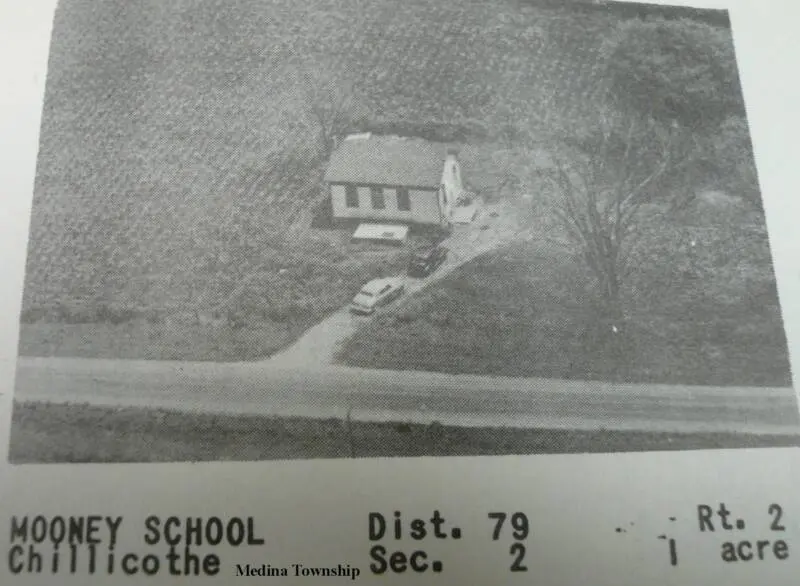
Mooney School, District Number 79
The history of Mooney School district #79 begins after the first school law in 1825, when the County Commissioners Court created a large school district in the northeastern part of Peoria County, consisting of the townships of Medina, Rome, Hallock, and Chillicothe. In 1825, this district was divided, the northern half being given the name of LaSalle District #1. It was this district in a primitive log cabin built on the Joe Hick’s farm in 1836, that the pioneer pupils of Mooney settlement received their early education. Private schools held in the dwelling houses of the settlers were the summer schools, beginning the middle of May and closing in early August. The teacher of the summer school was a woman who boarded around among the homes of the patrons and received a subscribed salary.
In 1852, two years after township organization, a small frame school house was erected on the Thomas B. Reed farm in Section 3, Medina township. It was situated in the lane leading up to the Reed home and about half way between the corners and the homestead. When this site was chosen the old Galena road ran past the school but later this road was changed.
The seats in this school were long benches and the desk on which the writing was done, was a broad plank hinged to the wall. This same plank when not being used for writing was swung down and used as the back rest for the seats. The front seats had no back at all and the floor was full of cracks through which water entered and froze, never thawing from fall to spring. In 1864 the records show that the district had 91 pupils enrolled.
On June 30, 1866, the voters in District #1 voted to build a new schoolhouse and then remove the old school house site to the southwest corner of the northwest quarter of section two of Medina at that time. The building of the school house was let to Barton Chase Palmer for $1500.00 and the old school building sold to him for $31.00.
October 5th of the same year, the last payment on the building was made and Mr. Palmer, the carpenter teacher, began the first term and followed it by teaching six more years in the same school. His salary was $50.00 per month.
This school building has been in use for over 62 years and is in a good state of repair at the present time. The entrance hall is toward the south and extends the entire width of the building. Two doors from the hall enter into the schoolroom, which is 22 feet by 23 feet. The room is well heated and ventilated, having a room furnace, a fresh air duct and a foul air register. There is plenty of good blackboard in the school and a library of 170 volumes.
Until 1897 the school went under the name of the Reed School but during the incumbency of J.J. Robertson, County Superintendent of Schools, the name was changed to the present name of Mooney School. The reason being given at the time was that the Mooney families in the neighborhood greatly outnumbered the Reed families so to them should go the honor of the name.
Because of the ideal situation, the country about Mooney settlement has been called Pleasant land. To its south is the old historic Mooney Mallen farm. Here was located the LaSalle post office named Helena after Squire Mooney’s wife.
The school building at different times has had many uses. Once upon a time there was a spelling club formed which met weekly, then when this got tiresome, a singing school was started and when the community got tired of singing, a writing class was organized and in later years the school has been used for the Medina Band practice.
J. A. Hayes, County Superintendent of Schools, 1940. Copied with permission from current Superintendent’s office, 2008.
Rice School, District Number 80
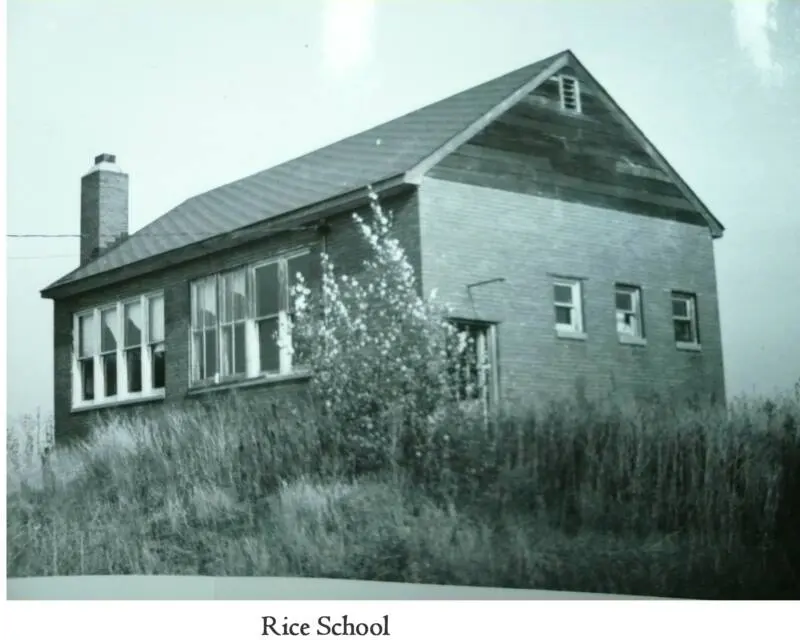
The history of the Rice School district number 80 of Peoria County takes its beginning as a free school in 1855. A plot of ground approximately about one acre was leased to the school district by Mr. Hargadine, with the understanding that as long as the plot should be used for school purposes the district could have it but should the school ever be closed, the land would go back to his estate. Previous to the school in 1855, subscription schools were held in different homes and at two different times, log cabins which were not being used, were given over to the community for a place to hold school. The teachers received very little pay and boarded with the different families in the community who had children in the school. These schools were not satisfactory because of inadequate room and equipment, and too many pupils could not attend because the parents had no money to help pay the teacher.
In 1855 when the building was erected it was very modern. Since that time the school board has had many things done to the building in the way of keeping it up to date, but it is much like the boy’s jack knife which had seven new blades and six new handles, it was still the same old jack knife. The same holds true with the school building: the inside has been made over to conform to state regulations: the outside has had an entry built on and new doors have been added. The school has been changed to meet the requirements of the sanitation law. In the present days the people in the community wonder how the school could have ever accommodated seventy-one students as it once did. In those days they had benches around the wall and the pupils were crowded in. The teachers wonder how one school master could teach so many classes. They had a smaller curriculum than now and in pressing instances, the older pupils heard the younger students recite. Now the school is equipped with seats and the teacher hears all of the recitations herself, and follows a scheduled curriculum given her by the County Superintendent of Schools.
J. A. Hayes, County Superintendent of Schools, 1940. Copied with permission from current Superintendent’s office.
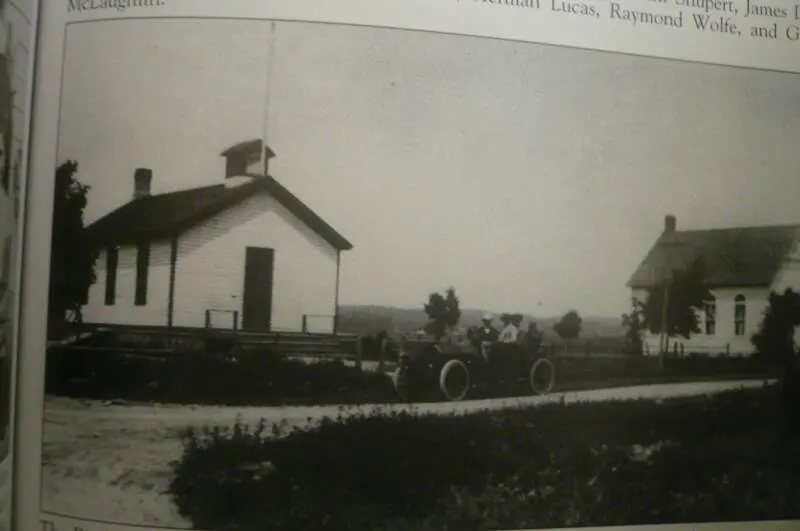
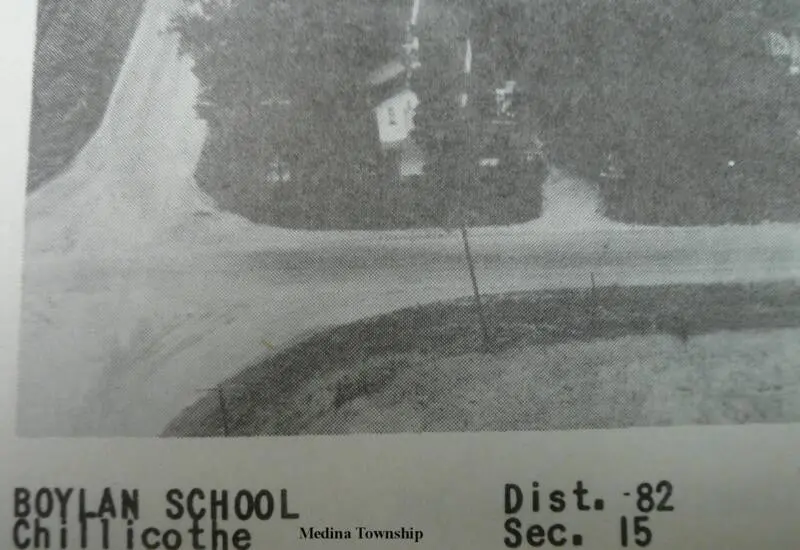
Boylan School, District #82
The Boylan School District was organized about 185_. At that time they had three terms of school, fall and spring terms of four months each, and a summer term which lasted about two months.
The first schoolhouse was built of logs with a puncheon floor. The benches were split logs fastened to the walls of the building. A wood stove placed in the middle of the floor heated the room. Pieces of boards painted black served as blackboards. This log school was built about 1840, and stood a little less than one half mile west of the present site.
The second schoolhouse was built in 1855 on the southeast corner of the northwest quarter section of Section 15. The land on which it was built was given the district by John Sturm, a pioneer of this neighborhood. The seats and desks were double and a common bench served as a recitation bench. A wood stove in the middle of the room heated the school. The blackboards were painted upon the walls.
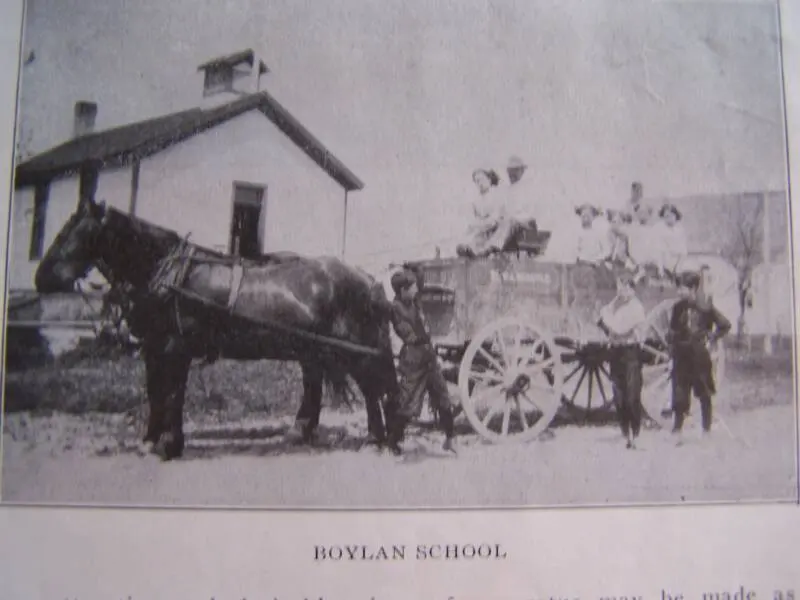
The present schoolhouse was built on the same site in 1882. It was a one-room frame building with single seats. When first built it was heated by a stove. The light came from six windows, three on each side of the room.
The social organizations in this district were few in early times. Most of the gatherings were held in Mossville, a small town south of here. A church was built beside the schoolhouse in 1897. Previous to this time Sunday School and church were held in the schoolhouse. Occasionally, the people of the community held a spelling bee, and later Dr. A. Keith taught a singing school at the schoolhouse in the evenings.
In 19__ the school board sponsored the digging of a basement under the schoolhouse and later installed a furnace. The present heating system has been in use for two years. They also put in new slate blackboards. In 1910 the three windows on the south side were replaced with seven windows.
J. A. Hayes, County Superintendent of Schools, 1940. Copied with permission from current Superintendent’s office, 2008.
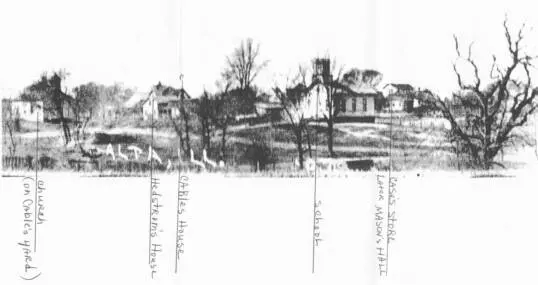
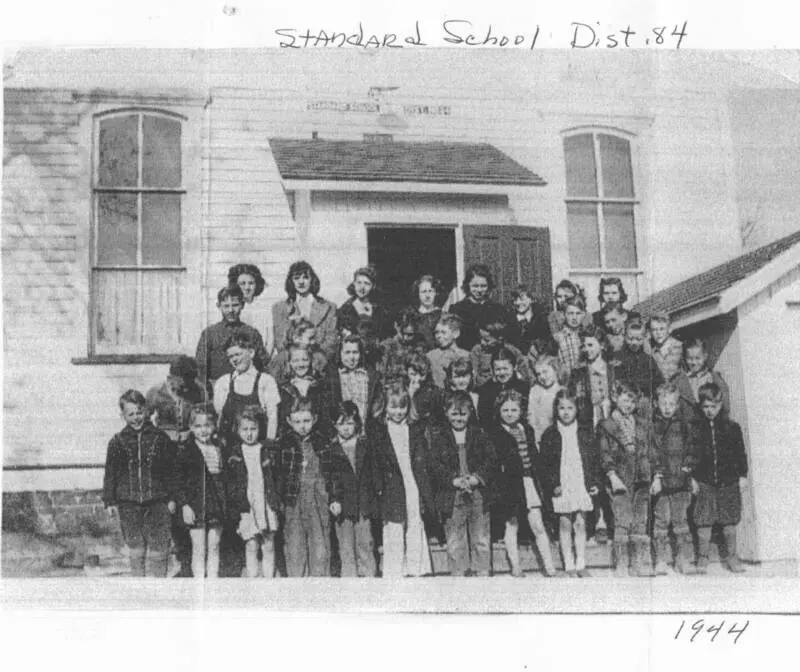
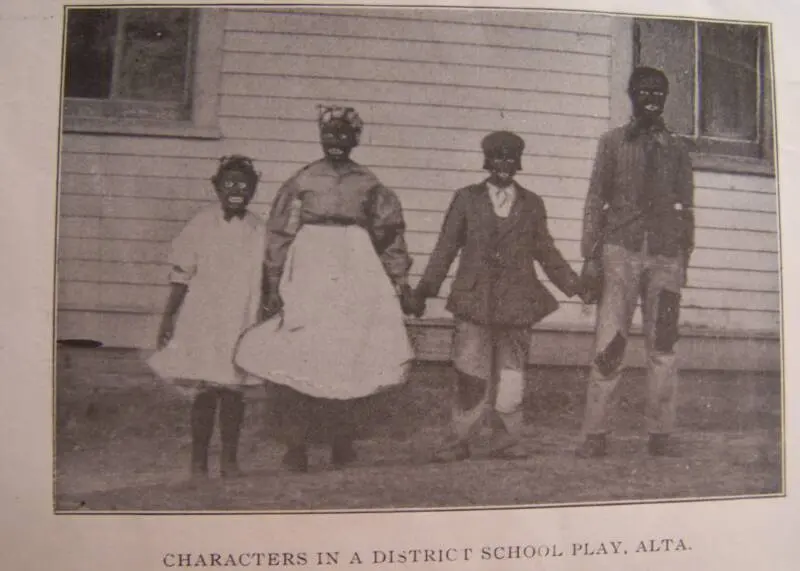
Alta School, District Number 84
The first schoolhouse in district 84 of Peoria County was a frame building, situated just south where I. J. Case’s house was located in 1918. It was known as District Number 6 at that time. The first school was held about 1858 and the first teacher was Helen Partridge, who, as was the custom of these times, boarded with each one of the families who had children in the school and stayed over the weekends with the directors.
The Alta School is now about one quarter of a mile south of where the old schoolhouse stood. Mr. Hanson, Mr. L. Wilder, and I. J. Case who laid out the town of Alta in 1873 donated the site for the new school. In the year of 1877 a meeting was called for the voters in district number six to vote on levying a tax to build a new schoolhouse. The measure was passed and the school board elected, borrowed $1,200.00 from Miss Amy Silliman in the form of three bonds.
Contractor John Horine erected the building in the summer of 1877, for $975.00. The new building was the most prominent feature of the town and at that time was the best building of its kind in Medina Township. The old school building was sold and moved to Alta where it was used for many years as a dwelling house.
The first few years that the new building was in use, the terms were divided up so as to make three a year. The winter term, usually taught by a man, and the spring and fall terms taught by a woman.
School has been held each year in the Alta School since 1877, but no record has been kept of the salaries paid except for the last few years. The salary at the time the building was built, was about $30.00 per month. The more recent salaries have been $100.00 a month or more.
In the year of 1918, the condition of the school and school yard was found satisfactory and the equipment met the requirements of the state regulations, so the school became one of the standard mediums of education in the county.
Written in the 1930s
In 1945 the Alta School was destroyed by fire. The students completed their school year in the nearby Masonic Hall in Alta. The following year Alta School and 4 other schools consolidated and became Wilder-Waite School District 303. Classes were then held at Glendale, Orange Prairie, and the old Grange Hall (across from Orange School) until the new building was completed for the school year 1948-1949.
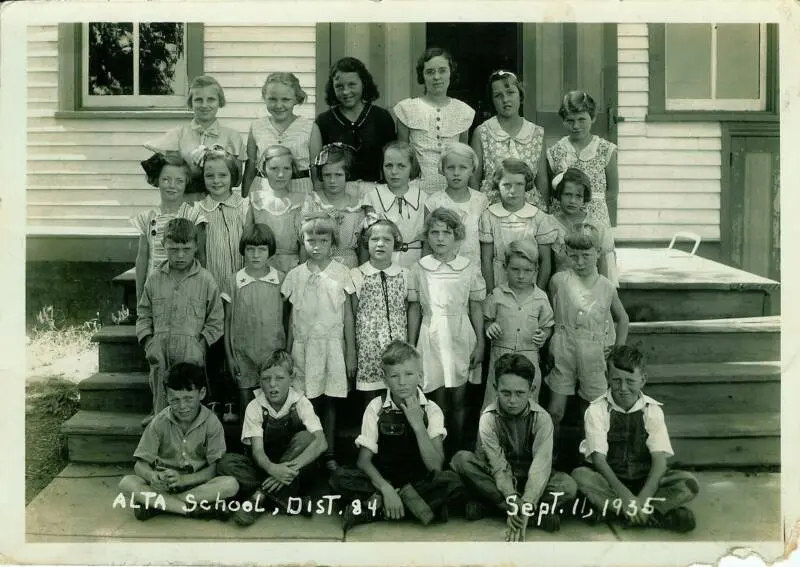
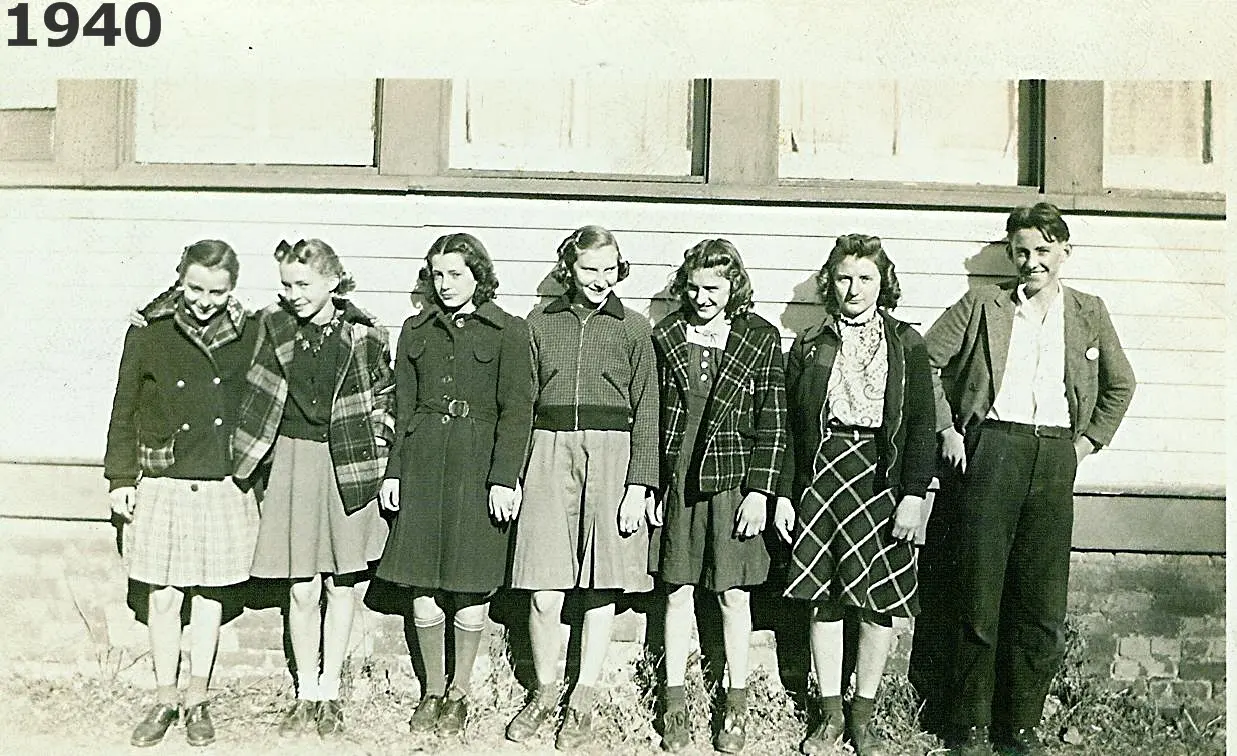
- Row 1: ____, ____, ____, ____, ____
- Row 2: Walt Davis, Betty Starnes, Jean Carlson, Louise Bevency, Bob Starnes, ____
- Row 3: Helen Metzger, Ann Bevency, Hazel Brown, Freida Metzger, ____, Lois Carlson, Georgia Starnes
- Row 4: Virginia Worsfold, Helen Luethow (?), Ruth Davis, Mrs. Castel, MaryAnn Davis
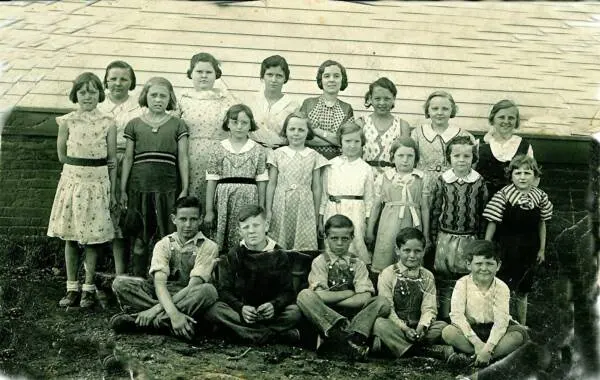
- Front Row: ____, ____, ____, ____, ____ (Bredmore)
- Row 2: ____, ____, ____, Hazel Garmer, Georgia Starnes, Ann Bevency (?), Betty Davis
- Row 3: Vivian ?, Gladys Starnes, ____, Mrs. Castell, Ruth Davis, ____, Virginia Worsfield
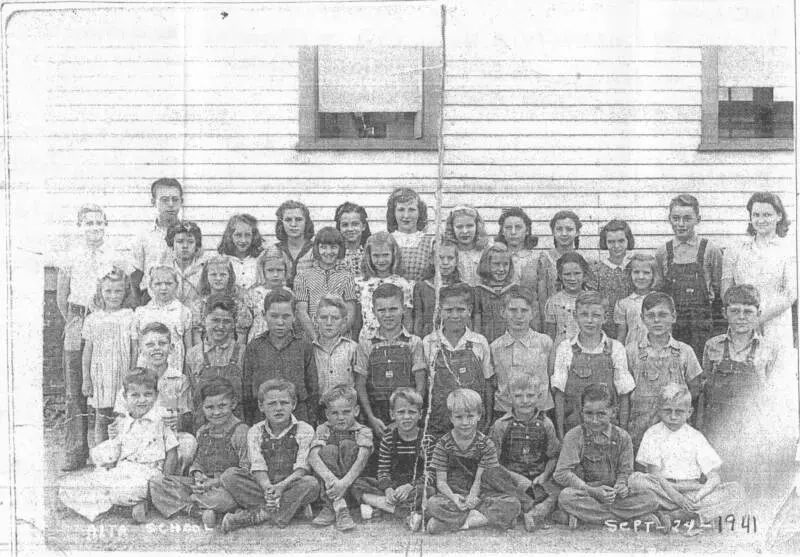
- Row 1: Hollis Allen, Melvin Hohulin, Charles Predmore, ____, Ronnie Wabel, Hannah Allen, ____, Vernon Hohulin, Merle Carr
- Row 2: Gerald Lynch, Alphie Hohulin, Herbert Southey, Bobby Starnes, Jack Gepp, Kenneth Lynch, Frederick Bevency, Edwin Felder, Ralph Carr, Hal Predmore
- Row 3: Katherine Baer, Frances Bevency, Shirley Leuthold, Virginia Metzer, Margaret Baer, Lamae Leuthold, Doris Southey, Donna Southey, Judith Hinshaw, Wilma Baer
- Row 4: Junior Rumerfield, Glenn Carr, Virginia Allen, Don Baer, Betty Reynolds, Rosemary Adami, Edna Baer, Eunice Leuthold, Shirley Starnes, Louise Bevency, Alice Metzger, Martin Hohulin
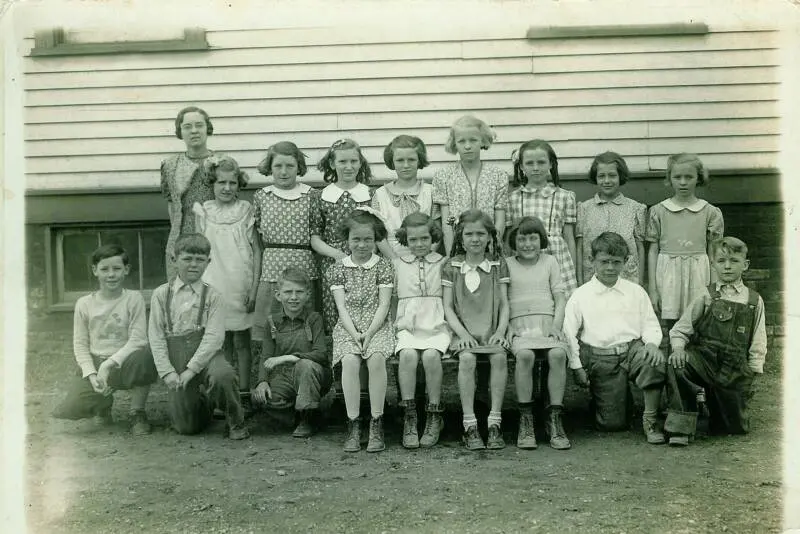
- Row 1: ____, ____, Fred Bevency, Jean Cable, ____, Louise Bevency, Shirley Starnes, ? Cable, Bob Starnes
- Row 2: Mrs. Castel, Betty Starnes, Georgia Starnes, Hazel Garmer, Freida Metzer, Lois Carlson, Ann Bevency, Jean Carlson
Banner School
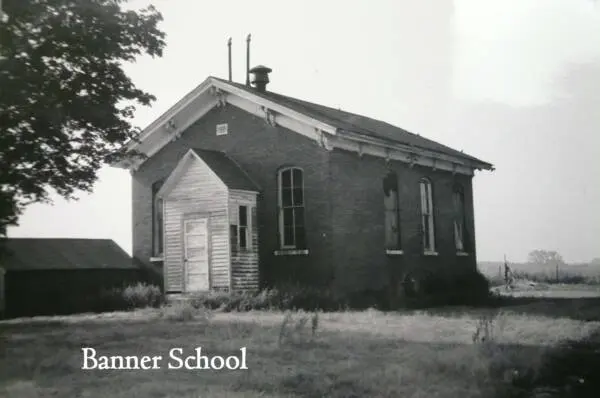
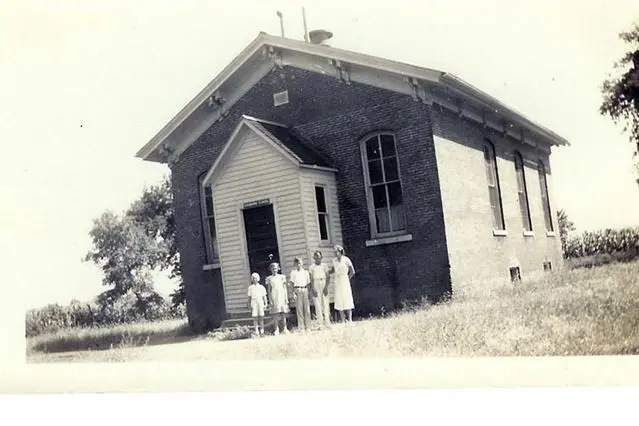
Thank you Margery Miller Bettman for sharing your Banner memories.
Those pictured are (l. to r.) Bob Bieberich, Elaine Bieberich, William L. Miller, Fred Bieberich and Margery Miller Bettman. The Bieberich's are cousins of mine and were visiting from Preble, Indiana. My younger brother, Wm. Miller is deceased as of Oct. 31, 2007. My older brother, Roland L. Miller (deceased) was also a student at Banner for two years before going to high school. We had many good times there, from riding a horse at recess and lunch hour to cooking a hot lunch item on a kerosene stove, washing the dishes in water that we had to pump, bring inside and heat. I believe the horse was brought to school by the Stahl brothers, Eldon and Stanley. They lived on the farm just west of the school where their parents farmed after migrating from the Netherlands. Mrs. Stahl often sent home made cakes and I remember fondly the angel food cakes. Our teacher, Luella Stuck, attended the same grade school as her father, Roland Stuck, farmed near by. Luella's younger sister, Ardith, was in my class (3) graduating at a county wide graduation in 1938. The teacher arrived early in the colder months to stoke the furnace. Her father often came with her to make sure that there was some heat and they had to "bank" the fire at night so that it would not be completely out by morning.
The other member of our class was a boy by the name of Simms (?). You could hear the cars (which were very few) as they came down the gravel roads. One time during the winter a very bad snow storm was beginning and one of the fathers hitched up his team and a wagon and came to school to collect all the students living his way so that they did not have to walk and to ensure that we arrived home. Snow drifts were quite common and we sometimes would like to walk on the higher ones which went over the tops of the fences. My brothers and I had about a mile and a half to walk each way. I just wish I had saved my orthography book which we used in 6th through 8th grade. It was one of the most useful subjects and helped me to decipher words and meanings to this day. It would have been a great help to have while I was teaching. Whenever I mention "orthography" to someone today they always ask, "What is that?" Maybe that is why I find texting messages annoying.
Margery Miller Bettman, Naples, Florida, February 2009
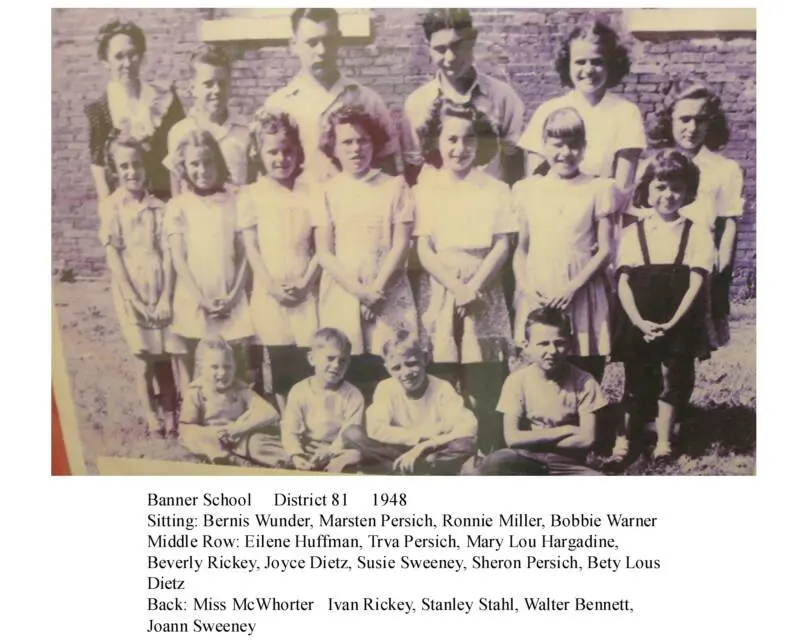
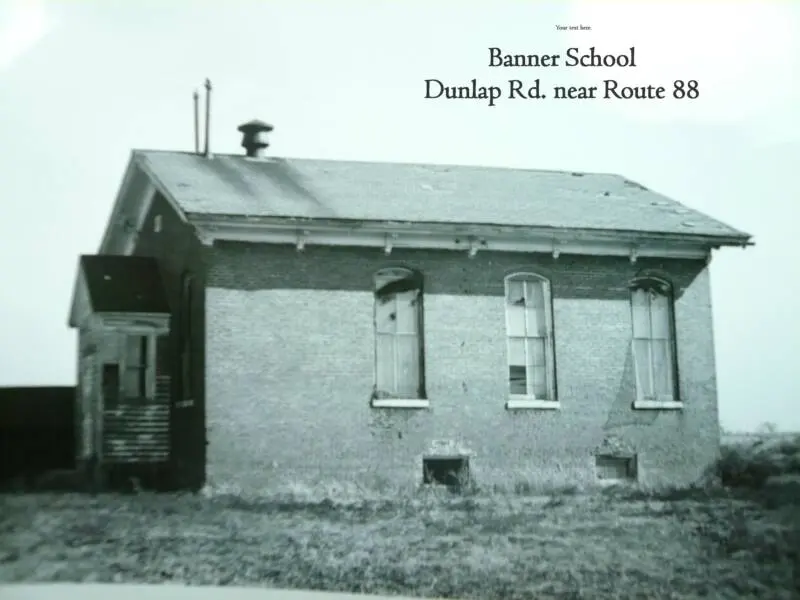
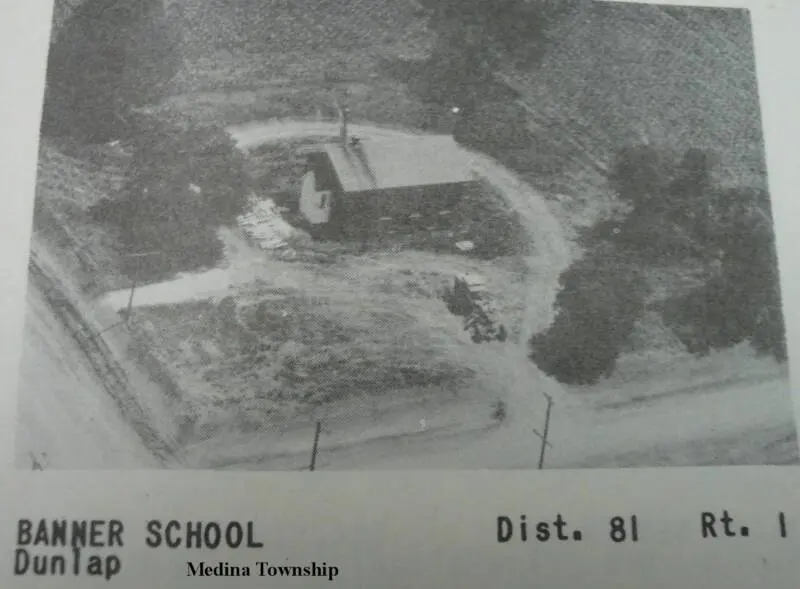
Banner School, District #81
The first schoolhouse in district number 81 of Peoria County, known as District Number 3, was a half a mile north of the present site. It was a log cabin, which belonged to Mr. Bristol. This school was opened about 1844. Another building replaced this in 1849 and built about 80 rods east of the present location. This building was in use until 1872. These school buildings were typical of their time but served the purpose and many pupils learned their three “R’s in them. About 1864, while the pupils were being taught by Miss Babcock, arrangements were made for the uniting of district number 3 of Medina Township and district 10 of Radnor, and the name used by them at that time was Union, district number.
The combining of the two townships caused such an increase of students that the school building then used was far too small and since the district was now enlarged, it was decided to build a larger and most up-to-date building, which was done in 1872. The new school cost $1,989.00 and the seats cost $230.00. This was a large sum of money in those days, but it was worthwhile, for the County Superintendent, Judge Worthington pointed the school out to all the other districts as the ideal school. He called it a Banner School, whence the present name was established.
The Allen Brothers were largely responsible for the building of this new school. As testimony of this fact, there were three bricks symmetrically placed in the front of the building. One brick was placed in the center of the arch over the door, and one on either side about halfway down. These are stamped “Allen Brothers”. Above the center brick, a short distance below the gable, is a piece of marble about one foot square which is inscribed, “W. Moore, Builder, 1872”. When Banner was built, and before the seats were placed, it was dedicated with a dance.
Banner School was the first school in the county to have single seats and desks; these being installed when the building was erected in 1872.
The school has been in continuous service since that time and it is still considered modern. It has been changed at different times to conform with different regulations passed upon by legislature and as a whole the community has carried out the ideas of 1872 in keeping abreast with the times.
Aside from the day spelling bees, which were held during the winter months, no social organization had existed within the district, with the exception of a Literary Society formed in 1888. This society was taken very seriously and in 1895 a constitution was drawn up and adopted. This organization had an almost 100% membership in the district for a number of years.
The original school was operated as an educational facility for 81 years and closed its doors in 1953. The original structure was torn down in 1969 and the playground was returned to agricultural use. It is hoped that present Banner School will serve its community as well as the little red schoolhouse of yesteryear.
The Allen Brother bricks from the original Banner School are displayed at the new Banner School on Allen Road.
Oscar Allen, M.D., 1941
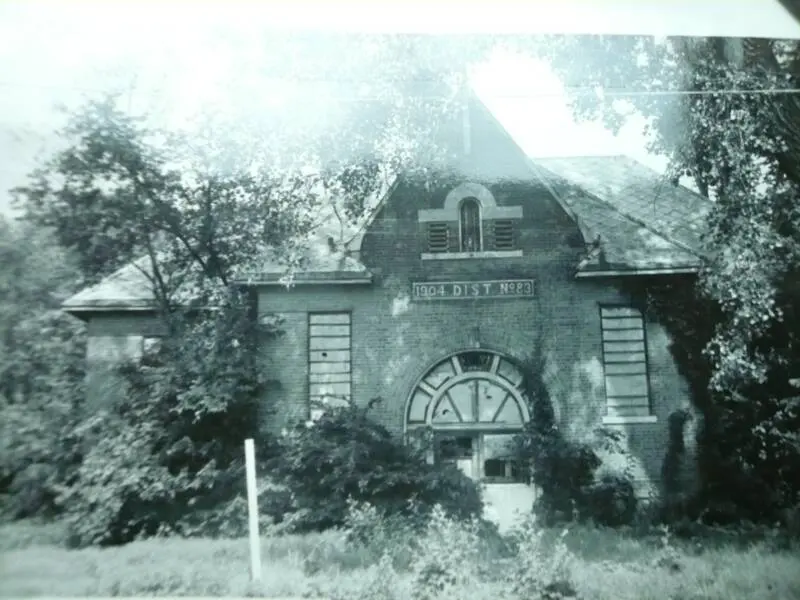
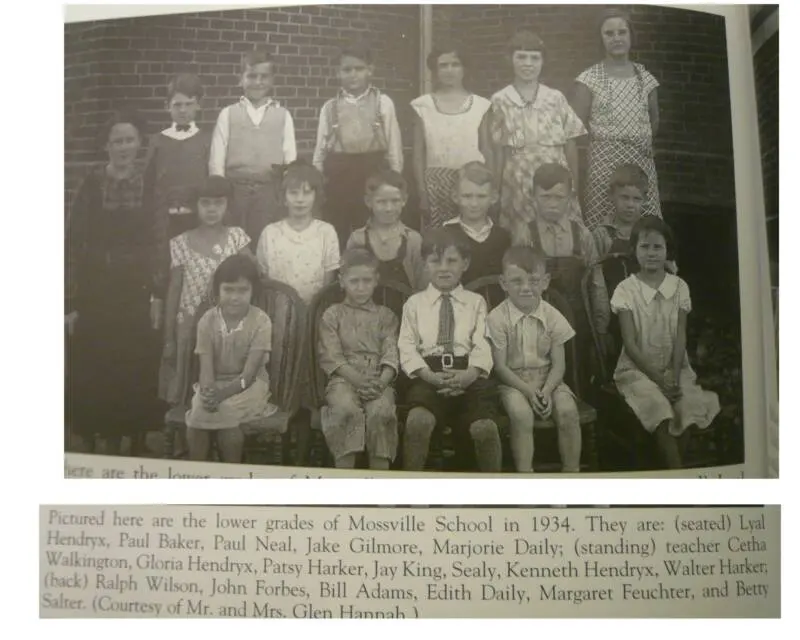
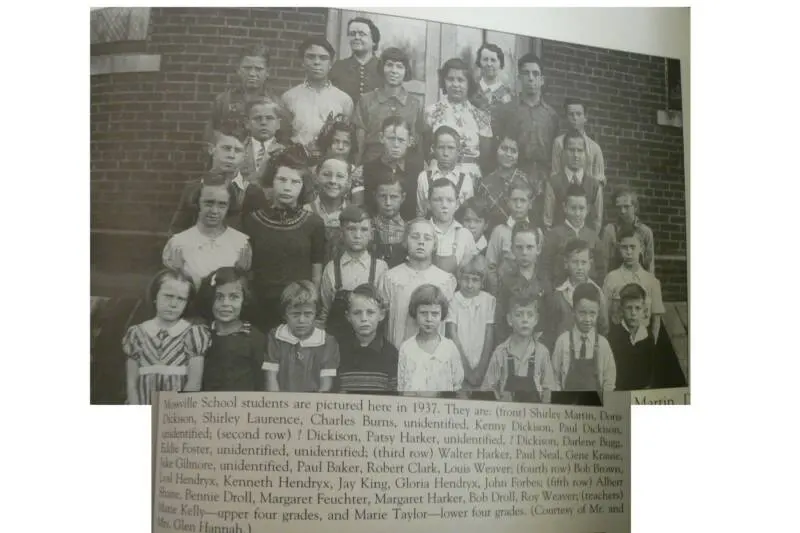
Mossville School, District Number 83
In a pretty spot on the Galena Road ten miles northwest of Peoria, with the broad Illinois River flowing silently on the eastward side, and sheltered by hills and forest on the eastward side, lies the quiet little village of Mossville. Set in the middle of fertile soil, gardening and farming are the chief occupations of the inhabitants.
The Mossville School District is in Medina Township, and this township can rightfully lay claim to having been one of the earliest in the county to be settled.
It is divided into two distinct sections, one lying on the prairie, the other on the river bottom, the two being divided by a strip of bluff about two miles wide. The land on the river bottom was considered very desirable not only from its contiguity to the river, but also from the fact that the soil, consisting in part prairie and in part of timber land, was exceedingly productive.
The first settler was George Love, who came with his family from Park County, Indiana, and on November 10, 1824, settled near the present village of Mossville. At the time of his location here, and for eight or ten years later, Indians were numerous in the vicinity as they had a village on Section 4. It is said that Mr. Love had no nearer neighbors than those at Fort Clark, nine miles distant in one direction and those at Fox River (now Ottawa) on the other. There was, however, an early settlement at Ten Mile Creek on the opposite side of the river, which may have been nearer in miles than Fort Clark, but as there was no ferry at the point, it was not so accessible.
About 1854 the village of Mossville was laid out and established as a way-station on the southeast quarter of Section 21.
About a month before the passage of the act creating Peoria County, an act was passed for the establishment of a system of free schools. This measure was introduced by Joseph Duncan of Jackson County, who afterwards became governor. This measure was in 1825.
This act introduced a new feature in the legislation of the state. Before that time the affairs of each county including the oversight of school lands had been in the hands of the county officers, and no such thing as local elections of town or school officers had been known. By this act a system closely resembling the town system of New England was introduced for the government of the public schools. It embraced many essential features of our present school system, but it lacked the power to raise sufficient funds by taxation to maintain it.
The first schoolhouse was situated about a half mile north of the site of the present schoolhouse. As this was one of the earliest districts formed in the county, it is possible that this house was erected under the peculiar provisions of the law of 1825.
It was a log cabin, 16 by 18 feet, with puncheon floor, paper windows, a clapboard door, and daubed with mud. The cost of the tuition was $2.00 per scholar for a term of three months.
The first school was taught by Jesse McGee, who, after securing the necessary number of scholars, turned it over in January, 1827, to Moses Clifton, and he, after teaching three months, was succeeded by Zolotes Marks.
School was held here in the log building until 1868, when a frame building was built on the northeast quarter of Section 27. This building is still standing and is now owned by Mr. David Brownell. After being abandoned as a schoolhouse, it was used for a store.
A new schoolhouse was built in 1868 at a cost of $4000.00.
(To be continued looking for missing page.)
J. A. Hayes, County Superintendent of Schools, 1940. Copied with permission from current Superintendent’s office, 2008.
From Mossville Methodist Church History compiled by N. Felton Whittle 1952
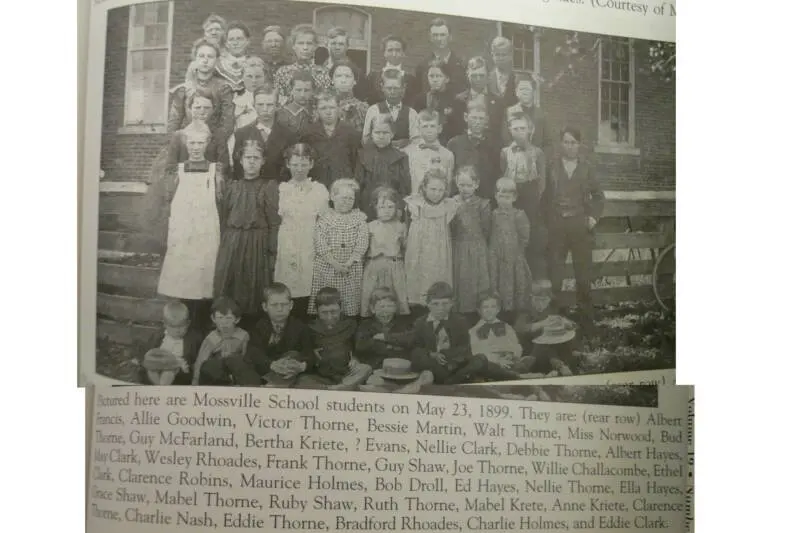
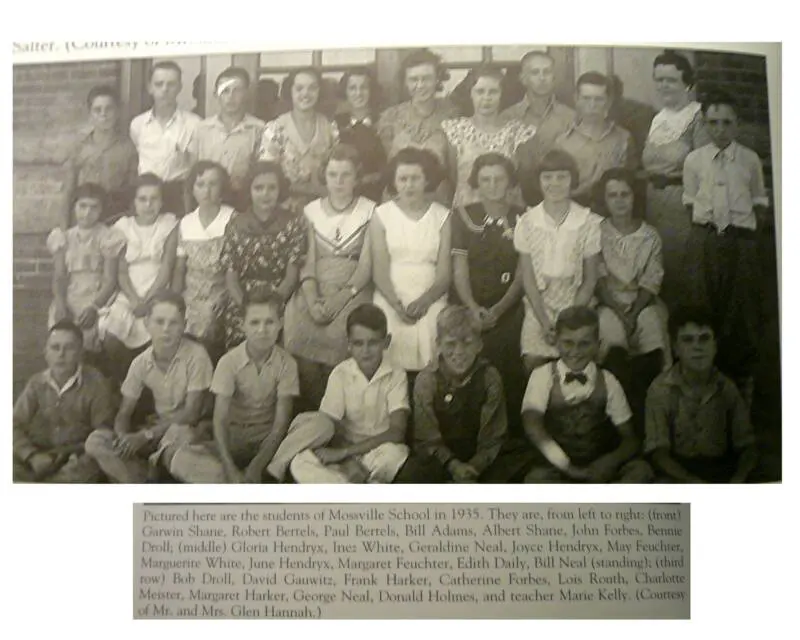
In the year 1868, the Presbyterians built a small one-room colonial type brick church in Mossville which was the community center of a large area. This building was completed, along with the school, in the spring of 1869. William Thorne Sr., who was born September 17, 1819, was the carpenter for this building. Joseph F. Hazzard was the brick contractor. They built the school and the church, working on each at the same time. They worked on the church from 9 a.m. to 4 p.m. so classes could be held in the south room of the school, and the balance of the day was spent working on the school. Both were finished in the spring of 1869. Working on both these jobs were the same painter, plasterer, and carpenters. The architect was a Mr. Emerson. The carpenters were William Thorne Sr., William Thorne Jr., and Richard Thorne and George Thorne, part time, as the latter attended school during the school hours. Also, "Ike" and Wes Crandall, Sam Fulton, and John Huxtable were carpenters on both jobs. Hines Lumber Company of Chicago furnished the lumber and supplies. The Presbyterian Church paid $4,000. for this building. The brick for both church and school were from the brick yard on the Neal Farm 200 yards southeast of the church.
The Medina schools today
Medina Township ended up split between two unit districts, and the line between them follows the consolidations listed at the top of this page. The Mooney, Boylan and Mossville side went into Illinois Valley Central Unit District 321, which was established in 1968 and covers the northeast corner of Peoria County, including Chillicothe, Mossville and Rome. Mossville School still operates in Mossville as part of that district.
The Alta side went the other way. Alta and four other schools formed Wilder-Waite District 303 in 1946, and the Wilder-Waite Grade School opened in 1948 to replace them. In 1969 Wilder-Waite joined Dunlap Consolidated Grade School District 302 and Dunlap Township High School District 158 to form Dunlap Community Unit School District 323. Wilder-Waite Grade School is still on the Dunlap district's list, along with Dunlap Grade School in Alta and a Banner Elementary School on Allen Road.
That new Banner is where the old one is remembered. As Dr. Oscar Allen's account notes, the 1872 Banner schoolhouse closed in 1953 and was torn down in 1969, and the bricks stamped Allen Brothers went on display at the new Banner School on Allen Road.
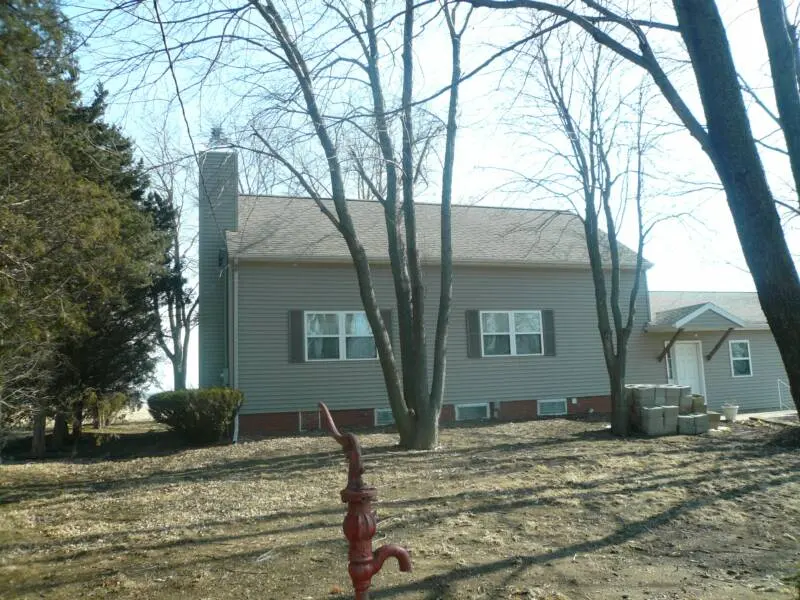
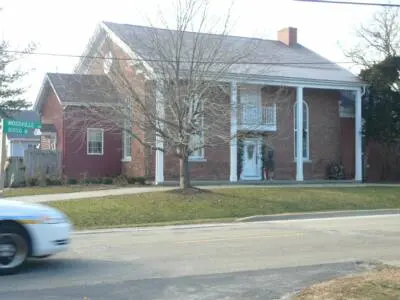
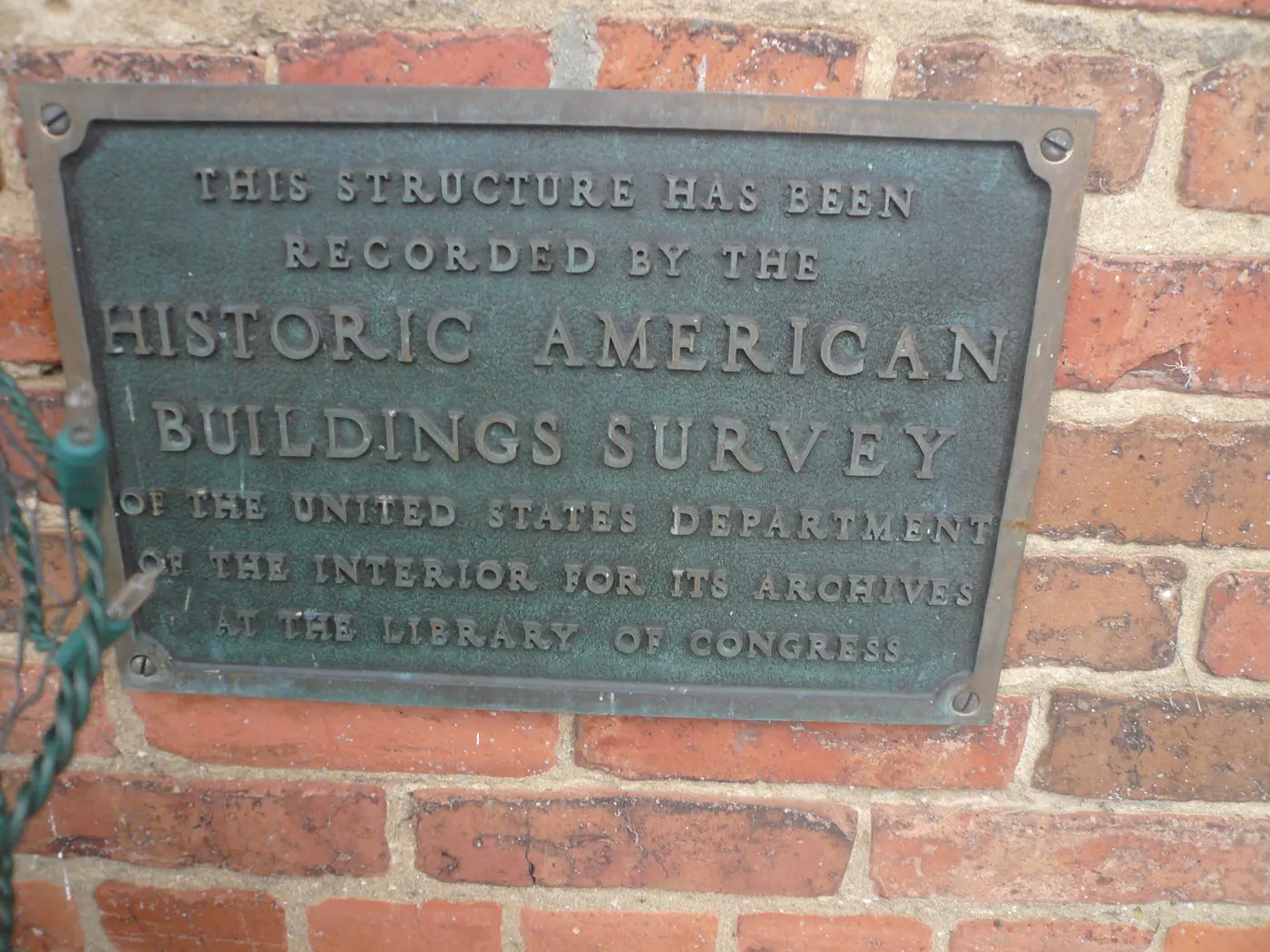
A few old buildings survive. Rice School was a private home on Route 40 when it was photographed in January 2009. The brick church built beside the Mossville school in 1868 and 1869 by the same carpenters later served as the Mossville Methodist Episcopal Church, and it was recorded by the Historic American Buildings Survey as HABS IL-282. The Boylan corner at Old Galena Road and Cedar Hills Drive is now the site of the Caterpillar Tech Center.
Common questions
What one-room schools were in Medina Township, Peoria County?
The 1945 list gives six districts: Mooney #79, Rice #80, Banner #81, Boylan #82, Mossville #83 and Alta #84. Several are very old. Mossville's first teacher, Jesse McGee, handed his school to Moses Clifton in January 1827, and the Boylan log school dates from about 1840.
Which school district covers Medina Township today?
Two unit districts share it. Illinois Valley Central Unit District 321, formed in 1968, took Mooney, Boylan and Mossville and still runs Mossville School. Dunlap Community Unit School District 323, formed in 1969, took Alta and much of Banner and Rice through Wilder-Waite and Dunlap consolidated districts.
How did Banner School get its name?
The 1872 brick building cost $1,989.00, and County Superintendent Judge Worthington held it up to other districts as the ideal school, calling it a Banner School. It was the first school in the county with single seats and desks. Bricks stamped Allen Brothers from the old building are displayed at the new Banner School on Allen Road.
What happened to Alta School?
Alta School burned in 1945, and pupils finished the year in the Masonic Hall in Alta. In 1946 Alta and four other schools became Wilder-Waite District 303. Classes met at Glendale, Orange Prairie and the old Grange Hall until the new Wilder-Waite building opened for the 1948-1949 school year.
Where was Boylan School in Medina Township?
Boylan School stood beside Central Christian Church at the corner of Old Galena Road and Bristal Hollow Road, now Cedar Hills Drive, where the Caterpillar Tech Center is located. The frame schoolhouse there was built in 1882 on land John Sturm had given the district for its 1855 school.