Rosefield Township 1945 consolidation history
- Brown School, District #121: 1948 part #309; 1951 balance #128; 1953 #314 Edwards CC; 1967 #25 Elmwood; 1969 #322 Elmwood CC
- Cottonwood School, District #122: 1953 #314; 1967 #25; 1969 #322
- Nixon School, District #123: 1953 #314; 1967 #25; 1969 #322
- Moore School, District #124: 1955 #25; 1969 #322
- Golden Knoll (Heitter School), District #126: 1947 #307 Brimfield CC; 1969 #309 Brimfield Unit
- Oak Hill School, District #127: 1963 #25; 1969 #322
- Rosefield Center School, District #128: 1954 #314 Edwards CC; 1967 #25; 1969 #322
Brown School, District #121
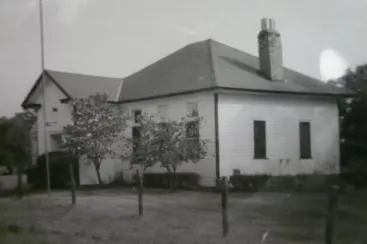
In 1865, the history of school district number 121 commences. The first building was a brick structure and was used for ten years. The building contained double seats, a large blackboard and cannon stove stood in the center of the room, furnishing the heat. In 1875, this building was struck by lightning during the night and pretty well broken up.
No attempt was made to repair the old building but in its place was erected a large new frame building, much more modern in every respect. The new building was well lighted, better heated and contained both double and single seats. The library was undamaged by the lightning and as it was added to from time to time, is quite large.
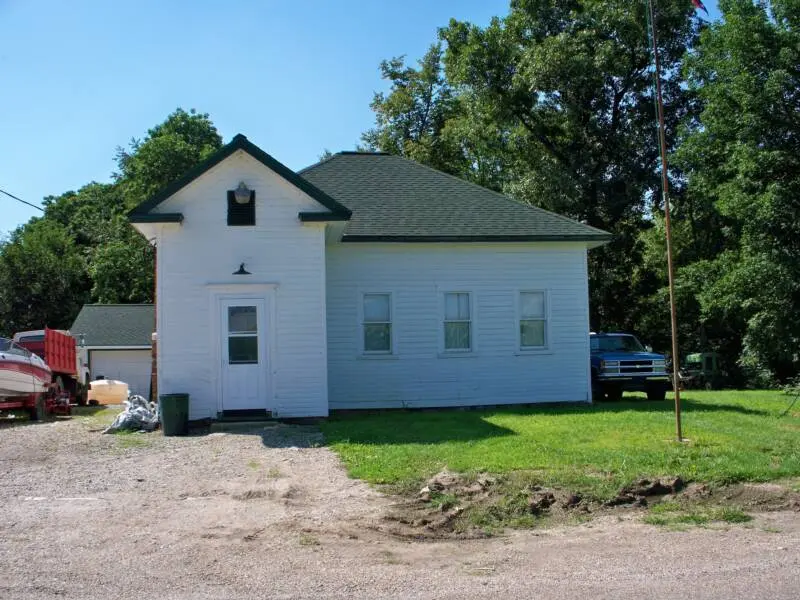
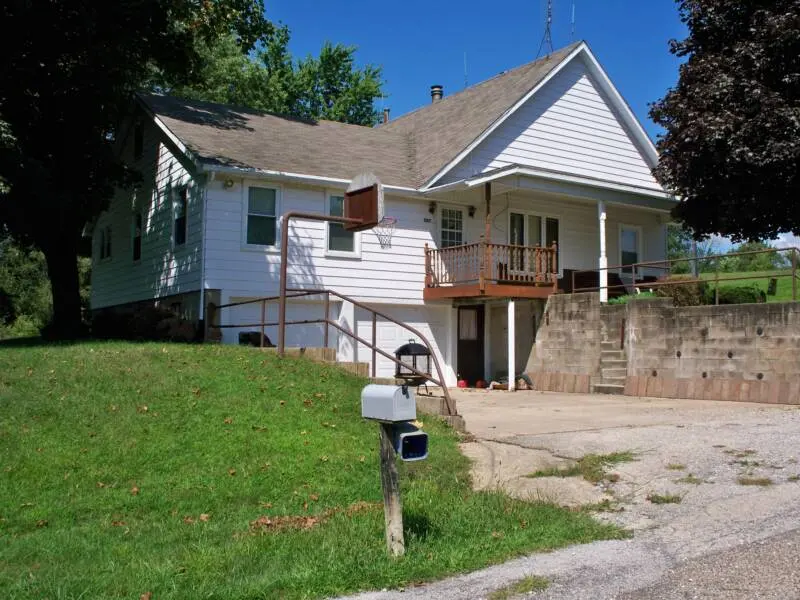
In 1915, the building was considered too small and as there were some minor changes, thought necessary by the directors, carpenters were called in and the building made ten feet longer. At this time an entrance hall was added also. With this and a few other small changes the building is still standing and serving the community.
John Hayes
DuBois Rd. and Kramm Rd. (off Rt. 74 by Two Rivers)
Cottonwood School, District #122
The history of the Cottonwood School dates back to Civil War days. Most of the old settlers have passed away and information is legendary for the most part. It is said that Mr. King donated the land for the school ground and a Mr. Foster built the first schoolhouse. The original schoolhouse was built of cottonwood logs and from them it received its name.
About 1880 a second schoolhouse was erected. No other buildings were built and no well was dug; the water was carried from a neighbor’s well. The seats were double and so were the desks, and only one large blackboard was available.
About sixty pupils were enrolled, and the teacher’s salary was about $35.00 a month. Children attended school four and five months a year, and were graded according to readers; Johnny was either in the third reader or the fourth and graded accordingly.
Every two weeks one of the schools would hold a spelling bee and all the people in the district and from neighboring districts attended. One old settler, A Mr. Johnson, tells of one spelling bee which he attended. Shortly after the contest had begun, it became very light outside. All rushed out to see a large ball of fire with a long tail on it going over, and later a sound like thunder was heard.
“You may be sure we ended the contest then and there,” states Mr. Johnson.
This reference is probably made to Halley’s Comet.
Another old settler tells of paying ten cents admission to hear an old fashioned talking machine, one of the first in that part of the country.
Improvements have been made. Single adjustable seats, more blackboard space, a library, flag, globe, and stone water cooler have been added. A kindling house is built and out houses: a well has been dug. In place of the old spelling bee a Community Club meets once a month where neighbors exchange ideas and home talent is put to use.
John Hayes
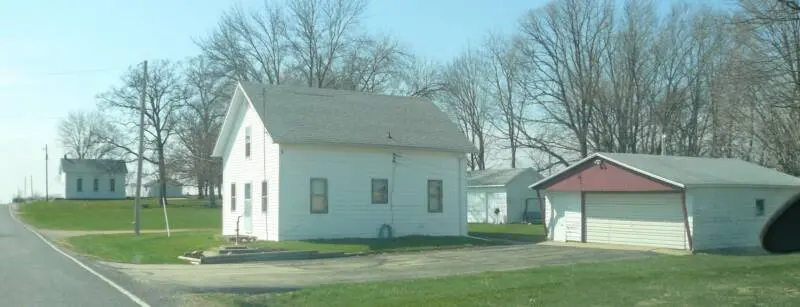
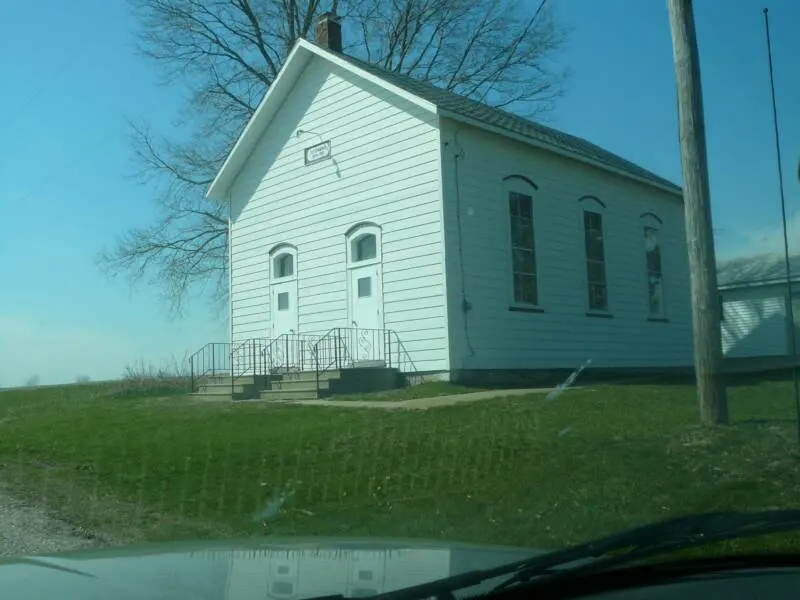
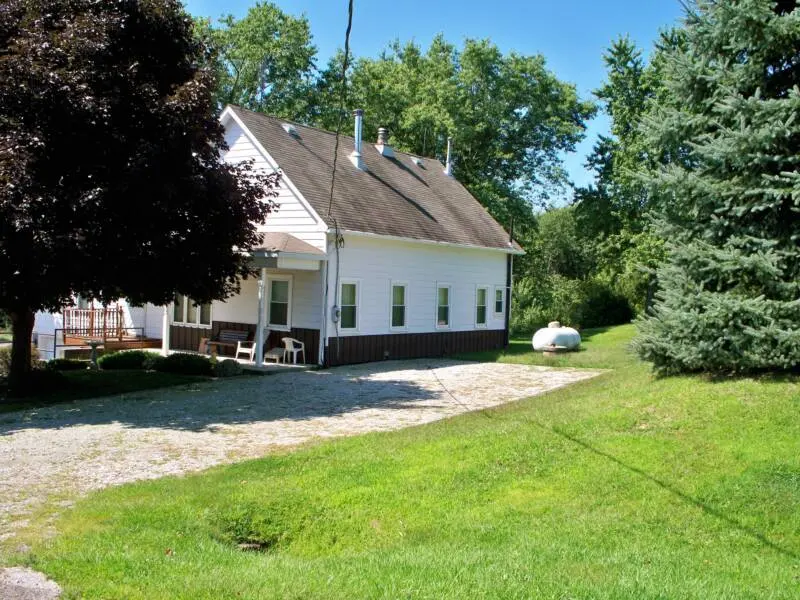
On Cottonwood Rd. off Rt 8 next to Cottonwood Church and Cemetery
Nixon School, District #123
The first schoolhouse in the district, then called the Miller District, was located a half mile north and east of the present schoolhouse. The building was constructed of plaster and weather-boarding filled in with bricks.
This structure was not long adequate and sometime in the early 70’s a new schoolhouse was built on the present site. The second building is the schoolhouse now standing. Somehow the name has been changed and the only one now used is that of the Nixon School.
This new schoolhouse was a small one-room building. In 1917 the district enlarged this room and added a small cloakroom. There have been no other improvements.
Last summer a storm cave was purchased and placed in the ground just west of the schoolhouse. While the cave was intended for storm protection, it has served as a very enjoyable playroom for the children.
Corner Rt 8 (Southport Rd.) and McIntyre Rd. (past Eden Rd.)
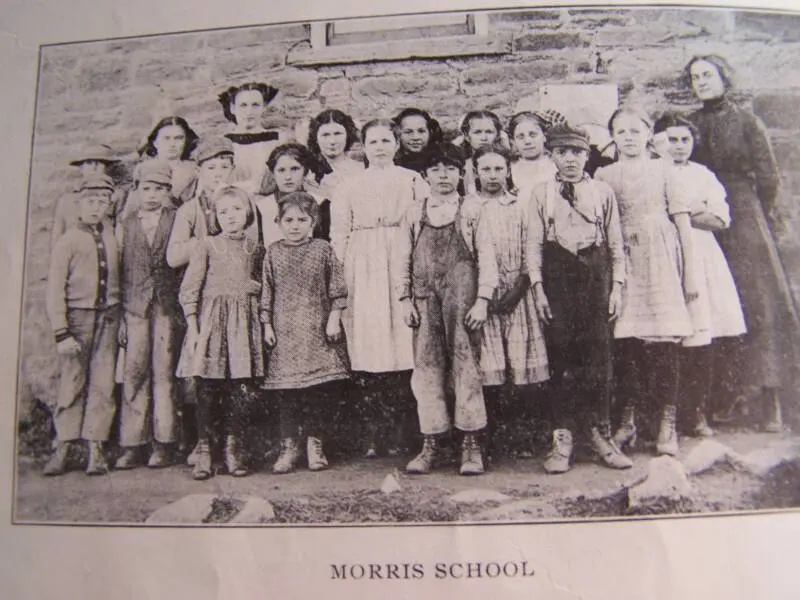
Morris School, District #124
In 1787 when the Ordinance of the Northwest Territory was made, it very wisely provided for a system of education. Not much was done toward establishing schools until this territory was formed into states.
Illinois was one of the states formed from the Northwest Territory but the early settlers in Illinois were for the most part ignorant and poor. The first schools were held in the cabins of the settlers and were taught by wandering teachers whose educational qualifications were little above the ones they taught.
Gradually log schoolhouses were built. The floors of these rude buildings were made of thin slabs called puncheons, which were hewn smooth upon one side. The desks and benches were without backs and hewn from logs. A long thick slab served as a writing table. Just such a school was the Moody (???) School District #4.
This log school was situated on the northeast corner of the farm now known as the Loren Moody farm. The playground was across the road on the farm now belonging to Ross Stewart. The schoolhouse was log with benches around the sides. Pupils sat on these and held their books on their laps, and put them under the bench when through with them.
There were about thirty-five pupils attending this school, among whom were the Bohannon girls, Kate Holt Moody, Lettie Morris, Alice Ramshaw, Lizzie Diegel, Ephraim Yinger, and Tom Moody.
Sef Wing and a Mr. Higgins were two of the early teachers.
This land was to be bought for the new school, but as too much money was asked for it, the directors had to get a new site. It was suggested that they build the schoolhouse on the road just past the Edward Dorenbus farm. That was ruled out because it was too close to the edge of the district. Then John Yinger gave a place in the southwest corner of his farm for a school with the provision that when it was no longer used for school purposes, it was to revert to the original owners or their heirs. The taxes for two years on this were to be given to Mr. Yinger but this part of the contract was never kept. Mr. Yinger gave the stone from which the schoolhouse was made, from a quarry situated at that time just east of the site of the schoolhouse.
A stone mason by the name of Camel from Alta, Illinois was obtained to build the schoolhouse. He was to dig out the stone, but as he had never done such work before, he found it a very difficult task. He finally persuaded Mr. Yinger to do this work for him. Mr. Yinger’s son Ephraim also helped. In due course the building was finished. It was then the year 1867 and pupils started to the new school.
There were four rows of double desks, and as this was not enough, the little folk were seated on a bench in the corner.
There were about forty pupils attending school then, among whom the Yingers, the Conns, Mary Holt, Ida Green Harding, Anna Marvin Norris, Carrie Bohannon, Alice Ramshaw, Loren Moody, and Robert Morris.
Robert Brudette was the first teacher there. Among others were Marion VanArsdale, Ella Pulsifer, Walter Clinch, Flora Cole, Teena Koon, Hettie Koon, Helen Wakefield, David Forney, Rosie Hutchinson, Minnie Felton, John Bitner, Mary Moody, Harvey Parr, Lucy Nurse, Ed Siegal, and Isabella Catton.
The following teachers have taught since 1914-1915: Marie Blandin, Isabella Catton, Edna Glasgow, Myrtle Beal, Josephine Kaufman with Anne Thorne substitute, Terzille Moehlenpah, Lois Greenfield, Thomas Drake, Mrs. Bridson, Marie Isenburg Sweeney, Leah Maher, Faye Gorsage, and Helen Gorsage, who is teacher at the present time.
Morris School, District # 124: Eden Rd. between 116 and 8 between Cottonwood Rd. and Dorembus Rd. (closer to Dorembus Rd.)
This is the Morris School, District #124
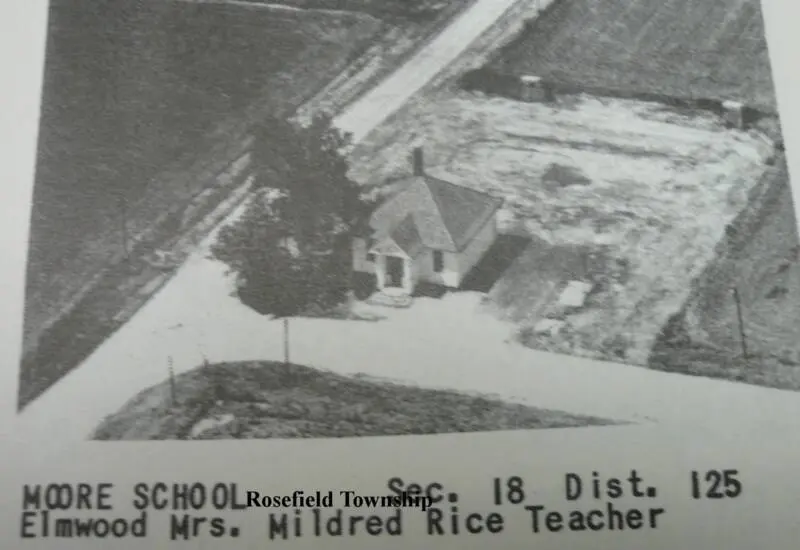
Moore School, District #125
Back in the middle of the 19th century some time, a few people gathered together for agricultural purposes in what is now district #125. After two or three families had settled there and they began to have children, thought of educating them, caused the building of a small brick building, erected sometime in the early fifties, probably, and standing about one quarter of a mile south of the present schoolhouse on the west side of section 19.
This building served only a short time for a school when it was considered too small and as the people needed a building for a post office, this building was taken for that use and another building erected for school purposes. This new building was of a frame structure and located on the same site as the present building, in the southwest corner section 18. This school was used until 1913.
In 1913, Mr. Spangler purchased the school building from directors, and moved it to his farm north of the school site. A new school was built, much more modern in every way and suited to education uses. This building with a few changes, brought by state legislation, is being used now 1931. The hedge fence, which surrounded the grounds, has been removed and more land purchased for playground within the last few years.
This school, while one of the oldest districts organized, does not boast of much of a social center in early days. The Texas Church (Methodist) was located a mile and one half south of the school site and to this place, everyone went for their social gathering. Gathering at the church, although it was a trifle further for some of the people to go, was much more interesting as it took in a larger territory and those attending were able to mingle with many more people. At this place, spelling bees, oyster suppers, box suppers, entertainment, and last but not least, the courtships of the younger people, were held.
John Hayes
#125: Texas Rd. off of Rt 8 after big curve at W. Windish Rd.
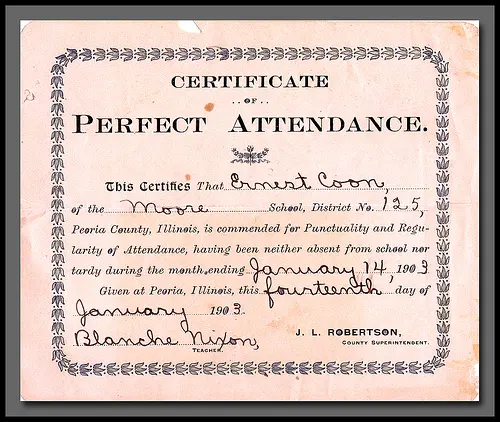
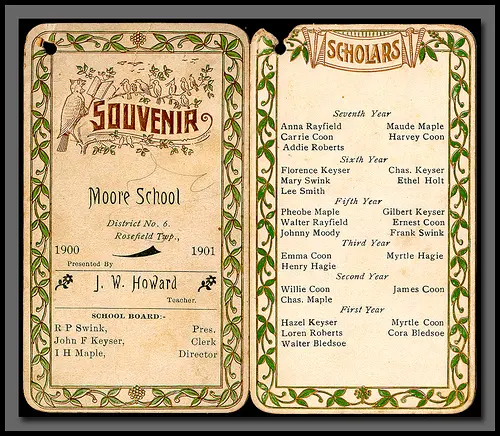
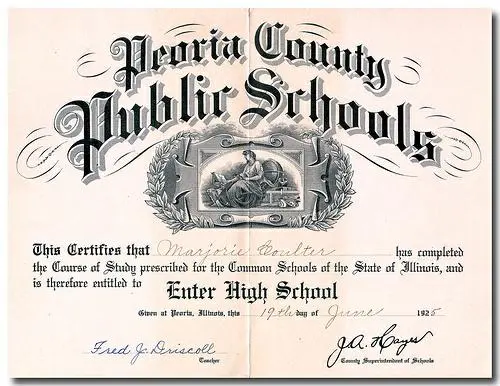
Thank you Douglas Coulter for letting me use several pictures from your amazing collection.
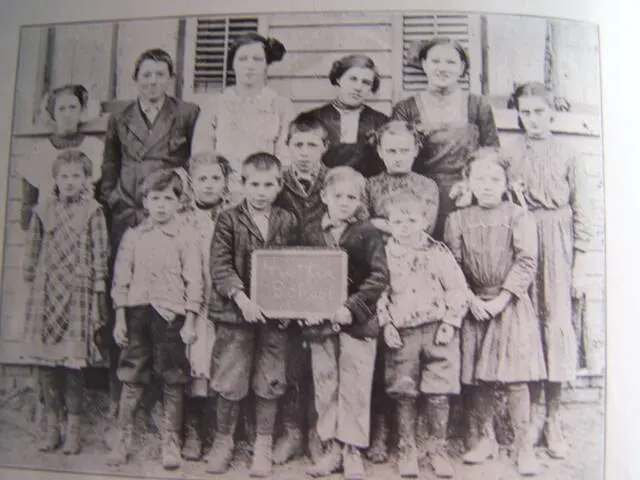
Golden Knoll School (Hietter School pre 1922), District #126
Under the name of Golden Knoll, the school has been in existence eight years, but previous to that time district #126 was known as Hietter School and dates back to a very early age. The school was probably built about 1855. It was a crude structure to those seeing it after 1900, but at the time of its erection it was very modern and well constructed. The pupils hung their wraps on nails driven into the wall and the wall, instead of being plastered, was faced with 6 inch floor board. Two rows of double seats, one on each side of the room, served as study desks while the center of the room was graced with a large cannon stove behind which the pupils liked to get so as to annoy the teacher.
In the school year of 1922-23 a new building was erected to meet all the state requirements and recommendations. The new building is very modern and one of the finest of the county at the present time.
John Hayes 1930
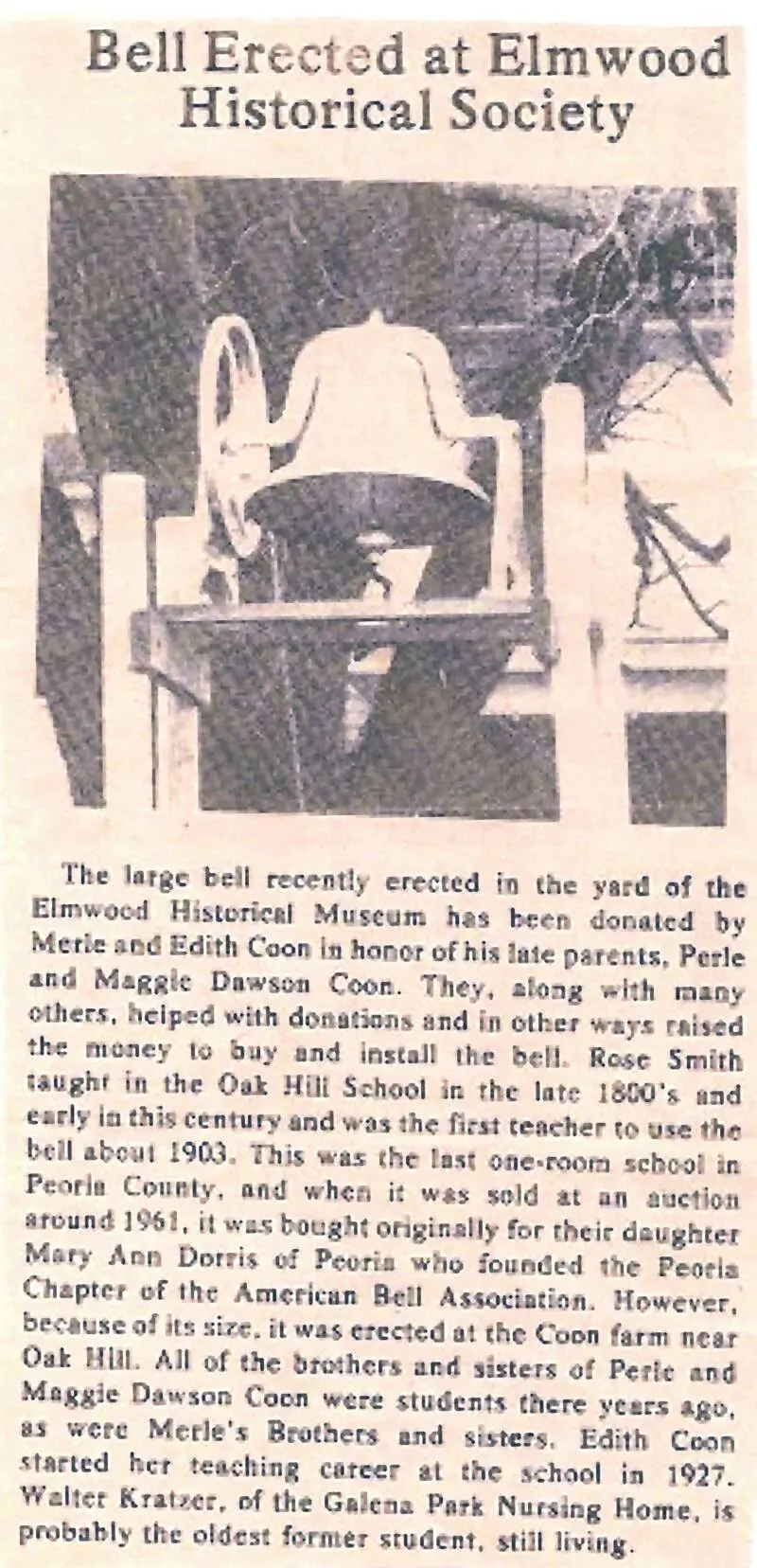
Elmwood Gazette 1984
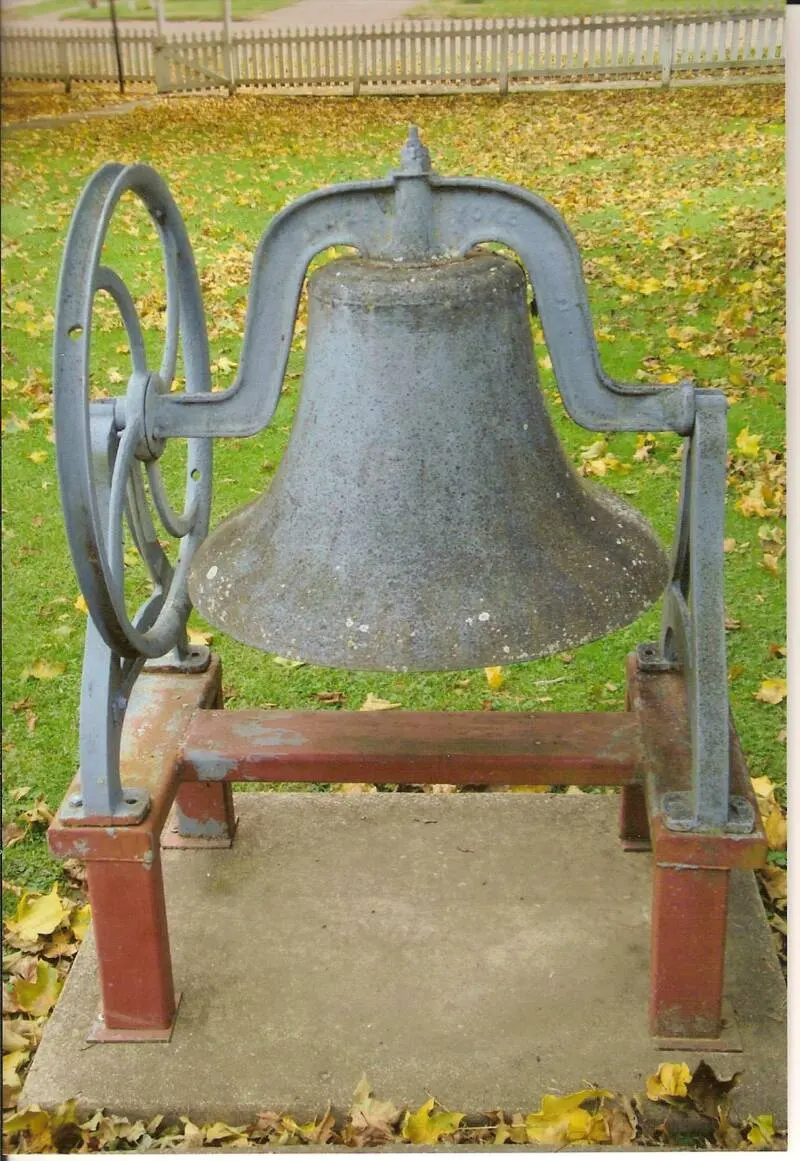
The large bell recently erected in the yard of the Elmwood Historical Museum has been donated by Merle and Edith Coon in honor of his late parents, Perle and Maggie Dawson Coon. They, along with many others, helped with donations and in other ways raised the money to buy and install the bell. Rose Smith taught in the Oak Hill School in the late 1800's and early in this century and was the first teacher to use the bell about 1903. This was the last one-room school in Peoria County, and when it was sold at an auction around 1961, It was bought originally for their daughter Mary Ann Dorris of Peoria who founded the Peoria Chapter of the American Bell Association. However, because of its size, it was erected at the Coon farm near Oak Hill. All of the brothers and sisters of Perle and Maggie Dawson Coon were students there years ago, as were Merle's brothers and sister. Edith Coon started her teaching career at the school in 1927. Walter Kratzer, of the Galena Park Nursing Home, is probably the oldest former student, still living.
Oak Hill School, District #127
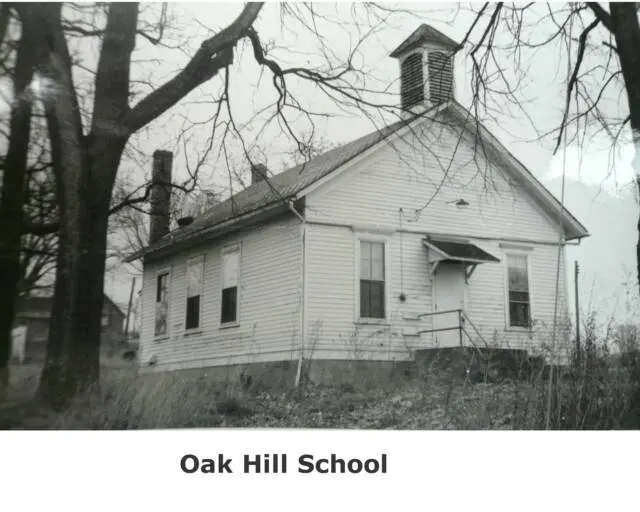
The first schoolhouse in Oak Hill was built in 1837 on Section 8. Prior to this school was held in a private home and taught by Martha Miller. In 1839 one room was built. This was partly destroyed by fire and the rest of the building was moved across the street to be made into part of Mr. Antrim’s house. Clement P. Allen taught at the school in 1849 earning $35.00 a month. The school district was organized in 1859 and a small building was constructed and replaced by a larger building in 1874 built by James Hutchinson. Eva Murry of Elmwood was an early teacher at this school. John Hayes 1930
In 1927-28 Edith Hampson (Coon) of Galesburg was hired to teach eight months for $100.00. She and her friend from Galesburg, Augusta Plummer (Wolford) who taught at nearby Nixon School, rode the train home to Galesburg every weekend. During the week she boarded with the family of Ernest and Nellie Coon paying a $1.00 a day for room and board. She later boarded with Martha Brant Coon and the Jay and Ethel McCoy family, whose home had a furnace. Children from the Hartley, McCoy, Maher, Harding, Shane, Rynearson, DeVries, and Coon family attended school during this time. Edith Hampson was 19 years old and had 30 students her first year of teaching at Oak Hill School. She left Oak Hill after two years and returned in 1954-55 for a year as Mrs. Edith (Merle) Coon. (Coon Family History) In 1945 Lorene Hartley was the teacher. Gladys Stewart from Elmwood taught at the school in 1955.
Oak Hill School consolidated with Elmwood in 1963. The schoolhouse was later removed from the site. Merle and Edith Coon obtained the school bell, which was moved to the Coon family farm on Texas Road. In 1984 Edith and Merle donated the bell to the Elmwood Historical Society.
Thanks to Wayne Coon for all the Oak Hill information from The Coon Family History!
Rosefield Center School, District #128
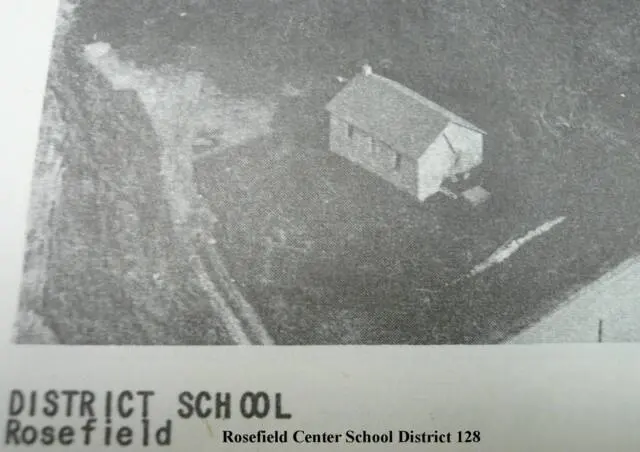
Rosefield Center School is located in almost the exact center of Rosefield Township in section sixteen. In 1837, Robert M. Smith owned the land. It changed hands several times in the course of years.
In 1860, the stone school building was completed. It is now used as a town hall. Ephram Rynearson donated one acre of land to the cause, quarried the rock and constructed the building for the consideration of $100.00.
August 19, 1901, the land was deeded by John Siegle and wife, Elizabeth, and John and Kate May to John Brown, Robert Morris and James L. Hall, trustees of the district. At that time the present frame schoolhouse was built.
Rosefield School, District #128: Off of Rt 8 before Eden Rd. after Cut off rd. turn on Townhouse Rd/ Rock Hill Rd. Location right before the big right angle turn. Stone school then frame school.
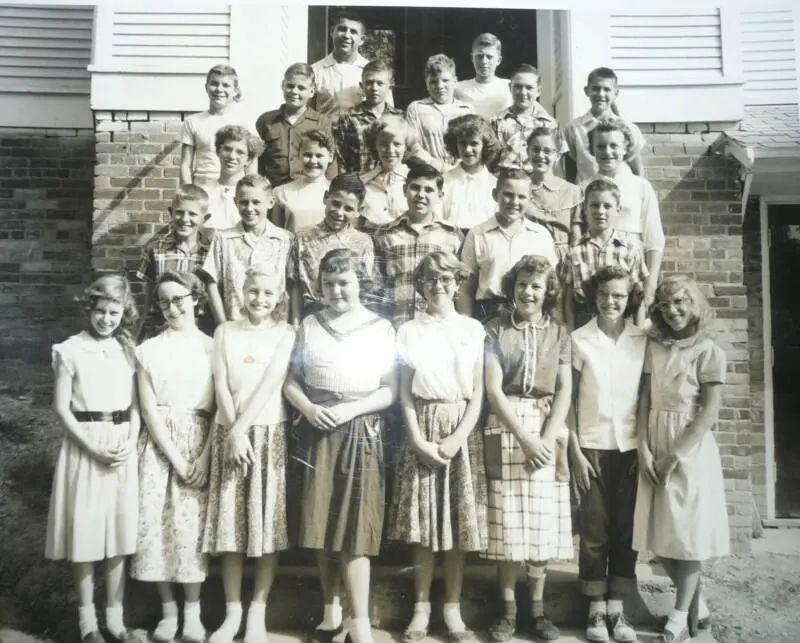
Thank you George Cusack for sharing your pictures!
The Rosefield schools today
Nearly every district in Rosefield Township ended up in the same place. Cottonwood, Nixon and Rosefield Center went into Edwards CC #314 in 1953 and 1954 and then into #25 in 1967. Morris joined #25 in 1955 and Oak Hill in 1963, and in 1969 all of them became part of Elmwood Community Unit School District 322. Brown School was split, part going to Brimfield #309 in 1948 and the rest to Rosefield Center in 1951. Golden Knoll, the old Hietter School, joined Brimfield CC #307 in 1947 and the Brimfield unit district #309 in 1969.
Both of those unit districts still operate in Peoria County, and Elmwood CUSD 322 remains the school district for the city of Elmwood. Rosefield is still thinly settled country: the 2010 census counted 1,217 people and 489 housing units across about 36.5 square miles of township.
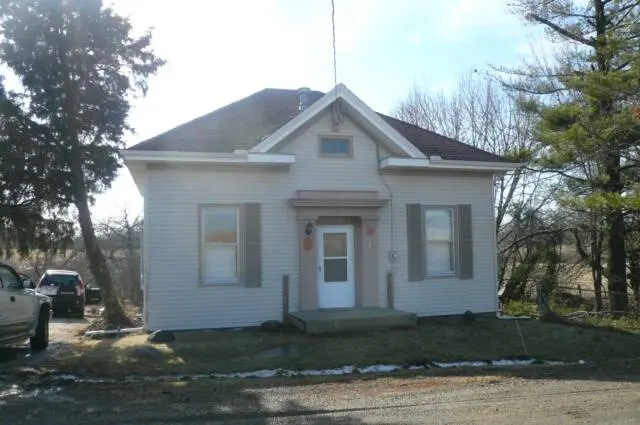
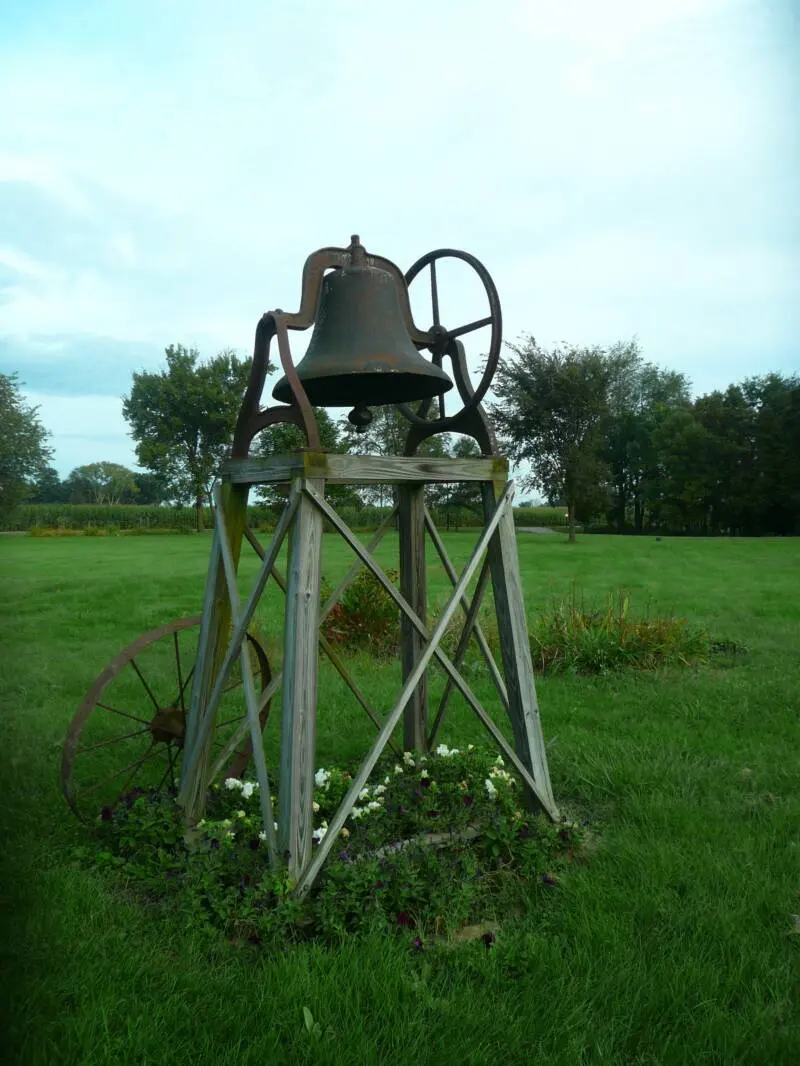
Several of the schoolhouses survived by turning into something else. Brown School, at DuBois and Kramm Roads, became a residence. Cottonwood School was photographed in 2009 beside Cottonwood Church, across the road from Cottonwood Cemetery. The 1860 stone Rosefield Center building, which Ephram Rynearson quarried and built for $100, was serving as a town hall when its history was written down, and the Rosefield Center bell was photographed on display in the yard of George Cusack, a former pupil.
Oak Hill, which the Elmwood Gazette in 1984 called the last one-room school in Peoria County, went into Elmwood in 1963 and its schoolhouse was later taken off the site. Its bell went first to the Coon family farm on Texas Road. In 1984 Merle and Edith Coon gave it to the Elmwood Historical Society, which set it up in the museum yard. Edith Coon had begun her own teaching career at Oak Hill in 1927, at nineteen, with thirty pupils.
Common questions
What was the last one-room school in Peoria County?
A 1984 Elmwood Gazette article named Oak Hill School, District #127 in Rosefield Township, as the last one-room school in Peoria County. Oak Hill consolidated with Elmwood in 1963 and the schoolhouse was later removed. Its bell, first rung by teacher Rose Smith about 1903, was donated to the Elmwood Historical Society in 1984 by Merle and Edith Coon.
Which school district serves Rosefield Township today?
Most of the township's old districts became part of Elmwood Community Unit School District 322 in 1969, by way of Edwards CC #314 and District #25. The exceptions were Golden Knoll, District #126, which joined Brimfield CC #307 in 1947 and the Brimfield unit district #309 in 1969, and part of Brown School, which went to Brimfield in 1948.
Where was the Cottonwood School in Rosefield Township?
Cottonwood School, District #122, stood on Cottonwood Road off Route 8, next to Cottonwood Church and across from Cottonwood Cemetery, where the former school was photographed in 2009. The first schoolhouse was built of cottonwood logs, which gave the school its name, and a second building went up about 1880. About sixty pupils were enrolled in its early years.
When was the Rosefield Center School built?
Rosefield Center School, District #128, sits in section sixteen, almost the exact center of Rosefield Township. Ephram Rynearson donated an acre, quarried the rock and built the stone school for $100, finishing it in 1860, and it was later used as a town hall. A frame schoolhouse followed after the land was deeded to the district trustees on August 19, 1901.