No. 11 N. R.7 E.
1945 Teachers, Consolidations History
- #1 Hawley: Jane Callery (P); 1952 #313 Edelstein CC; 1969 #326 Princeville
- #2 Streitmatter School: Myrtle Yarnell (P); 1952 #311 Princeville CC; 1969 #326 Princeville
- #3 Blue School: Katherine Simons (P); 1951 #311 Princeville CC; 1969 #326 Princeville
- #4 Morrow (no school): 1951 #311 Princeville CC; 1969 #326 Princeville
- #5 Townhouse: Marian Johnson (P); 1958 #311 Princeville & #313 Edelstein; 1969 #326 Princeville
- #6 Timmons School: Lois E. McWhorter; 1952 #313 Edelstein; 1969 #326 Princeville
- #7 Potter School: Grayce E. Kuhn; 1953 #302 Dunlap Consol.; 1969 #323 Dunlap Dist.
- #8 Summit School: Patricia Bushman; 1954 #302 Dunlap Col.; 1969 #323 Dunlap Dist.
- #9 Wilson School: Marguerite Harmon; 1952 #311 Princeville CC; 1969 #326 Princeville
Hawley School, District #1
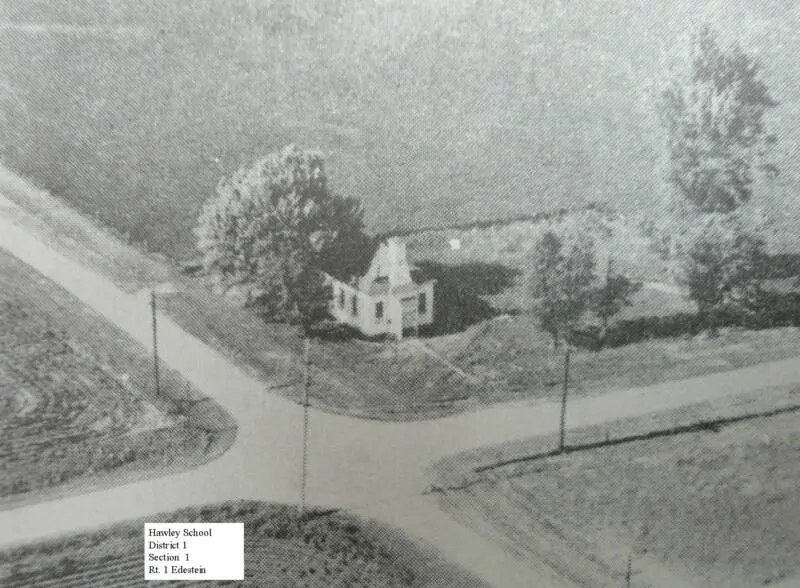
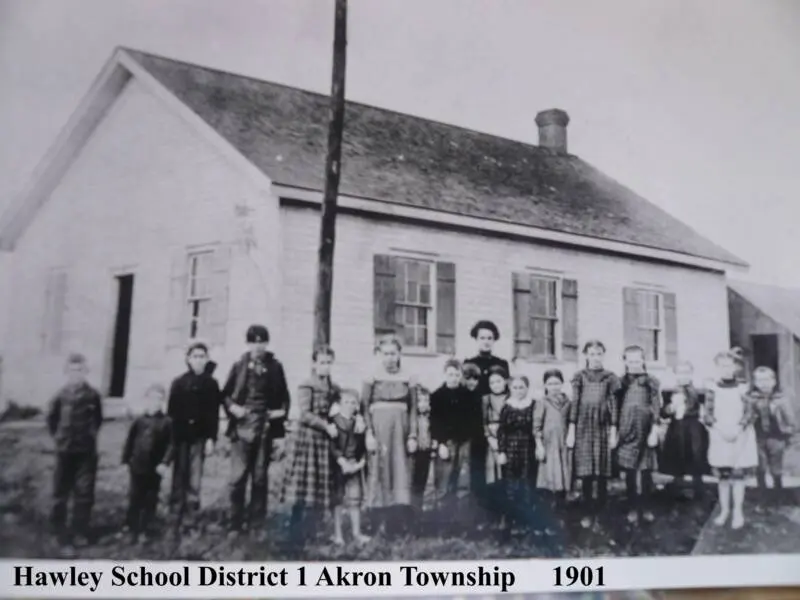
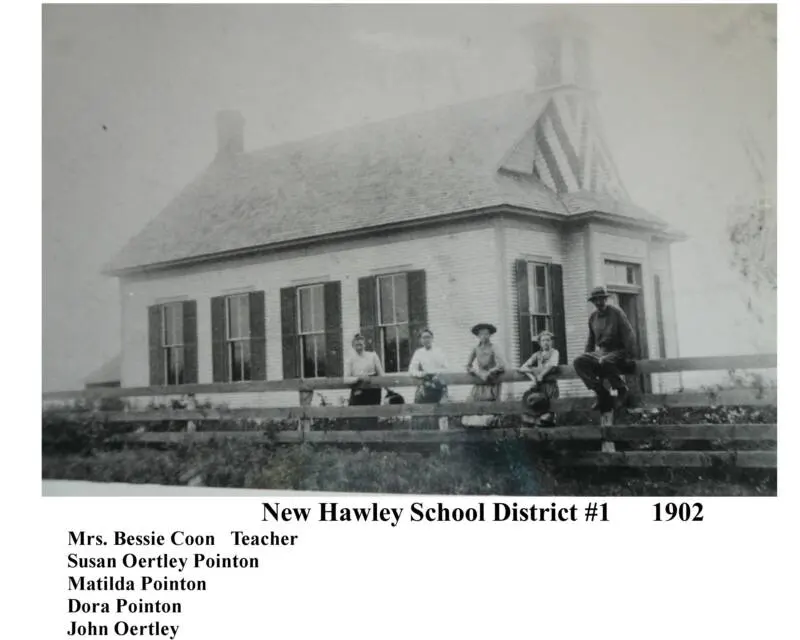
School burned to the ground sometime in 1901 and new school was built and opened in 1902.
The Hawley School is in district number one in Peoria County. The first schoolhouse was built in 1855 in what is now Hawley’s pasture. It was a small building about fourteen feet by eighteen feet with a window on west side of the room, a window in the back and a window and door in the front of the room.
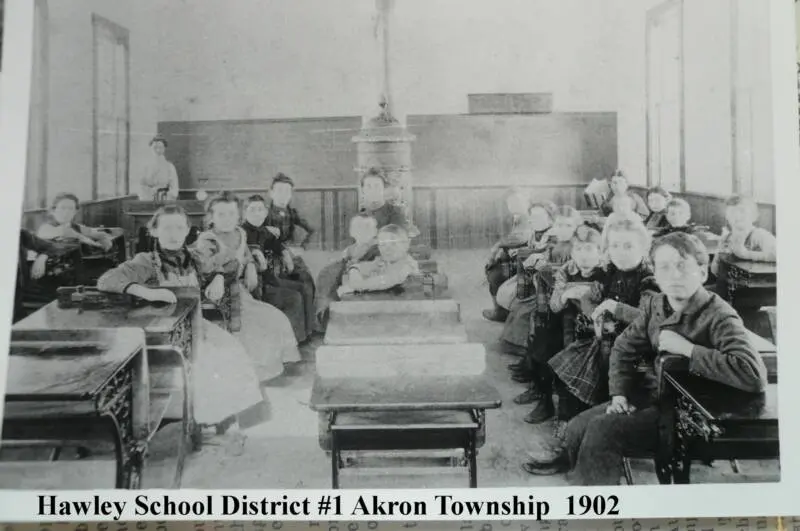
There were about eight seats with desks in the main part of the room. At the end of the room was placed the teacher’s desk with seats on either side of it. The stove was in the center of the room and behind this the mischievous pupils had their fun.
Captain Skeeter was the first teacher and as was the custom of the time, he boarded a period with each family in the district, making sure to stay the same length of time with each so as not to cause any hard feelings.
Because the building was quite small the school became known as the “Seven By Nine”, a name which it was known by for a number of years. This name was superseded by the present name when Mr. Hawley had become a resident of the district and lived there only a short time. He was very much interested in education and served as director for the school for many years.
The Civil War broke out about this time and the teacher and several pupils enlisted.
In 1863 a meeting was held of the district, at the school for the purpose of deciding on building a new building. It was also decided to purchase land for the building to rest on and a small plot was purchased from Dillian Anderson.
The new building was much larger than the first, having room for more seats and a larger space for recitation near the teacher’s desk. This building was in service until February 1901 when it caught fire and burned to the ground. A new building was built by Gaumer Brothers in the spring 1901 and has been in use since that time. The building, while not according to all the specifications of the Standard School Building, is a very good one and serves its purpose very satisfactorily. The building has plenty of windows to give the pupils sufficient light and in one corner there is a large jacketed stove, which heats the room evenly and well.
While there have been no United States Presidents graduated from this school, the residents of the district are quite proud of Mary, Sarah, and Alice Peters who attended the school and later became missionaries in China in which country Mary and Sarah are still located but due to ill health Alice was forced to return to America where she died a time later.
John Hayes
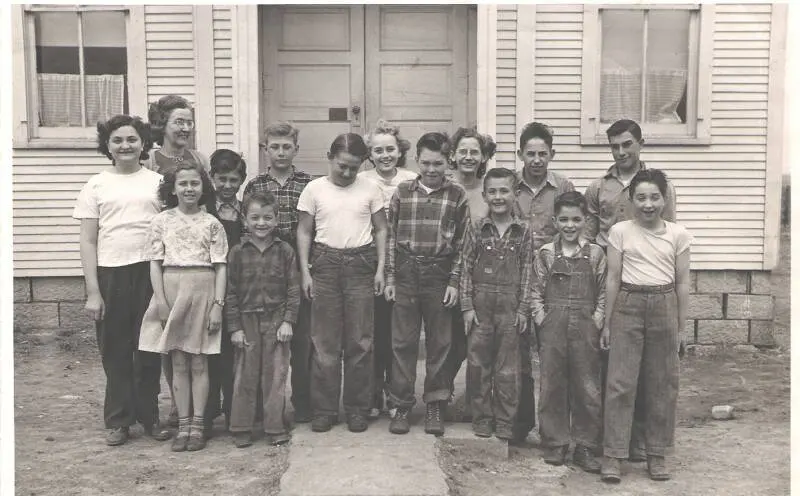
Hawley School - 1947-48
- Front row: Wilma Martin, Joan Berchtold, Dale Martin, Gerald “Pooch” Martin, Bob Hawley, Jim Hawley, Lyle Martin, Ray Martin
- Back row: Mrs. Jones teacher, LaVerne Berchtold, Gene Callery, Doris Martin, Alice Stockdell, Verl Stockdell, Bill Hawley
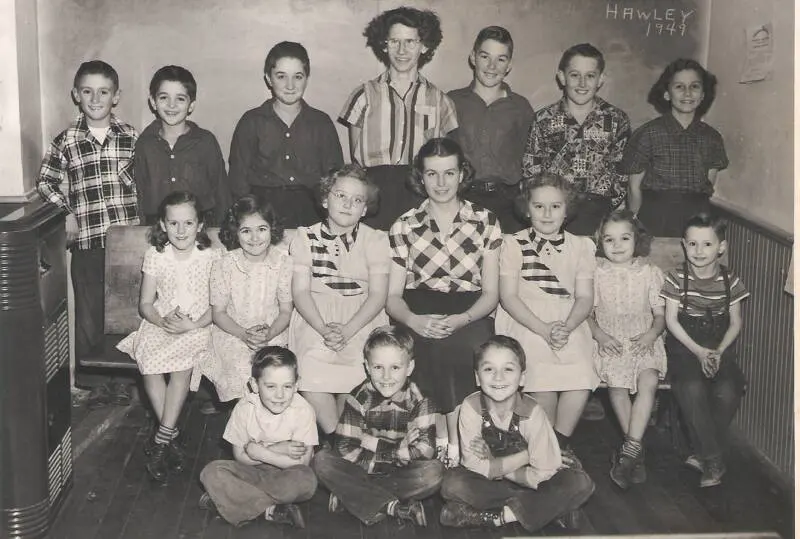
Thank you Alice Nash, a Wildlife Prairie Volunteer, for submitting the Hawley School pictures.
Hawley School - 1949-50
- 1st row: Ed Sollenberger, George Hawley, Dale Martin
- 2nd row: Judy Sollenberger, Elda Martin, Arlys Martin, Miss Dorothy Callery-teacher, Arlene Martin, Adele Martin, Greg Martin
- Back row: Jim Hawley, Lyle Martin, Ray Martin, Alice Stockdell, Bob Hawley, Gerald “Pooch” Martin, Joan Berchtold
Dorothy Callery became Dorothy McMullen and later taught at Wilder Waite School and many years at Dunlap Grade School.
Thank you to Princeville Heritage Museum and Suzanne Gill for the picture and names.
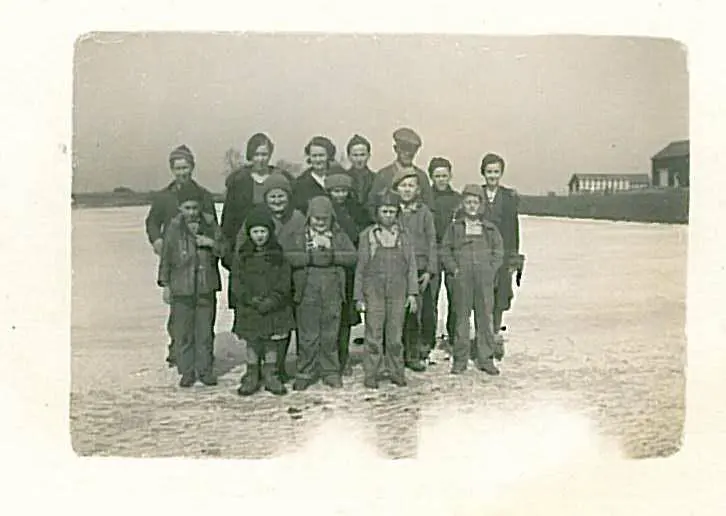
- Back Row: Walt Gehrig, Helen Gehrig, Lavern Streitmatter, Ivan Newell, Clarence Hawley, Bernadine Streitmatter
- Joe Callery, Kathleen Callery, Alice Martin, Nathan Martin, Bernice Callery, Bob Berchtold, Robert Ehnle, Ervin Martin
*Nathan Martin was born in 1929 and he looks about 8 in this picture, so I am estimating the year as about 1937.
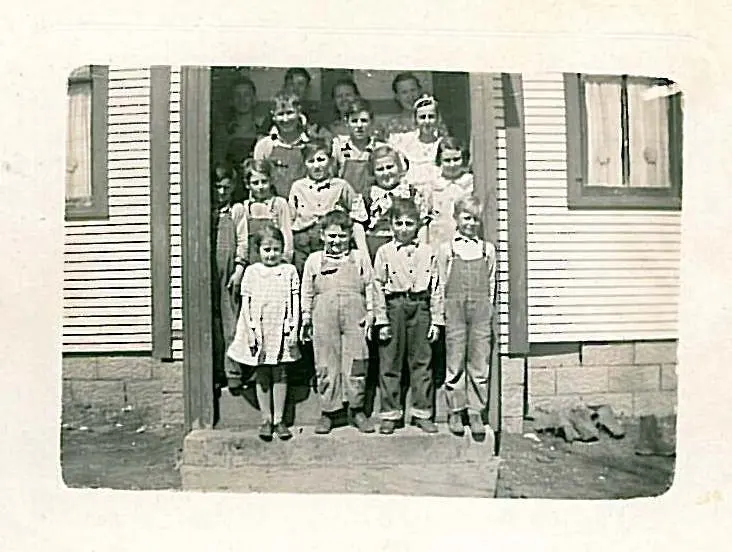
Thank you to Princeville Heritage Museum and Suzanne Gill for the picture and names.
- Back Row: LaVern Streitmatter, Raymond Newell, Iva Newell, Helen Gehrig
- Walter Gehrig, Clarence Hawley, Bernadine Streitmatter
- Ervin Martin, Joseph Callery, Alice Martin, Bernice Callery
- Kathleen Callery, Nathan Martin, LeRoy Ehnle, Bobbie Berchtold
Streitmatter School, also known as Gruner School, District #2
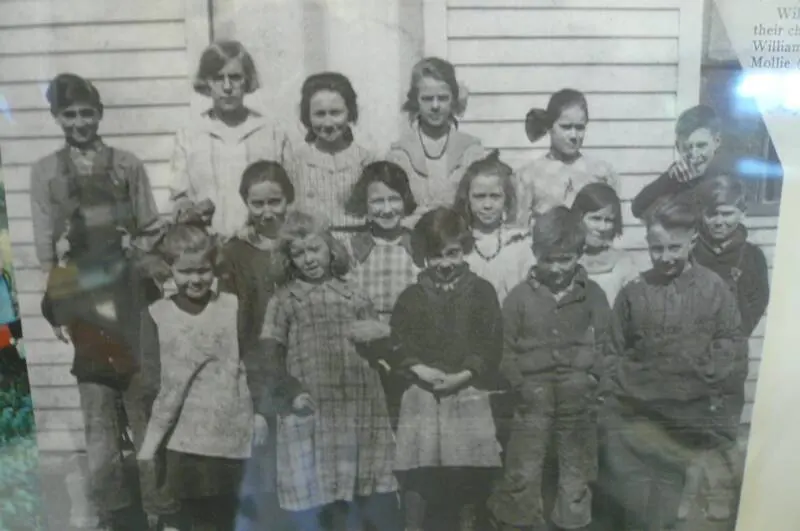
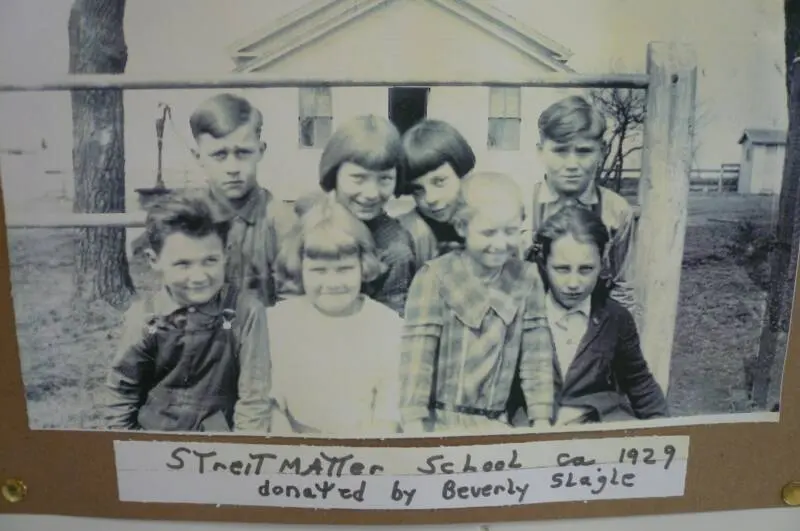
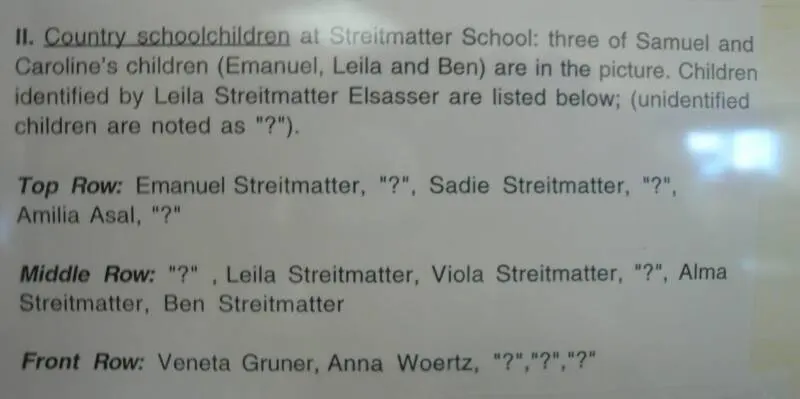
As far back as 1860 or possibly before that time, the present school building was erected. It was a one-room frame building. In later years the hall was added.
Any one in the district does not know when the community was organized into a school district. The officers of the school board were the same as at the present time; president, clerk and director.
The school year was divided into three terms; fall, winter, and spring terms. The fall term included September and October. The winter term began in December and carried through to March or if the weather was bad just through February. A month or so intervened and then a two months spring term.
The same teacher did not always teach all three terms, often first one term. His salary was sometimes lumped for the term and not by the month. The teacher for the winter term received the highest salary.
The first teachers of the district taught for $18.00 to $22.00 a month. As all things in general became higher, the teacher’s salary increased accordingly.
A well has been dug that improved the school property.
John Hayes
Blue School, District Number 3
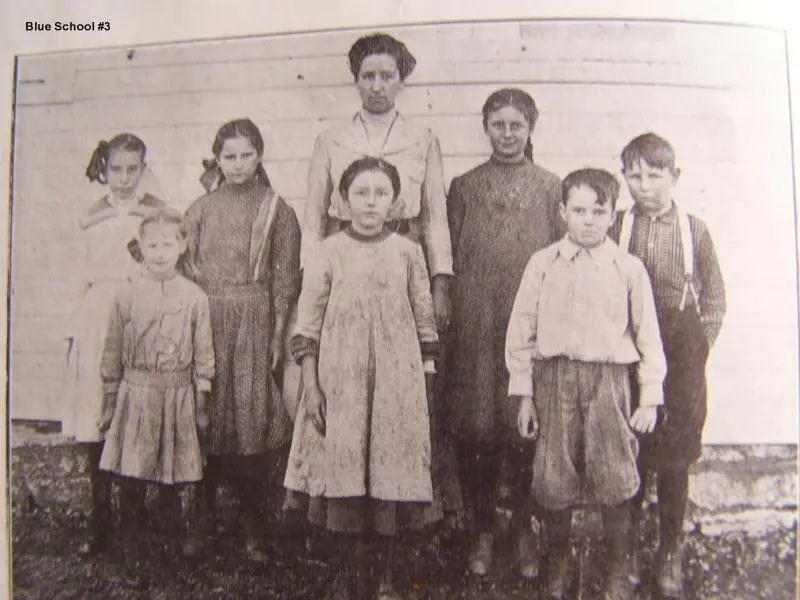
The Blue School, District Number Three was erected in 1857. It was built about one hundred rods south and across the road from its present location. It was on the Anderson farm and was known as the Anderson School. This was before the public roads were laid out.
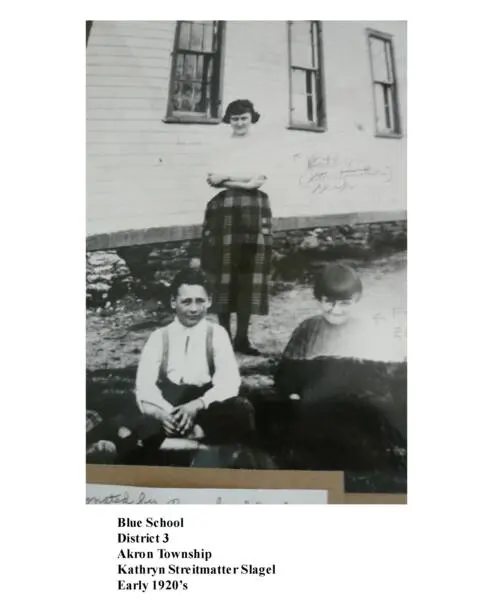
About 1873 when the public roads were laid out it was decided that location of the school was not suitable, so it was moved to its present location. At the time it was moved, Mr. Blue lived on the corner near the school, and so the school soon became known as the “Blue School”.
The building consisted of one room without a vestibule. A cannon heater located in the center of the room heated it. The walls were plastered and whitewashed. After the building was moved a vestibule was added. Within more recent times, it has been papered; a well has been dug; and an organ, a library, and many other things have been purchased.
The first years the school was in session, the first five grades were all that were taught. The teacher was hired for two terms, the winter term in which more pupils were in attendance, carried with it a salary of between $25.00 and $35.00 while the summer term paid in the neighborhood of $20.00 per month. The number of pupils has varied from ten to thirty.
During the World War, Miss Streitmatter was serving her country in France in the capacity of a Red Cross nurse. Miss Streitmatter was in attendance at the Blue School District #3 for her entire grade school education.
John Hayes
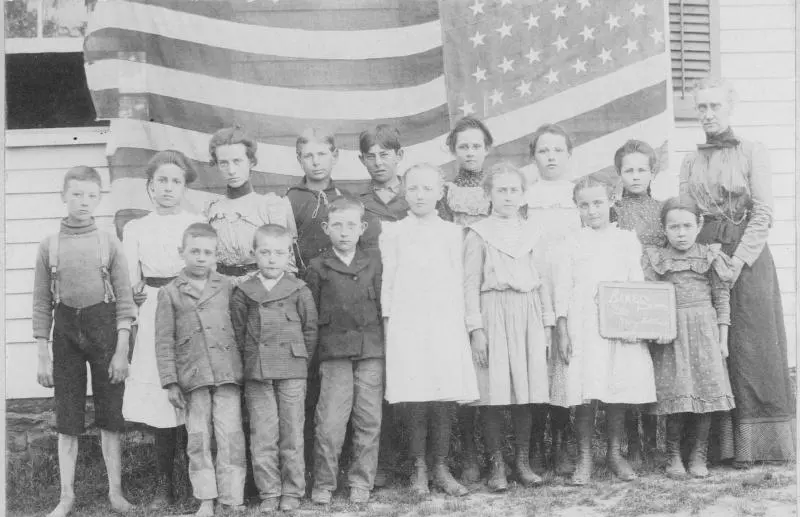
Blue School 1901 Teacher Ms. Mary Fieldhouse
Frank Streitmatter, Frank Fritz, Charles Fritz
Photo submitted by the Princeville Heritage Museum.
Morrow School, District #4
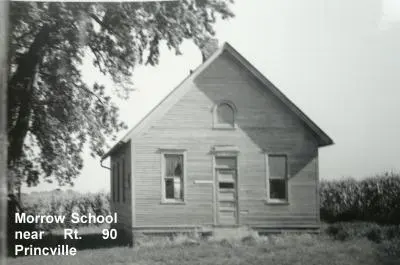
Located: S. W. ¼ of the S. W. ¼ Section 17 Akron Township, 11 N. R. 7
No record
Townhouse School or Townhall, District Number #5
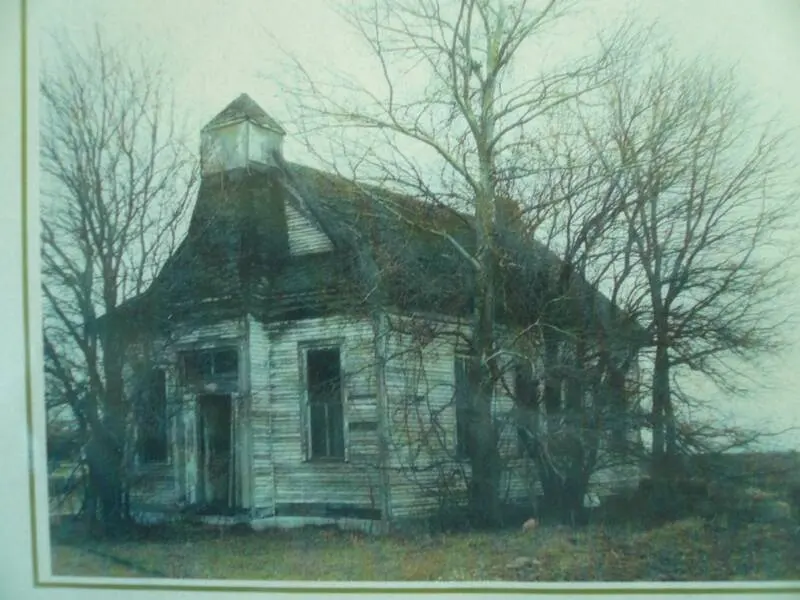
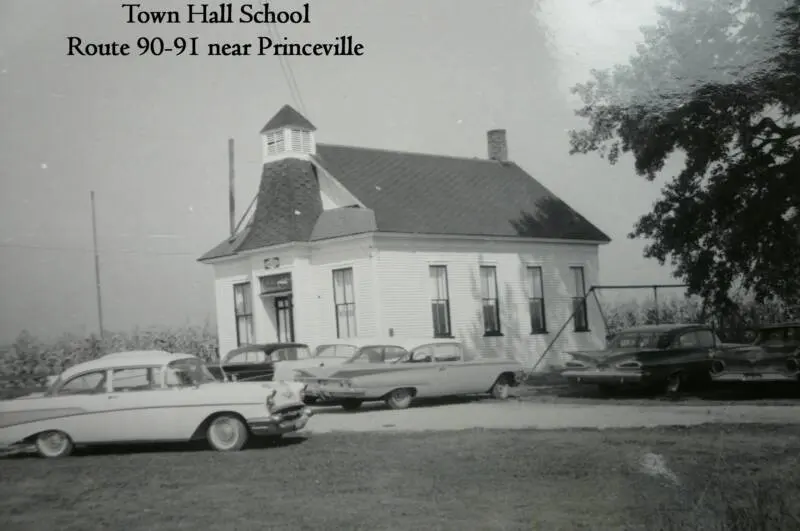
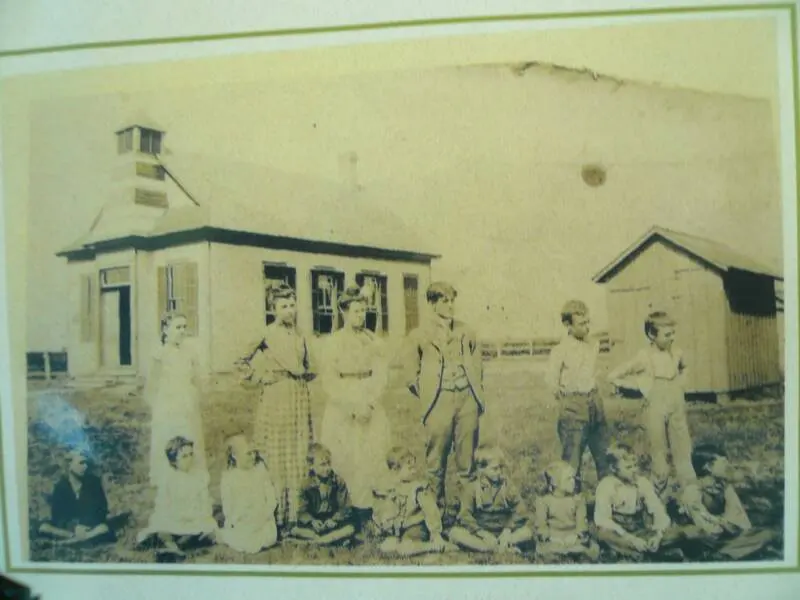
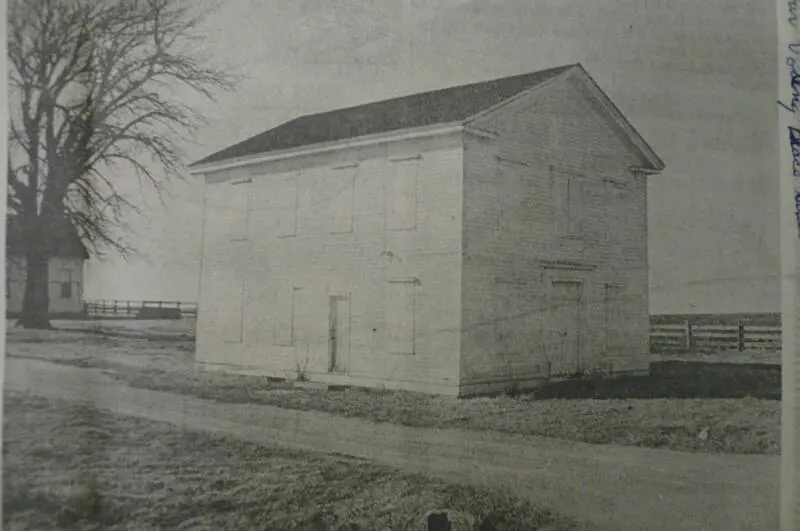
Town Hall School donated by Bob and John Wieland. Moved from original location to the Heritage Center in Princeville, Illinois. Pictures from Heritage Center.
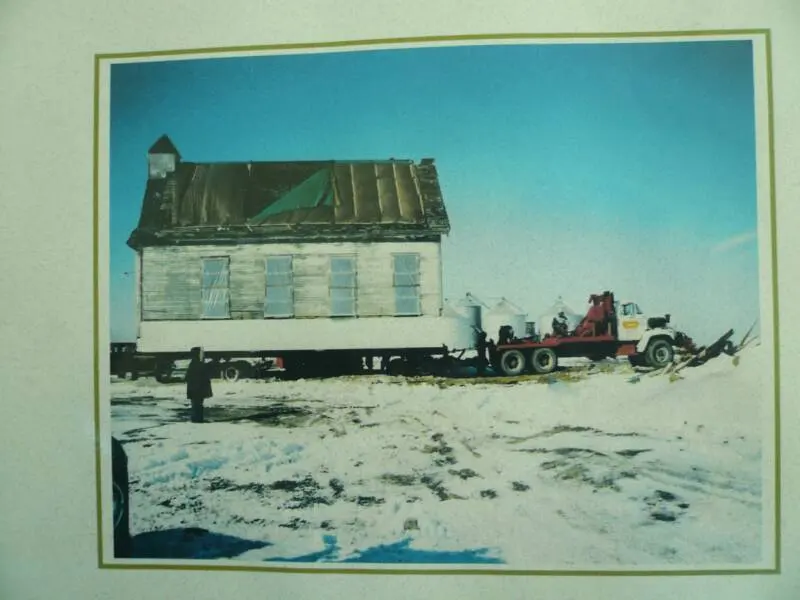
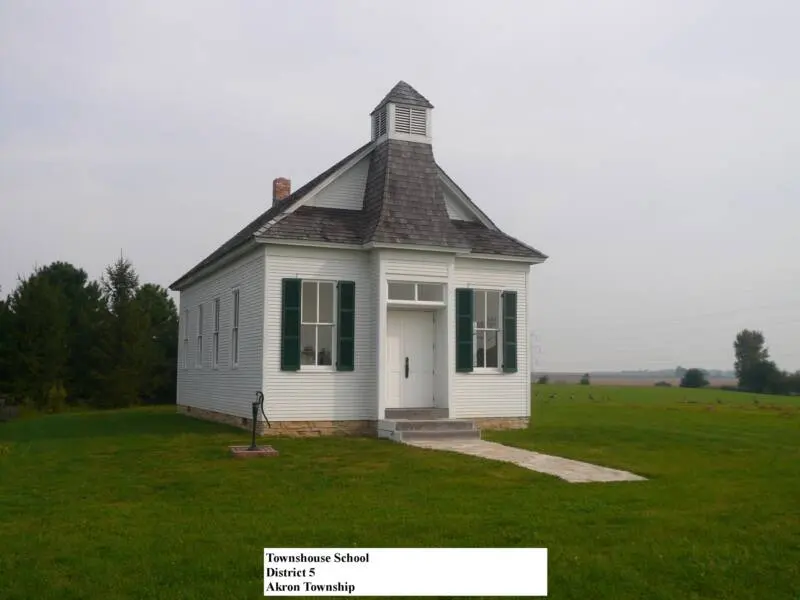
Restored and moved from original location to Heritage Center in Princeville, Illinois.
In the year 1854, a meeting was held for the purpose of making plans to build a Town House. It was decided to have building 26 ft. x 18 ft. and 11 ft. high. This building was to be located near the center of the township. The same year, the house was built and until the year of 1866 served the double purpose of a school house for District No. 5 and for town meetings. At first, school was in session only a few months during the winter and during the rest of the year, it was held at farmhouses.
In 1865, the voters of the town feeling the need of a larger house, voted to join with District No. 5 in the erection of a two story building, the lower part to be used for school purposes and the hall above for public gatherings. This arrangement continued until June 1900 when the town bought the interest of School District #5 and moved the building on to another part of the lot.
In this year the schoolhouse was built which is being used at the present time.
The first post office in Akron was started in 1859 in District #5. Up to this time, the people were dependent upon Princeville and Southampton for post office accommodations. Those offices were first supplied with a weekly mail, then with tri-weekly. About 1860 a post office named Akron was established four miles east of Princeville, and T.P. Burdick was the postmaster. Three years later the office was moved ¼ mile further west and William Saunders was elected postmaster which office he held until 1866.
At the Town House School, the salary of the first teacher was $12.00 per month.
The number of pupils in this school averages from 12 to 15. From the year 1890 to 1900, it averaged from 35 to 40 in the winter months.
John Hayes
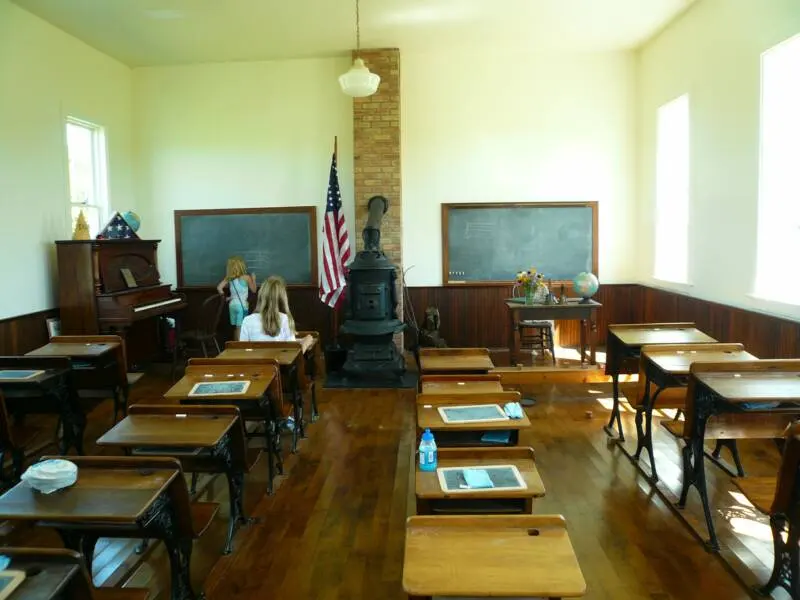
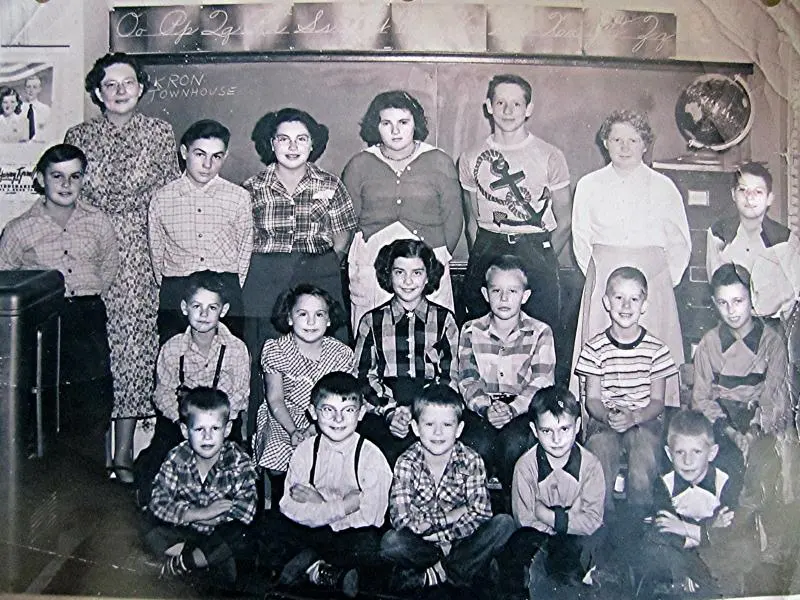
Townhouse School 1950
- Row 1: David Jacobson, Sidney Stahl, Dale Jacobson, Johnnie Weiland, Jimmie Donalth
- Row 2: Norman Stahl, Nancy Stahl, Garry Jacobson, Sandra Fry, Joey Burgess, Bobby Weiland
- Standing: Donald Stahl, Miss Slane, Jordon Stahl, Caroline Stahl, Delores Weiland, Bob Graham, Mattie Smith, Johnnie Neff
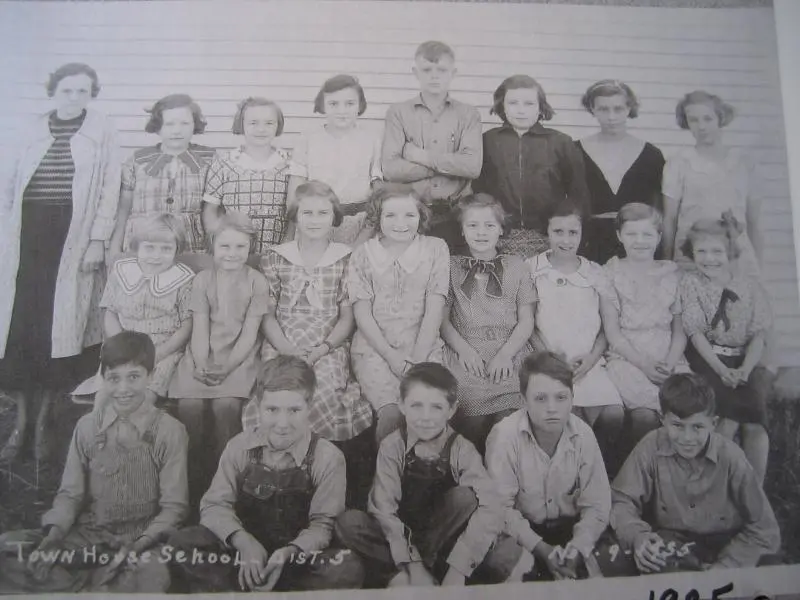
TownHouse School 1935
- Row 1: Junior Earl Grimm, Earl Asal, Harry Oertley, Jack Fry, Fred Epley
- Row 2: Darlene Emery, Evelyn Gruner, Viola Gruner, Anna Jean Smith, Gladys Wieland, Emma Dale Grimm
- Row 3 (standing): Teacher, Marian Johnson, Norma Oertley, Evelyn Wieland, Dorothy Curry, John Wagner, Betty Oertley, Betty Fry, Ella Marie Hohenberry
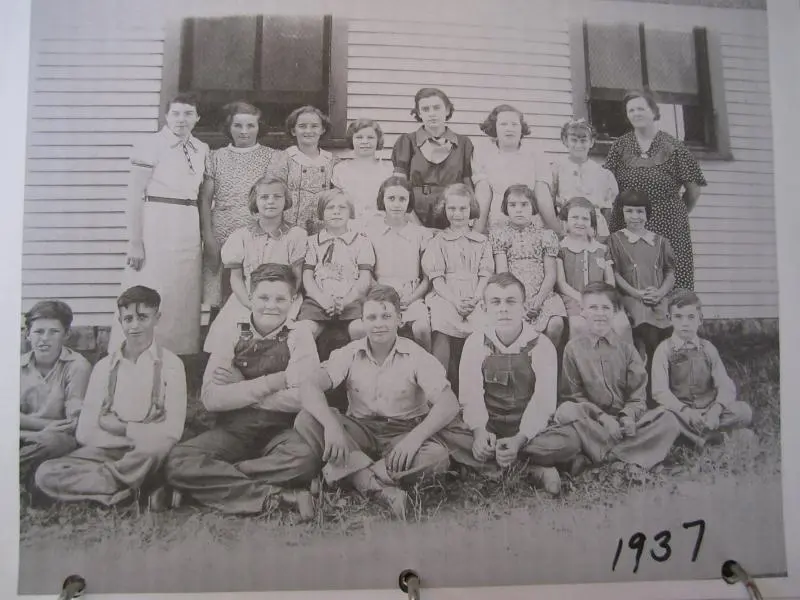
TownHouse School 1937 Teacher Edith Nurse
- Row 1: Fred Epley, Earl Grimm, Laverne Perdlewitz, Jack Fry, Tom Cavadas, Harry Oertley, Lester Smith
- Row 2: Gladys Wieland, Dalene Emery, Emma Dale Grimm, Evelyn Grunner, Donna Fry, Pauline Oertley, Dorothy Cavadas
- Row 3 (standing): Edith Nurse, teacher, Anna Jean Smith, Evelyn Wieland, Doris Epley, Dorothy Curry, Norma Oertley, Viola Gruner, Pauline Trigger, music teacher
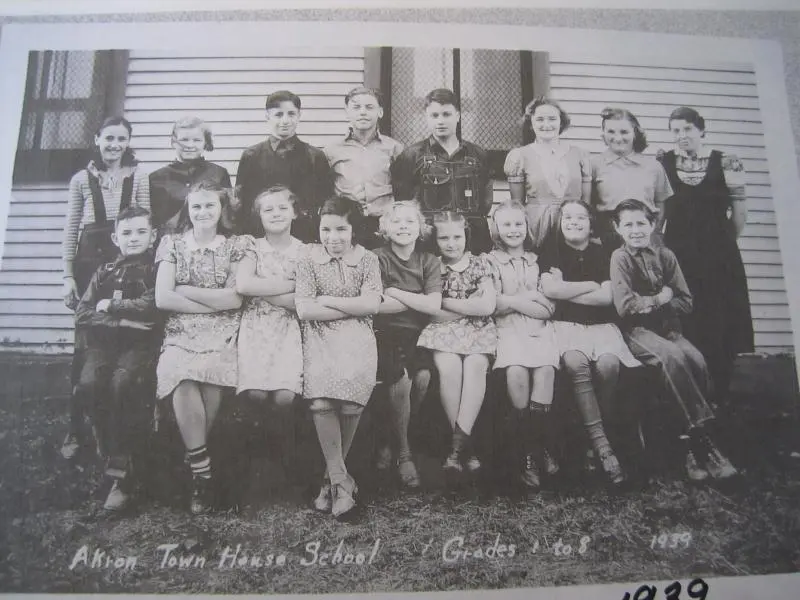
TownHouse School 1939
- Row 1: Lester Smith, Viola Gruner, Gladys Wieland, Dorothy Cavadas, Darlen Emery, Pauline Oertly, Evelyn Gruner, Donna Fry, Harry Oertley
- Row 2: Emma Dale Grimm, Doris Epley, Junior Earl Grimm, Thompson, Jack Fry, Evelyn Wieland, Anna Jean Smith, Edith Nurse, teacher
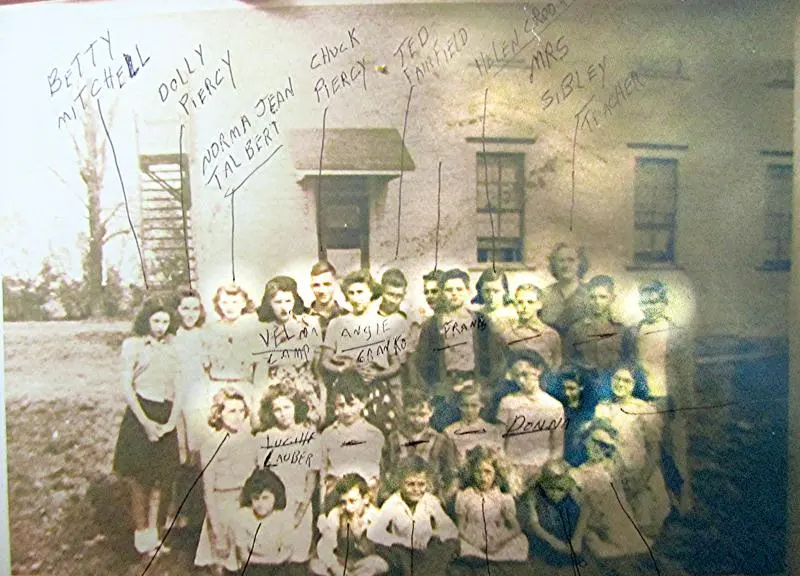
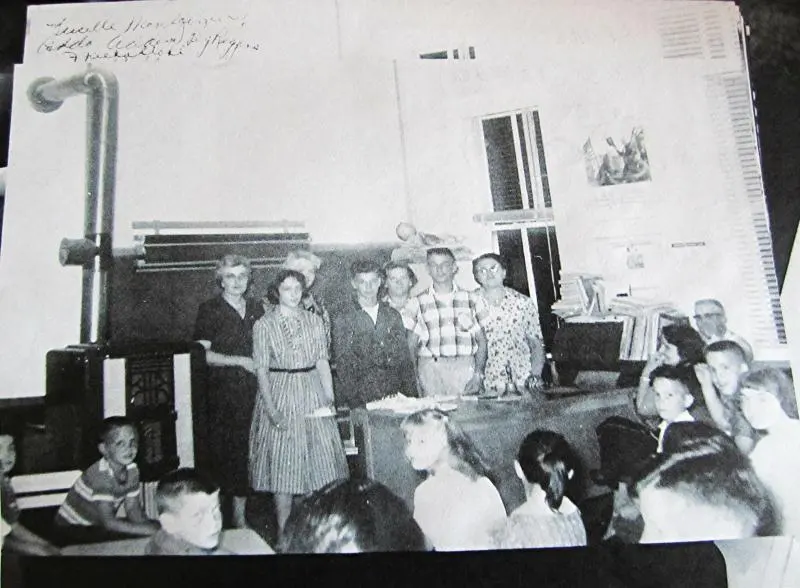
TownHouse School Former teachers and students (I think!)
- Lucille Montgomery, Teacher
- Nancy Stahl
- Adda Addis, Teacher (slightly behind Nancy)
- Mike Slater
- Peg Riggens, Teacher (between Mike and Norm)
- Norm Stahl
- Frieda Stahl
Timmons School, District #6
The first schoolhouse in District Number 6, was located on the south east corner of the south east quarter of Section 14 of Akron Township on the property known as the Sanger estate. The first building was erected in 1840 and was a one-room structure 18 feet by 24 feet. This building was in use a little over thirty years when its condition was such that it was deemed necessary to build a new school. The second building was 22 feet by 28 feet, a frame construction, and was not built at the same location as the former school. The location was moved across the road to the northeast corner of the northeast quarter of Section 23. This building has been in continuous use for more than fifty years.
John Hayes
Potter School, District #7
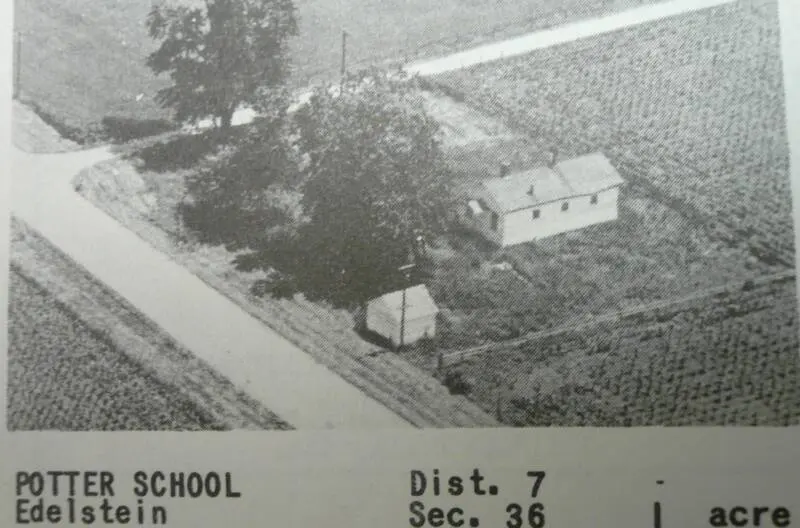
Our school is called the Potter School. It is located Section 35, District 7, Akron Township, west of the Chicago and Northwestern Railroad.
Levi Booth of Chillicothe built Potter School in 1867. One half acre of land on which the school was built, was purchased from Jesse Boswell. The Potters, after whom the school was named, migrated here from Alfred Center, New York, in 1847. This family came originally from England. Since this time eleven members of the Potter family attended Potter School. They represent three generations.
The first teacher of Potter School was Charity Burdich. She came from Massachusetts. The subjects were arithmetic, reading, spelling, grammar and history. The first graduates were Della Lucas, Irene Keach, and Rose Overend.
The stove was a “Black Hawk”. The desks were made by a carpenter, planed and painted a dark lead color. The teacher’s desk, which was really a table, was a square board with four roughly cut out legs. The boys used to take great delight in standing on the table, much to the teacher’s dismay. Mr. Asa Potter remembered distinctly having to take the table home to repair after the episode heretofore mentioned. There was a well in back of the schoolhouse. It soon went dry, however, and they were forced to carry water from a neighbor’s well about thirty rods away.
Our shade trees are soft maples, planted soon after the school was erected. Our schoolhouse is nicely furnished and our playground neat and clean. Today we have a modern school furnace, a teacher’s desk, and necessary school equipment. Twenty-eight graduates have come from this school since 1896.
John Hayes
Summit, District #8
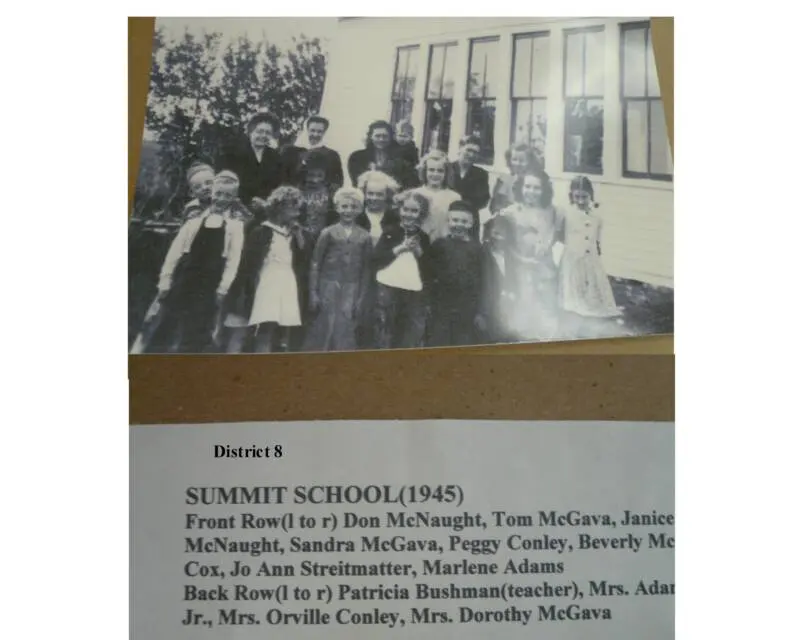
In 1857 the four corners near the schoolhouse were laid off and fenced. There were very few fences around the fields at that time, and the farmers had to guard their stock to keep it from destroying the crops. The schoolhouse was not built at the four corners after all, because that particular site was occupied in 1858. It was easier to trade acres than to move the dwelling house, so the new school was built on the acre south the corner.
The first schoolhouse was built in 1858, a very small building 13 by 16 feet. It was named Toehead. Miss Mary Nesmith was the first teacher, and she taught for $24.75 per month.
The present school building, which is very much larger than the first, was erected in 1883. This schoolhouse was named the Summit. This old school building was moved to a nearby farm and is still being used for a farm building. The new schoolhouse was built over the old foundation. George Pyle of Dunlap built it for $648.00.
The windows on the other side of the schoolhouse were removed and placed on the south side. Some other improvements are a new foundation, a new floor, a new stove, and new cistern. These changes made the Summit School a standard school in 1914. In 1929 three small windows were put in the north wall of the building.
John Hayes
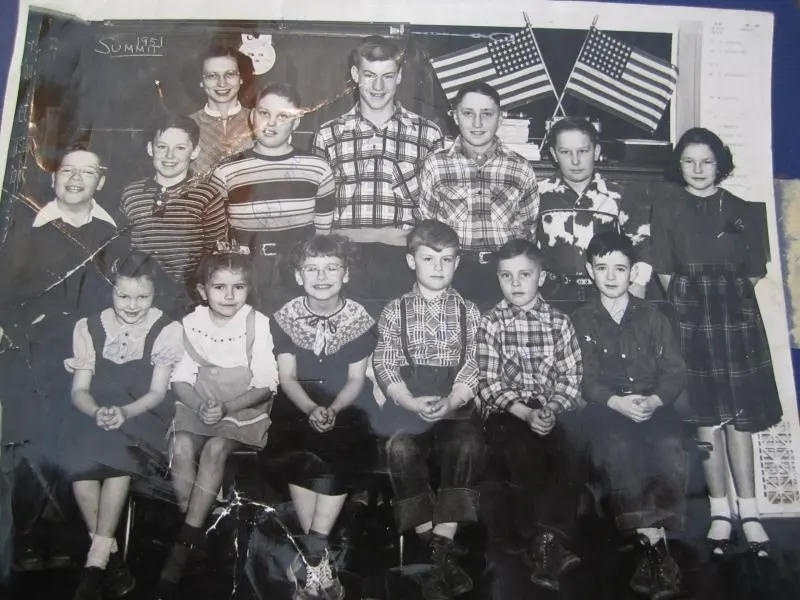
Summit School 1951 Teacher Mrs. Lisetta White
- 1st Row: Brenda King, Linda Henly, Sharon Cates, Melvin Slane, Rick Telander, Joe Fogerty
- 2nd Row: Mick Harmon, Jim Endress, Brian Telander, Bob Slane, Bob Harmon, Earl Johnson, Pat King
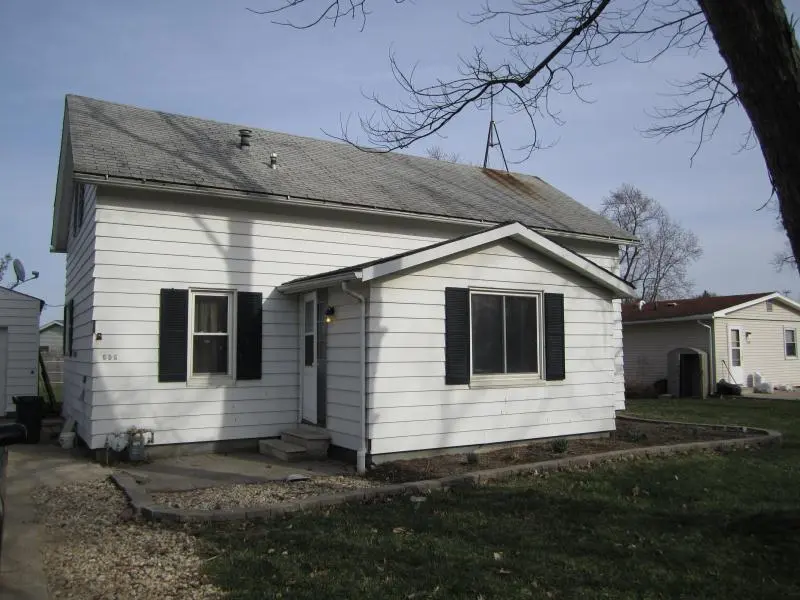
After Summit School closed, it was moved from corner of W. Akron Rd. and Rice Rd. into the town of Dunlap. 2011
Wilson School, District #9
At an early period in the history of Akron Township the sturdy pioneers set about to provide such educational advantages as their means would permit. At first there was but one, which was built at Princeville, near the Rock Island and Peoria Depot. This building stood for only a few years and was burned to the ground during a cold spell. The next building was erected near the place where the Santa Fe crosses the public road one-mile east of the west line of the township. The township was divided soon after this into three districts and school was held in different farmer’s homes. The division was only temporary and the following year the township was divided into 9 districts each of which consisted of a section two miles square.
Wilson School became a reality at this time, William Wilson lived in one of these districts and he gave a patch of land from his property for a school ground. This piece is located about two-mile south of Princeville. The building that was built was equipped with double seats and a stove in the center of the room. Mr. Wilson gave the school a chair that has been carefully taken care of and is now becoming quite an antique. The building was erected about 1870 but no records were kept until 1875. By looking into these records it was found that the teacher’s salary at that time was $23.00 per month and that the period for which she was employed was 12 weeks being rehired for 12 weeks more if she was liked. In 1895 bonds were issued for the purpose of building a new school. The new school was built upon the site of the old building in the center of the large maple grove, which was set out by Mr. Wilson in 1875. The trees are very healthy and afford a wonder shade over the playground.
John Hayes
Corner of W. Akron Rd. and N. Slane Rd.
I graduated with the last class from Nelson School in 1953, along with John Williams, now deceased. My 5 brothers and sister also attended this school, as did my father and his siblings. My mother, before marrying, taught at the school in 1916. John Williams and I did quite a lot of research on the school before it was burned by arsonists in 2003, as we had hoped it might be chosen for the school to be moved to the Princeville Museum area. Pictures have been hard to come by, as have details, unfortunately. Tho Nelson was one of the earlier schools, apparently, there were few records kept. It had “indoor plumbing” for instance and a “large” furnace with a back chimney, cloakrooms, an adjacent ballfield and an out building to house coal and other necessities. The land eventually became part of my family’s farm after the school was consolidated. I have many of the books from the school “library.” (Mary Sheila Harmon Sasso of Crawfordsville, IN)
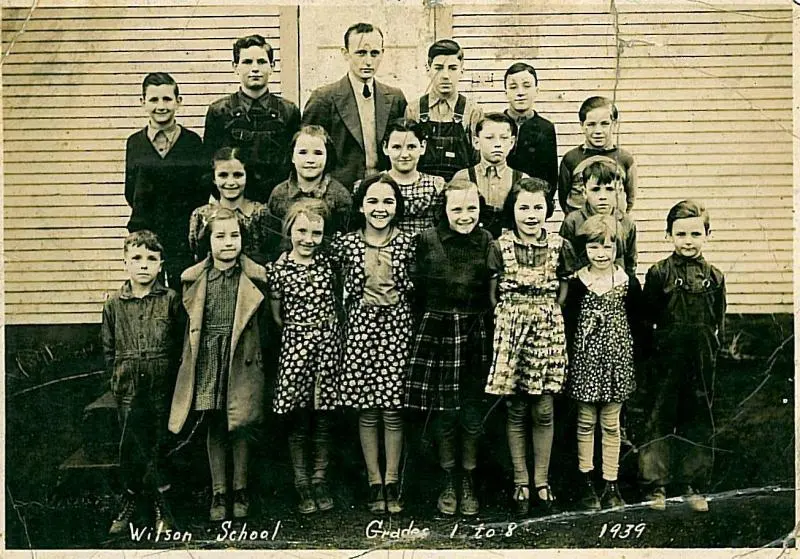
Wilson School in Akron Township. The picture was taken in 1939 and is of grades 1 to 8. Identified in the picture are Alma Jean (Green) Swain, front row, 3rd from left, Betty Lou (Green) Claver, front row, 4th from left. Teacher is Mr. Leo B. Kneer.
Photo submitted by the Princeville Heritage Museum, donated by Alma Jean Swain.
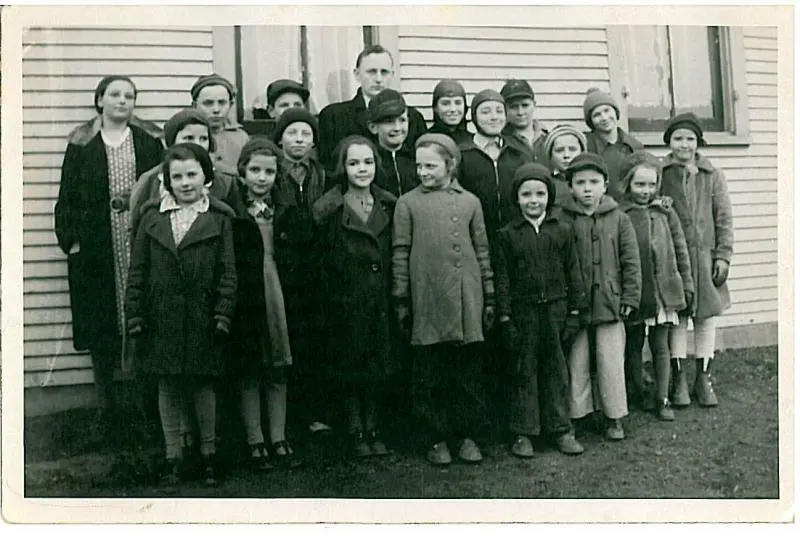
- Front Row: Joanne Purcell, Helen Menold, Betty Lou Green, Della Strietmater, Dean Burns, Franklin Rhodes, and Alma Green
- Row 2: Martha Menold, Edward Purcell, Duane Burns, James Kuntz, Elvin Bouton, and Juanita Rhodes
- Back Row: Mary Ellen Menold, Cecil Bouton, Alpha Menold, Mr. Leo B. Kneer (teacher), Donald Kuntz, and Gerald Bouton
Photo courtesy of Leroy Rhodes.
Where the Akron children went
The 1945 table at the top of this page shows Akron's nine districts splitting three ways. Hawley and Timmons went to the Edelstein consolidated district, #313, in 1952. Streitmatter, Blue School, Morrow and Wilson joined Princeville #311 in 1951 and 1952, and the Townhouse district was divided between #311 and #313 in 1958. In 1969 all of those became part of Princeville #326.
Potter and Summit, in the southern part of the township, went to the Dunlap consolidated district, #302, in 1953 and 1954, and then into Dunlap #323 in 1969. Dunlap Community Unit School District 323 was formed that year from Dunlap Township High School District 158, Dunlap Consolidated Grade School District 302 and Wilder-Waite District 303, and it still takes in part of Akron Township. Princeville CUSD 326 runs Princeville Elementary School and a junior and senior high school in the village.
Two Akron schoolhouses were saved. The Townhouse School, which the Princeville Heritage Museum describes as a one-room schoolhouse built in 1900, was moved from its spot near the center of the township to the museum grounds at 325 N. Ostrom Avenue in Princeville and restored. The museum welcomes school field trips to it, and the photographs above show its open house on July 25, 2009. Summit School was moved from the corner of W. Akron Road and Rice Road into the town of Dunlap. Not every building fared as well: Mary Sheila Harmon Sasso's note recalls that her old school was burned by arsonists in 2003.
Akron Township counted 1,025 people in the 2020 census. Many of the class pictures on this page came from the Princeville Heritage Museum and from families who kept them, and the museum is still the place to ask about Akron school records.
Common questions
Where is the Akron Townhouse School now?
The Townhouse School, District #5, was moved from its original location near the center of Akron Township to the Princeville Heritage Museum at 325 N. Ostrom Avenue in Princeville, where it was restored. The museum describes it as a one-room schoolhouse built in 1900. The township history on this page says the town bought the district's share of the old two-story town house in June 1900, and the new schoolhouse was built that year.
When did the Akron Township schools consolidate?
Between 1951 and 1958 the Akron districts went into three consolidated districts: Princeville #311, Edelstein #313 and Dunlap #302. In 1969 the schools that had gone to Princeville and Edelstein became part of Princeville #326, while Potter and Summit, which had joined Dunlap #302 in 1953 and 1954, became part of Dunlap #323.
Why was the Hawley School called the Seven By Nine?
The first Hawley schoolhouse, built in 1855 in what became Hawley's pasture, measured only about fourteen by eighteen feet, and because it was so small people called it the Seven By Nine for years. The Hawley name came after Mr. Hawley moved into the district and served as director. The second building burned in February 1901, and Gaumer Brothers built its replacement.
What happened to Summit School in Akron Township?
Summit, District #8, began in 1858 as a 13 by 16 foot building called Toehead, where Mary Nesmith taught for $24.75 a month. George Pyle of Dunlap built the larger Summit schoolhouse in 1883 for $648. It joined Dunlap #302 in 1954 and Dunlap #323 in 1969. After it closed, the building was moved from W. Akron Road and Rice Road into Dunlap.